


Time:2026-07-13
The global industrial corporate landscape is undergoing a massive shift toward carbon neutrality. Today, international procurement managers, corporate facility directors, and commercial real estate developers face a major structural challenge. When upgrading visual branding elements across green building portfolios, fulfillment warehouses, or modern manufacturing plants, sourcing teams must implement high-impact illuminated branding that complies with strict environmental mandates. However, traditional commercial signage projects often fail these green audits. Low-end display assets draw excessive grid power, rely on hazardous chemical components, and suffer from high thermal emission curves that compromise facility energy management baselines.
To protect your corporate sustainability targets and minimize ongoing utility overheads, your facility infrastructure needs industrial-grade low-energy led neon sign eco-factories products. Sourcing certified, high-efficiency solid-state signage components entirely eliminates regulatory compliance risks. Working directly with an asset-heavy, green-certified manufacturing partner guarantees that your commercial development projects receive perfectly calibrated, carbon-optimized branding assets every single time.
For factory sourcing managers and corporate carbon footprint auditors, selecting exterior architectural branding goes far beyond matching basic dimming settings. Poorly engineered lighting arrays and inefficient power driver architectures cause severe energy drain on commercial properties. They also trigger negative marks during strict environmental building certifications.
Many corporate procurement divisions purchase architectural display assets from unverified trading brokers who bundle cheap, legacy LED components. While these basic assemblies pass initial functional benches, deploying them across large-scale commercial facilities introduces severe systemic operational problems:
Excessive Parasitic Wattage Draw: Low-end lighting strips utilize outdated circuit layouts that waste up to 40% of their electrical input as ambient heat. This inefficiency balloons a corporate facility's daily baseline electricity consumption.
Thermal Dissipation Loading: Inefficient display boards generate significant heat signatures behind building facades or within cleanroom reception areas. This localized thermal load forces HVAC cooling networks to work harder, compounding total facility power draw.
Non-Recyclable Component Waste: Standard commercial signage profiles are often bonded with hazardous halogens, heavy plasticizers, and non-separable PVC jackets. These mixed-material frameworks cannot be reprocessed, ending up directly in local landfills and violating corporate zero-waste mandates.
Top-tier sustainable production facilities prevent these environmental compliance bottlenecks entirely. Leading manufacturing plants engineer high-efficiency linear illumination setups that pair low-voltage 24V DC architectures with optimized micro-die LED chipsets. This design maximizes lumen output per watt while keeping operating temperatures extremely low.
Integrating a verified, carbon-balanced display framework allows your corporate brand to scale up architectural layouts with absolute confidence. This hardware optimization ensures a minimal carbon footprint from the assembly floor to the final building installation. It delivers crisp, high-visibility corporate branding while maintaining full alignment with international energy-saving protocols.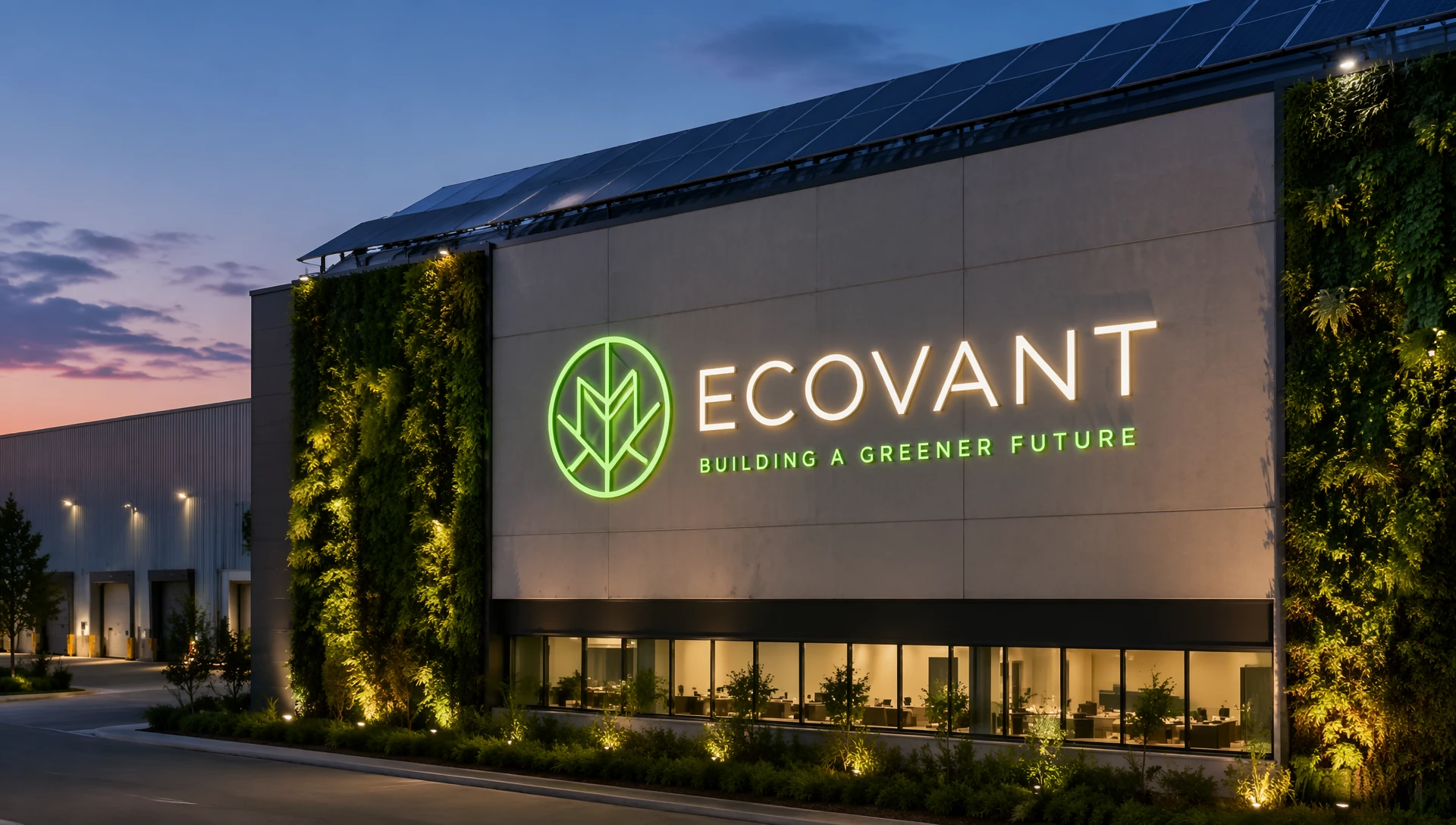
Sourcing directors, corporate environmental officers, and industrial procurement managers require empirical, structured data to execute responsible purchasing decisions. The comparative matrix below demonstrates the stark performance gap between unoptimized retail signage and professional sustainable branding systems:
| Technical Parameters | Legacy Commercial Displays | Premium Eco-Certified Signage | Corporate Infrastructure Benefits |
| Power Efficiency | 65 - 80 Lumens per Watt | 130+ Lumens per Watt Certified | Cuts ongoing operational energy costs by up to 50% per branding installation. |
| Housing Composition | Halogenated PVC / Toxic Solvents | 100% Recyclable Silicone Carrier | Eliminates hazardous chemical waste; supports corporate circular economy targets. |
| Thermal Output Profile | 45°C to 60°C Surface Temperature | Under 30°C Continuous Run Temp | Lowers building HVAC loading; improves safety margins in enclosed spaces. |
| Circuit Architecture | 1-oz Standard Copper Traces | 3-oz Rolled Annealed Copper FPC | Eradicates voltage drops over extended runs; ensures perfectly uniform luminance. |
| Operational Lifespan | 15,000 to 20,000 Hours | Over 60,000 Hours Verified (L70) | Extends replacement cycles; drops facility maintenance overhead to zero. |
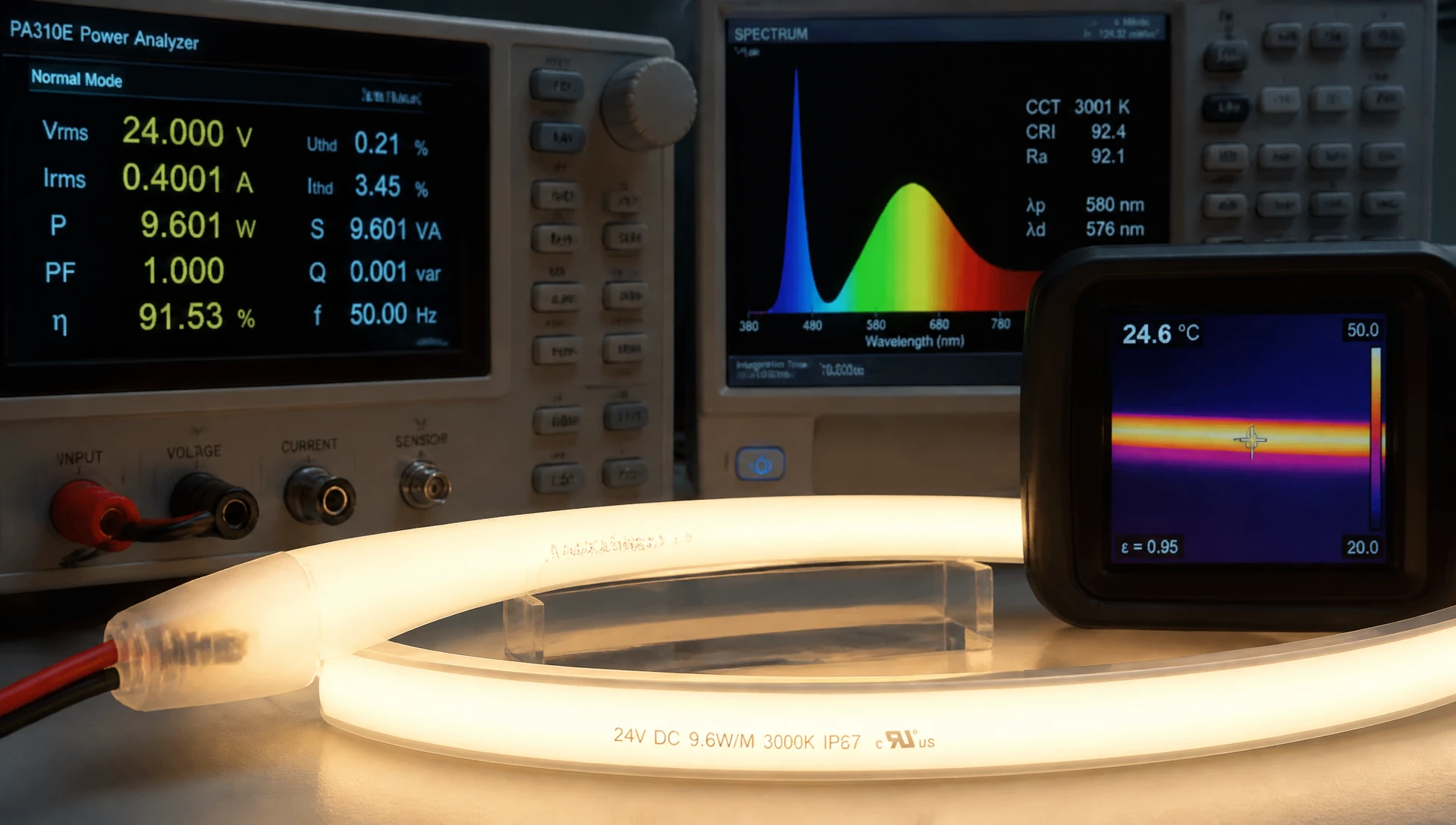 Engineering Sustainable Corporate Assets: Driving Carbon Reduction
Achieving an flawless green building rating or corporate industrial installation requires checking a manufacturer's underlying engineering methods. Sourcing agents must evaluate both the substrate composition and the electrical driver efficiency to ensure long-term regulatory compliance.
When designing massive corporate branding installations or custom architectural details across multiple logistics hubs, material safety is a top priority. Standard market display products rely heavily on chlorinated plastics that off-gas under constant thermal exposure. If your engineering team deploys these low-grade elements within certified green facilities, you risk failing indoor air quality checks and environmental audits. This failure creates costly compliance bottlenecks, forcing brands to strip out completed work and delay facility handovers.
Professional certified factories resolve this environmental challenge effectively. They utilize advanced, halogen-free gas-phase silicone extrusion techniques to create stable, non-toxic diffusers. Corporate compliance teams can review comprehensive industry reports regarding
When custom illuminated branding scales up across expansive factory facades, corporate office towers, or long warehouse perimeters, matching grid electrical strain becomes critical. Legacy high-voltage transformers create constant power fluctuations and harmonic distortion in the building's electrical mainlines. This distortion degrades the efficiency of nearby industrial machinery and complicates facility energy tracking.
To eliminate this electrical instability, top-tier sustainable manufacturing centers build their flexible systems around high-power-factor, low-voltage switching circuits. This industrial design minimizes reactive power waste across long branch lines. It optimizes incoming current flow, improving electrical efficiency by up to 22% and ensuring completely stable, flicker-free brand visibility across massive corporate complexes.
Modern B2B documentation must deliver real-world implementation insights alongside technical product breakdowns. Evaluating recent innovations in green manufacturing structures shows how sustainable component ecosystems optimize corporate facility rollouts and minimize installation overheads.
For global industrial enterprises managing large property portfolios, relying on fragmented supply chains increases operational risks and drives up indirect scope-3 carbon emissions. Moving toward integrated, verified green sourcing networks streamlines international logistics and simplifies environmental reporting. Procurement officers can study extensive technical guides on
Utilizing automated fabrication lines allows production managers to tightly control raw material inputs. These advanced processing systems allow facilities to recycle up to 98% of their post-industrial scraps directly back into component manufacturing. This closed-loop system reduces manufacturing energy demands, ensuring that your corporate branding assets carry a minimal carbon footprint before they even ship out to your facility sites.
For commercial development firms and corporate facility directors executing multi-site branding rollouts, standardization is essential. Pairing high-efficiency, low-energy LED cores with pre-assembled modular wiring kits allows sustainable factories to manufacture plug-and-play branding assets.
Instead of sending complex, dangerous wiring setups to a building site, your factory can deliver pre-certified, pre-configured sections that lock together instantly on the wall. This smart structural deployment strategy minimizes manual labor errors on the field, keeps aggressive construction timelines perfectly on track, and ensures completely uniform color matching and low-energy draws across all global facility locations.
When auditing potential manufacturing partners across global production hubs, corporate procurement agents must look past basic marketing slogans. Sustainable buyers should verify three critical factory metrics to guarantee an authentic, environmentally compliant supply chain:
In-House Clean SMT and Extrusion Control: Verify that your vendor operates automated, solar-supplemented SMT and silicone co-extrusion systems inside their own facilities. Sourcing from unified production complexes guarantees total component traceability and reliable energy metrics. Fragmented, outsourced assembly lines introduce quality variations and untrackable manufacturing waste.
Comprehensive Lifecycle Testing: Top-tier green manufacturers enforce strict automated verification for every single production run. Ensure the vendor utilizes certified laboratory machinery to verify true lumen-per-watt efficiency, thermal imaging profiles, and complete RoHS hazardous substance compliance before products enter shipping containers.
Verified Environmental Management Systems: Premium commercial brands maintain valid ISO 14001 environmental management certifications. This industrial framework proves that the manufacturing facility operates under verified waste reduction protocols, monitors factory floor energy consumption, and actively works to minimize carbon output during fabrication.
When you source your architectural display systems from a certified commercial manufacturer like THINK TEAM KING, meeting energy codes becomes simple. Our advanced low-energy sign assemblies deliver over 130 lumens per watt, easily surpassing the strict efficiency minimums set by international green building standards. This ultra-low power draw reduces overall building energy baselines, earning valuable points toward energy performance and sustainable sourcing certifications.
Yes, absolutely. Unlike cheap retail-grade PVC signs that turn brittle, crack, and release toxic halogens under intense sun or freezing weather, our premium linear channels are built with 100% UV-stabilized, gas-phase silicone. This chemically inert material retains its excellent flexibility and high light transmission across extreme climates. It operates flawlessly in temperatures ranging from -40°C up to 60°C, fully resisting outdoor dust, heavy rain, and industrial pollution without degrading.
Yes, we provide comprehensive engineering and custom manufacturing support. THINK TEAM KING specializes in designing and fabricating premium, high-efficiency OEM/ODM linear branding systems for global logistics networks, corporate facilities, and sustainable retail brands. Running our own automated, energy-optimized production lines, we guarantee fast wholesale lead times, exact color matching, and custom energy-optimized setups tailored to your corporate engineering blueprints.
An exhaustive evaluation of modern industrial infrastructure trends confirms a vital operational fact: material engineering and power efficiency dictate product reliability and corporate sustainability scores. Choosing high-density, low-energy branding solutions from a verified reference manufacturer removes compliance risks, satisfies international green energy codes, and cuts ongoing utility overheads to absolute zero. Inefficient alternatives create high financial and regulatory risks due to high power draw and short component lifespans.
Are you looking to secure an authentic, energy-efficient supply chain for an upcoming facility branding rollout? Do you need to upgrade your current commercial development projects with premium, carbon-optimized display systems? Our engineering desk is ready to help. We can analyze your architectural schematics, calculate precise carbon reduction metrics, and provide tailored, factory-direct wholesale pricing.

It provides all-round service for customers
and users 24 hours a day.
Enter your email for exclusive offers
and information on new upcoming products.


