


Time:2026-07-16
In the competitive global visual identity market, commercial signs face harsh operational conditions. Large architectural engineering networks, multinational franchises, global retail brand managers, and commercial signage installation firms require highly durable materials. Standard consumer LED strips or traditional fragile glass neon tubes cannot withstand continuous 24/7 exposure to heavy rain, direct sunlight, and wide temperature swings. For long-term installations, companies must use industrial-strength commercial-grade rgb neon tube signage systems to protect their brand image and ensure system longevity.
When a public sign fails—whether from localized diode failure, yellowing housings, water leaks, or power drops—repairing it requires expensive equipment and high labor costs. This comprehensive engineering guide explains how to source high-durability linear RGB signage systems, analyze their material science, review their electronic designs, and set up reliable factory procurement channels.
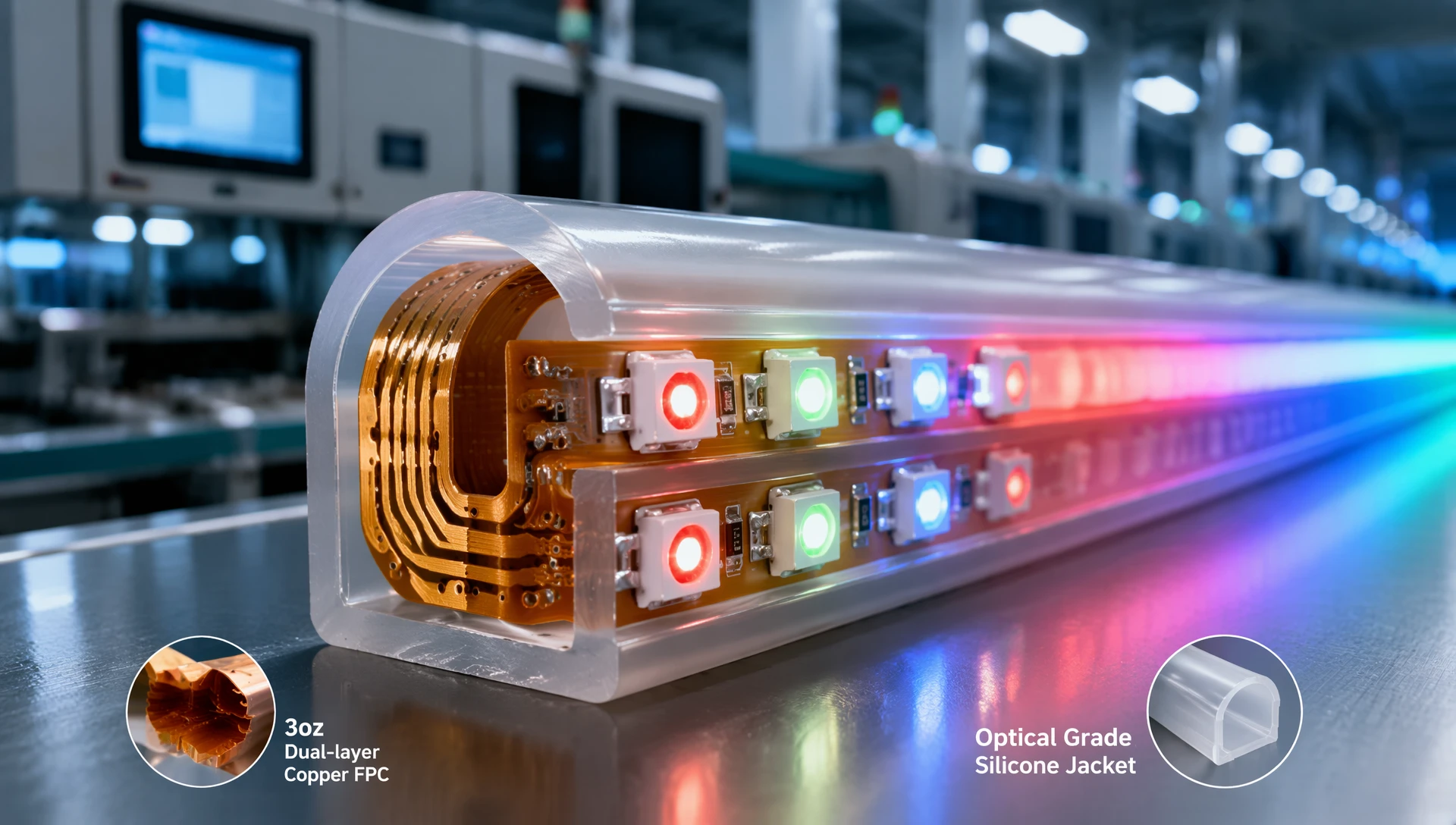
The outer diffusion sleeve is a critical defense barrier for any outdoor sign. For years, the sign industry relied on polyvinyl chloride (PVC) formulations because they were cheap and easy to bend. However, modern commercial projects have shifted completely to high-purity, optical-grade silicone co-extrusion systems.
When buying signage components for major infrastructure projects, sourcing teams should look at the long-term material properties rather than just the initial purchase price. The table below outlines the core differences between standard PVC and industrial-grade silicone:
| Performance Property | Standard PVC Extrusion | Industrial-Grade Silicone Extrusion | Project Impact |
| UV Stability (ASTM G154) | Discolors and yellows within 12–18 months | No yellowing or degradation over 10 years | Prevents shifts in brand colors and keeps light output high. |
| Thermal Operating Range | -10 degrees C to +45 degrees C (becomes brittle) | -50 degrees C to +150 degrees C (remains flexible) | Prevents cracks in cold climates and melting in hot environments. |
| Chemical Resistivity | Highly vulnerable to industrial solvents and acid rain | Inert to salt spray, chlorine, ozone, and acid rain | Ideal for coastal areas, gas stations, and industrial zones. |
| Outgassing Profile | Releases chlorine gas, accelerating diode corrosion | Zero outgassing, chemically stable environment | Extends the life of internal LED chips and gold wires. |
The reason PVC fails in outdoor applications lies in its molecular structure. Solar ultraviolet radiation breaks down the polymer chains in PVC through a process called dehydrochlorination. This chemical reaction creates conjugated double bonds that absorb blue light, turning the housing yellow and brittle.
Industrial silicone features a highly stable silicon-oxygen (Si-O) backbone. The bond energy of a Si-O bond is roughly 460 kJ/mol, which is much stronger than the carbon-carbon (C-C) bonds found in PVC (around 348 kJ/mol). As a result, solar UV rays cannot break down premium silicone, allowing the sign to maintain clean, vibrant colors for over a decade.
For global brands, maintaining strict color accuracy across all locations is essential. If a sign displays uneven colors or dark spots along its length, it damages the brand's visual identity. Achieving high color uniformity requires advanced optical engineering inside the neon tube.
To create a smooth, continuous line of light without visible hot spots, the distance between internal LED chips must match the thickness of the diffusion layer.
Diode Density: Commercial-grade systems use at least 120 to 144 high-efficiency surface-mount diodes (SMDs) per linear meter.
Chip Type: Using advanced SMD 3838 or SMD 5050 three-in-one RGB packages provides excellent color mixing right at the light source, preventing rainbow separation lines.
Binning Practices: Premium manufacturers follow strict 3-step MacAdam Ellipse color-binning processes. This ensures every batch of signs maintains matching color wavelengths, regardless of the production date.
Maintaining brightness over time is evaluated using the LM-80 standard. High-quality systems maintain 80% of their initial light output past 50,000 hours of runtime (L80B10). To achieve this, the internal flexible printed circuit (FPC) board must handle heat effectively. Diodes that run hot lose brightness quickly and shift in color. Using an FPC with a high thermal conductivity rating allows heat to move efficiently out of the sealed silicone tube, protecting the sensitive LED junctions.
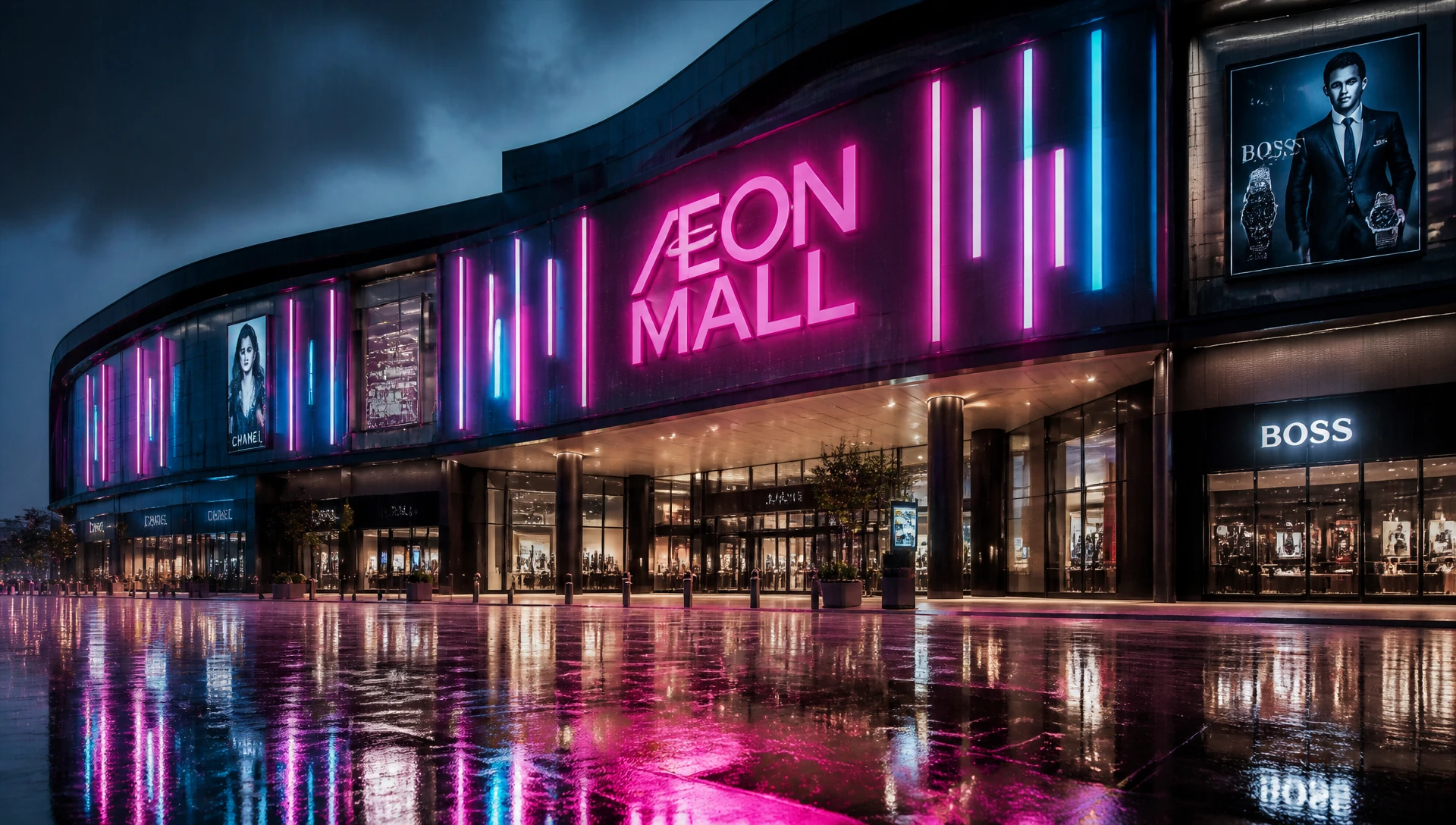
Signs installed on tall buildings or open storefronts must endure extreme weather conditions. Rain, wind-driven moisture, and physical impacts can easily break low-grade signs.
True commercial systems feature robust IP67 or IP68 waterproof ratings. Achieving these ratings requires more than just adding manual silicone glue to the end caps.
Advanced manufacturing lines use automated dual-injection molding processes to bond the end caps directly to the main body. This technique creates a continuous, single-piece structural barrier that blocks water, even during high-pressure cleaning or heavy rain storms.
In busy public areas, signs must resist physical impacts from vandalism, strong winds, or flying debris.
Impact Testing: Top-tier silicone extrusions are rated to IK08 shock standards, meaning they can absorb direct impacts without cracking or short-circuiting.
Structural Mounts: Heavy-duty signs are secured into heavy-gauge marine-grade anodized aluminum channels or flexible stainless steel locking clips. These mounting systems keep the neon tubes firmly in place during high winds.
Large signage systems often cover hundreds of linear meters around building perimeters. Connecting these long runs requires careful electrical planning to prevent voltage drop and power issues.
When running low-voltage DC power across long distances, the natural resistance of the copper traces causes the voltage to drop towards the end of the line. This drop reduces brightness and causes color shifts at the far end of the sign.
To minimize this issue, commercial-grade systems use 24V DC or 48V DC power distribution instead of older 12V architectures. Higher operating voltages lower the overall current draw, which significantly reduces voltage drop and cuts down on system heat.
To maintain uniform brightness across runs longer than 15 meters without adding extra power lines, manufacturers embed miniature constant-current integrated circuits (ICs) directly onto the flexible circuit board.
Unlike basic setups that only use resistors, constant-current ICs adjust to small voltage changes. They keep the current flowing through every LED chip perfectly steady, ensuring the sign looks uniform from the first meter to the last.
For global procurement managers, picking the right manufacturing partner is just as important as choosing the right product specifications. Working with a dedicated, asset-heavy factory helps reduce supply chain risks and ensures consistent product quality.
Before choosing a supplier for bulk signage projects, procurement teams should review the factory's automated production and testing equipment:
Automated SMT Production Lines: Automated pick-and-place machines eliminate manual assembly mistakes, ensuring durable solder joints across every batch.
Advanced Environmental Testing Chambers: Reliable factories use thermal shock ovens, salt spray testers, and high-pressure water test areas to verify that their designs hold up under real-world conditions.
Integrating Smart Controls: Modern signs must easily connect with external control platforms. High-quality RGB tube systems are fully compatible with standard DMX512 controllers, wireless Art-Net interfaces, and automated building networks.
For a closer look at how modern production facilities use automated quality control and specialized testing systems to build long-lasting signs, check out our comprehensive report on
Our commercial-grade systems are built using high-purity, optical-grade silicone co-extrusions. This premium silicone material has an incredibly stable silicon-oxygen molecular backbone that resists UV damage, preventing the yellowing and color shifts common in low-grade PVC alternatives.
By utilizing 24V DC constant-current internal FPC architectures, our advanced systems can run up to 15 to 20 meters from a single power connection point. This design maintains perfectly uniform brightness and color across the entire installation without requiring complex power networks.
Yes. Our flexible neon systems are engineered with clear, precise cut marks along the side or bottom of the housing. We provide complete outdoor sealing kits and clear installation instructions, allowing your field technicians to easily adjust lengths on-site while maintaining a secure, weather-resistant seal.
To build a reliable, long-lasting outdoor brand display, you need to use rugged, high-performance components. Investing in premium commercial-grade rgb neon tube signage systems from a dedicated manufacturer helps you avoid expensive field repairs, satisfy local safety codes, and ensure your visual displays perform perfectly for years.
Are you looking to streamline your component sourcing, request custom product samples, or get a competitive factory-direct quote for a major project? Our technical engineering team is here to assist you with layout planning, electrical calculations, and custom options tailored to your project blueprints.

It provides all-round service for customers
and users 24 hours a day.
Enter your email for exclusive offers
and information on new upcoming products.


