


Time:2026-03-03
In the global lighting industry, traditional glass neon is gradually being replaced by a more efficient, safer, and flexible solution — LED neon light. For factory buyers, project contractors, wholesalers, and commercial developers, this shift is not just a trend but a strategic upgrade in performance, cost control, and long-term sustainability.
Unlike conventional neon tubes filled with gas and powered by high-voltage transformers, led neon lights use advanced LED chips embedded inside flexible silicone housing. This technology maintains the smooth, continuous glow associated with traditional neon while dramatically improving durability, energy efficiency, and installation convenience.
For factory-level clients managing bulk procurement, architectural lighting projects, retail chains, and signage production, understanding the advantages of LED neon technology is essential. This comprehensive guide explains product types, structural differences, industrial applications, and sourcing strategies — tailored specifically for commercial and manufacturing buyers.
In large-scale commercial and industrial projects, lighting systems must balance performance, durability, safety, and long-term cost efficiency. Led neon lights are specifically engineered to meet these requirements while maintaining the visual appeal traditionally associated with neon tubes.
Unlike glass neon, LED neon lights use high-efficiency SMD LED chips encapsulated within flexible silicone or PVC extrusion. This structural design eliminates the fragility of glass while delivering uniform, continuous illumination without visible hotspots. For factory buyers managing architectural lighting installations, this consistency is critical in ensuring a professional finish across long linear outlines.
In commercial environments such as shopping centers, office buildings, and hospitality projects, LED neon lighting enhances structural depth and spatial definition. Linear light accents emphasize building geometry, guiding visual attention to key design elements.
In industrial parks and logistics facilities, LED neon lighting improves safety by clearly marking pathways, perimeters, and operational zones. Because these systems typically operate at low voltage (12V or 24V), they reduce electrical risk while simplifying compliance with international safety standards.
For procurement managers, the key advantage lies in lifecycle cost reduction. With an operational lifespan reaching up to 50,000 hours, LED neon lights significantly lower maintenance frequency compared to traditional neon installations.
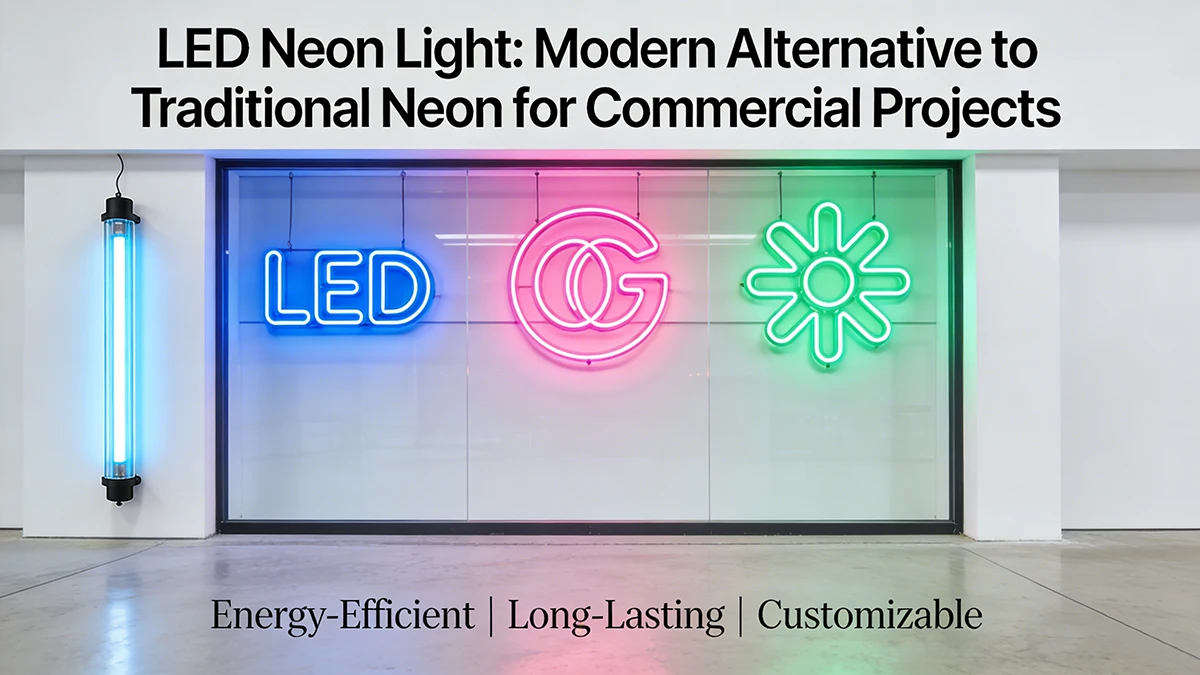
Led neon rope light is one of the most versatile configurations within the LED neon category. Designed for curved and freeform applications, it allows installers to follow architectural contours without complex fabrication.
The internal LED layout is engineered to maintain uniform brightness across the entire rope length. Advanced silicone diffusion layers ensure a soft, dot-free glow that closely resembles classic neon tubes.
In hospitality and entertainment venues, neon LED rope light is frequently used to create immersive lighting atmospheres. From hotel lobby ceilings to bar counters and outdoor terraces, flexible rope lighting adapts easily to complex surfaces.
For factory buyers and distributors, rope-format neon LED lighting simplifies inventory management. Standard reel packaging supports bulk transportation, while flexible cutting intervals reduce waste during installation. This combination improves both logistics efficiency and on-site productivity.
Neon LED strip lights are particularly suitable for projects requiring precise linear accents and narrow installation channels. Compared to standard exposed LED strips, neon LED strip lights provide enhanced protection through full encapsulation.
This protective housing improves resistance to dust, humidity, and UV exposure, making the product suitable for both indoor and outdoor applications.
Architectural designers often specify neon LED strip lights for:
Ceiling coves
Staircase handrails
Corridor outlines
Retail shelving systems
Curtain wall edges
In large real estate developments, maintaining consistent color temperature and brightness across hundreds of meters is essential. High-quality neon LED strip lights ensure batch-to-batch consistency, which is critical for factory-level procurement.
Customization is one of the strongest competitive advantages of LED neon technology. Custom neon LED lights can be produced according to exact project specifications, including:
Specific lengths
Custom bending directions (top bend or side bend)
Adjustable brightness levels
RGB, RGBW, or tunable white configurations
IP65, IP67, or IP68 waterproof ratings
For signage manufacturers and brand developers, customization allows precise replication of logos, typography, and corporate colors. For industrial buyers, OEM production ensures compatibility with existing power systems and control protocols.
THINK TEAM KING supports full ODM design services, enabling factory buyers to develop proprietary neon lighting solutions tailored to regional market demands.
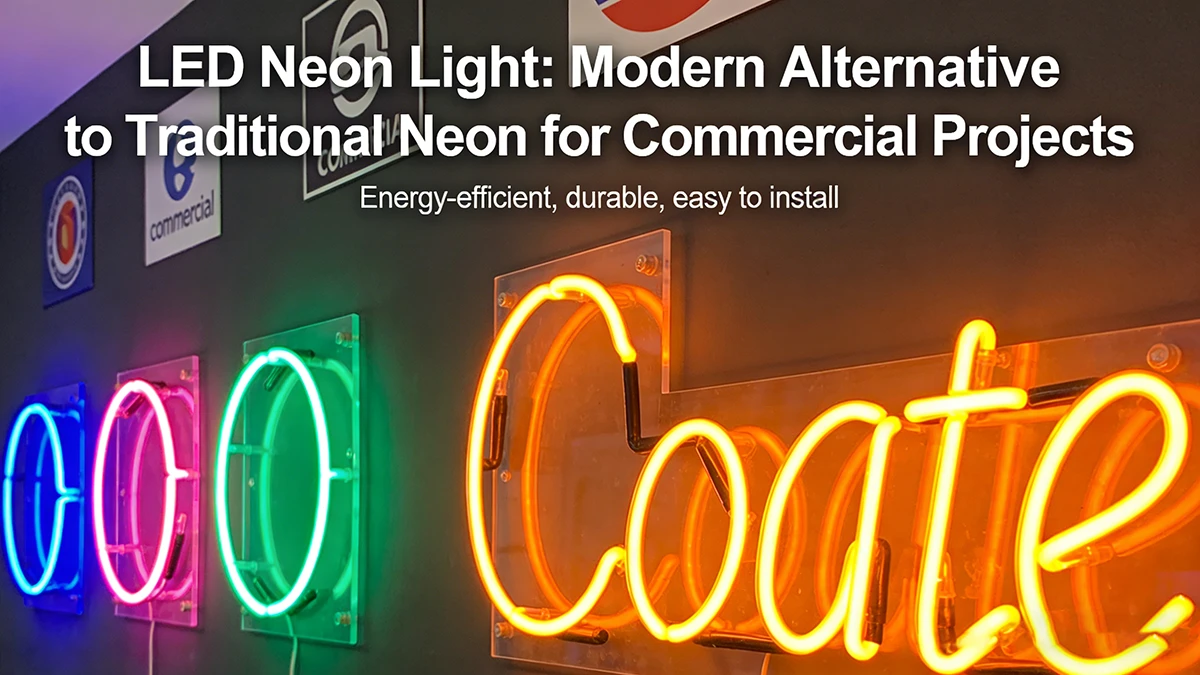
As project requirements become more technical, separated neon strip designs are increasingly preferred by professional contractors and factory clients.
A Separated silicone neon strip features a modular structure where the LED strip and silicone diffuser are produced as independent components. This structure offers several engineering advantages.
First, improved heat dissipation enhances LED lifespan. By separating the LED board from the outer silicone housing, thermal buildup is minimized.
Second, maintenance becomes more cost-efficient. In case of LED malfunction, the internal strip can be replaced without discarding the entire silicone profile. For large commercial installations, this dramatically reduces replacement expenses.
The Separated LED neon strip format provides greater flexibility in electrical configuration. Contractors can customize internal LED density, wattage, and control systems without altering the external profile dimensions.
For industrial projects requiring specific lumen output targets, this modular approach ensures performance customization while maintaining consistent exterior design.
This design is especially suitable for:
Shopping mall perimeter lighting
Smart building facades
Exhibition booth frameworks
Commercial interior feature lines
The Separated 8-mm neon strip is engineered for compact and precision lighting applications. With its slim profile, it fits into narrow channels and tight architectural spaces.
Applications commonly include:
Letter signage outlines
Retail product displays
Decorative furniture edges
High-end cabinetry
Despite its small size, the separated 8-mm neon strip maintains uniform brightness and stable performance, making it suitable for commercial-grade installations.
Dynamic lighting is increasingly demanded in commercial real estate and entertainment environments. The Separated RGB neon strip allows independent control of red, green, and blue LED channels, enabling:
Color transitions
Themed lighting programs
Event-based color adjustments
Interactive facade displays
When integrated with DMX or programmable controllers, RGB neon strips become powerful visual communication tools. For factory buyers bidding on large commercial projects, offering RGB solutions enhances competitive positioning.
The DIY separated neon strip format supports flexible on-site configuration. Contractors can assemble, cut, and install according to project requirements, reducing pre-fabrication complexity.
This modular design is particularly attractive for:
Exhibition contractors
Retail store fit-out companies
Commercial renovation projects
Temporary event installations
For wholesalers, DIY separated neon strip systems broaden product versatility and improve distribution adaptability.
From a procurement perspective, LED neon lighting provides measurable commercial benefits:
LED neon lights consume up to 70% less power than traditional neon. For large-scale installations operating daily, this significantly reduces electricity costs.
Impact-resistant silicone housing eliminates common breakage issues associated with glass neon. This reduces replacement frequency.
LED neon systems can be produced in bulk with consistent quality. OEM customization supports branding and export requirements.
Low-voltage operation improves safety standards and simplifies compliance with international electrical certifications.
THINK TEAM KING focuses on high-quality LED neon lighting solutions for international factory clients. The company provides:
OEM and ODM manufacturing
Bulk production capacity
Strict quality inspection
CE and RoHS certification
Competitive wholesale pricing
Stable delivery schedules
With extensive export experience, THINK TEAM KING supports commercial developers, lighting distributors, and signage manufacturers worldwide.
To connect LED neon lights, first ensure you use the correct voltage power supply (12V or 24V). Cut the strip at designated cutting marks, connect the appropriate connectors, and secure wiring properly. For waterproof installations, seal connectors with end caps. THINK TEAM KING provides technical manuals and support for bulk buyers.
Installation involves measuring the required length, mounting using clips or aluminum channels, connecting to a compatible power supply, and sealing for outdoor protection if needed. THINK TEAM KING offers professional installation guidance for commercial projects.
For LED neon rope lights, secure mounting clips along the desired surface, gently bend the rope according to design requirements, connect to a low-voltage transformer, and test illumination before final fixing. THINK TEAM KING provides bulk installation solutions and customized accessories for industrial clients.
【Contact us to get a free quote】
Related Articles

It provides all-round service for customers
and users 24 hours a day.
Enter your email for exclusive offers
and information on new upcoming products.


