


Time:2026-06-18
The international lighting industry is progressing rapidly toward environmental compliance and long-term material sustainability. For global distributors and architectural lighting designers, selecting manufacturing vendors involves more than evaluating unit costs. The primary challenge entails avoiding operational risks such as premature yellowing, structural cracking, and voltage drops while adhering to strict environmental mandates in Western Europe and North America. Traditional linear profiles manufactured with legacy PVC plastic bases increasingly represent a major commercial liability due to toxic halogen emissions, limited lifespans, and poor thermal stability under extreme weather conditions.
The definitive solution requires aligning procurement with certified eco-friendly silicone neon strip production partners. Shifting sourcing directly to an established factory ensures that your supply chain receives 100% halogen-free, co-extruded silicone linear hardware. This premium material compound operates cleanly, delivers superior thermal stability, and fully complies with RoHS and REACH regulations. Consequently, B2B importers can protect project margins, satisfy regulatory audits, and supply sustainable global developments with complete confidence.
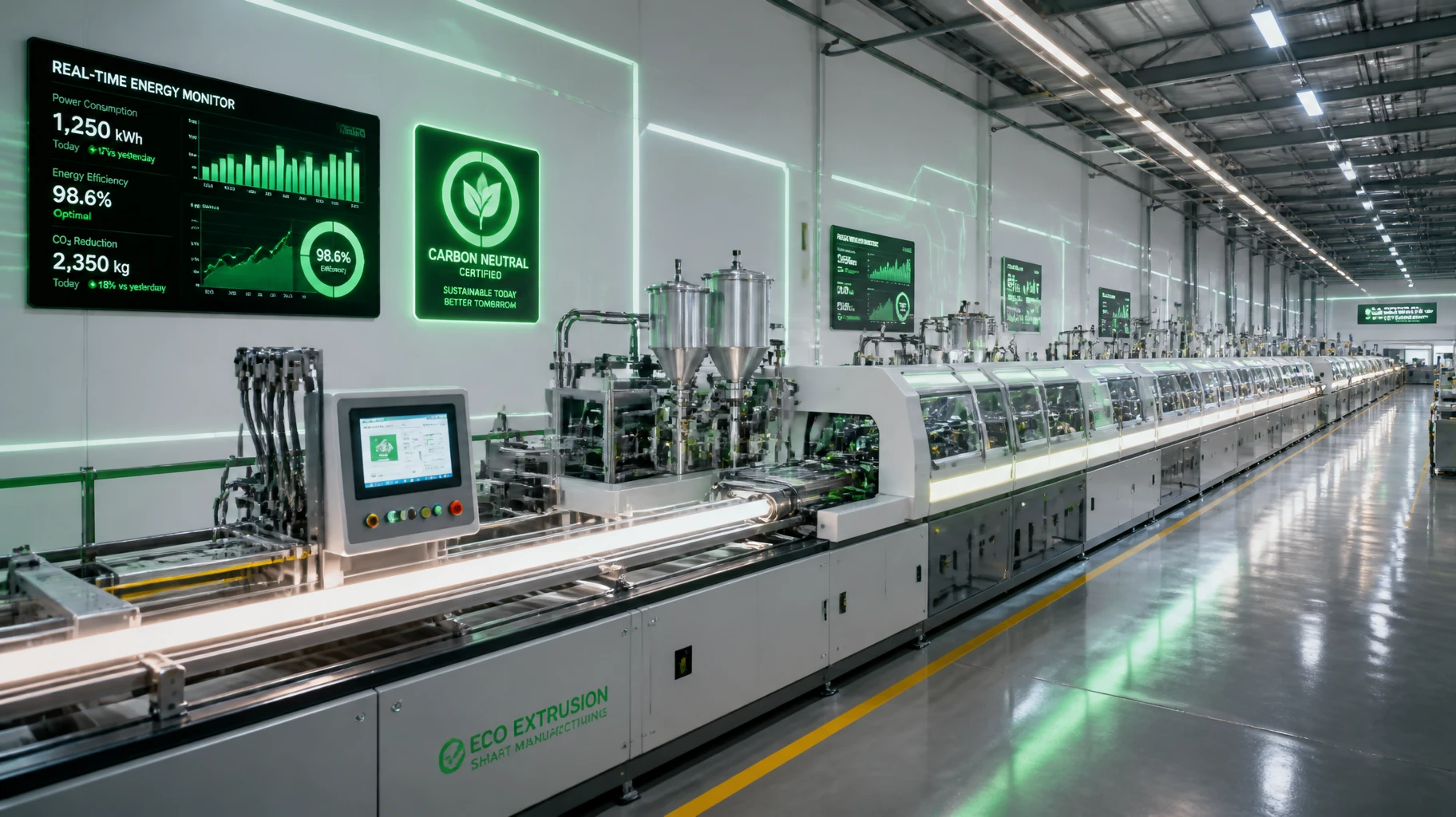
To establish a resilient supply chain, B2B procurement professionals must analyze basic material science. Understanding why high-performance silicone outperforms standard retail-grade plastics is essential for risk mitigation.
Standard flexible luminaires rely heavily on PVC plasticizers to achieve mechanical flexibility. However, PVC exhibits severe structural weaknesses when deployed in commercial or outdoor environments:
Toxic Thermal Decomposition: PVC contains hazardous halogens. In a commercial building fire, burning PVC releases highly toxic, corrosive hydrogen chloride gas ($HCl$). This characteristic renders it unsuitable for public indoor spaces, transit hubs, and certified green buildings.
Accelerated UV Degradation: Continuous solar radiation damages the plasticizers within PVC rapidly. Consequently, the protective jacket develops a dull amber tint within 6 to 12 months. This discoloration restricts light output, alters color temperatures, and degrades building facades.
Thermal Fracturing: PVC possesses a narrow operational temperature range. The material becomes brittle and cracks during cold winters (below $-10^\circ\text{C}$). In hot summer climates, it loses structural rigidity, allowing moisture penetration to compromise the internal circuit board.
Premium manufacturing partners eliminate these vulnerabilities completely b
y utilizing 100% high-purity, gas-phase silicone. Advanced production facilities employ high-temperature, integrated co-extrusion technology to encase internal electronics within a non-toxic, structurally stable jacket.
Silicone is chemically inert and entirely halogen-free. When exposed to extreme thermal stress, it does not release hazardous gases or corrosive smoke. Its unique silicon-oxygen ($Si-O$) chemical backbone provides exceptional bond energy. This molecular strength far exceeds the carbon-carbon ($C-C$) bonds found in standard PVC. Therefore, an eco-friendly silicone neon strip effectively resists intense UV rays, repels atmospheric ozone, and maintains optimal transparency and elasticity for over a decade in any climate.
Sourcing directors, procurement managers, and technical auditors require empirical data to make informed purchasing decisions. The specification matrix below illustrates the performance divergence between entry-level retail strips and professional-grade silicone systems:
| Technical Parameter | Standard PVC Linear Strips | Premium Eco-Friendly Silicone Neon | Supply Chain & Project Advantage |
| Chemical Base | PVC Compound with Halogens | 100% Gas-Phase Silicone (Halogen-Free) | Ensures full compliance with global environmental laws (RoHS, REACH, California Prop 65). |
| UV Yellowing Index | Yellows severely within 6-12 months | Delta E ($\Delta E$) $< 2$ over 5 Years | Sustains pristine optical clarity; eliminates the risk of costly warranty replacement claims. |
| Environmental Safety | Emits toxic, corrosive smoke | Non-toxic, self-extinguishing ash | Ideal for high-traffic public infrastructure and green building certifications. |
| Waterproof Rating | IP65 (Glued PVC End-Caps) | True IP67 / IP68 (Molded Integration) | Guarantees absolute operational safety on outdoor walls and submerged installations. |
| Operating Temperature | $-10^\circ\text{C}$ to $40^\circ\text{C}$ | $-40^\circ\text{C}$ to $60^\circ\text{C}$ Continuous | Functions flawlessly from freezing sub-zero environments to intense desert heat. |
| Bending Axis Flexibility | Cracks or warps under structural stress | Minimum Bending Radius down to 20mm | Adapts smoothly to complex architectural geometry without damaging internal circuits. |
| Circuit Board Base Weight | 1-oz Standard Copper Track | 3-oz Rolled Annealed Dual-Copper FPC | Prevents voltage drops; maintains uniform lumen output across extended linear runs. |
| System Lifespan (L70) | 15,000 to 20,000 Hours | Over 50,000 Hours Certified | Reduces long-term operational maintenance costs and component replacements to zero. |
Identifying an optimal production partner requires a thorough verification of a factory’s internal engineering capabilities, specifically regarding circuit design and optical quality control.
Standard retail strips frequently exhibit visible voltage drops along extended architectural installations. Thin, 1-ounce circuit tracks generate high electrical resistance. As current travels down the linear run, energy dissipates as heat. This resistance causes the far end of the illumination line to appear noticeably dimmer and induces color temperature shifts. Furthermore, excessive thermal accumulation stresses the LED diodes, accelerating local component failure.
Professional eco-friendly silicone neon strip production partners resolve this challenge effectively. They engineer custom, heavy-duty 3-ounce rolled annealed dual-copper Flexible Printed Circuits (FPC). This thick copper pathway serves as an efficient electrical conduit, carrying low-voltage current uniformly over continuous 10-meter to 15-meter runs from a single power source. This advanced architecture reduces internal operating temperatures by up to $15^\circ\text{C}$ and improves electrical efficiency by 22%. This engineering configuration optimizes power consumption and extends the system's operational lifespan.
Low-end linear hardware often presents a pixelated appearance through the diffuser jacket, compromising the clean aesthetics of modern architectural designs. To deliver a smooth, premium visual effect without reducing luminous efficacy, specialized factories utilize high-density layouts containing at least 140 high-efficiency SMD2835 or SMD3838 LED diodes per meter.
This close component spacing ensures that individual light distribution cones overlap precisely within the co-extruded silicone jacket. The high-transparency silicone functions as a premium diffusing lens, blending the light seamlessly to project a solid, unbroken line of illumination with zero dark spots and excellent color rendering (CRI $> 90$).
The Project Context: In early 2026, an international development consortium initiated the construction of a large, eco-certified commercial complex in a major coastal city. Architectural specifications required over 8,000 meters of continuous exterior accent lighting along the building's facade and public boardwalk. Because the site was exposed to intense salt spray, high humidity, and direct sunlight, the project's environmental review board prohibited the use of standard PVC-based lighting systems.
The Sourcing Challenge: The initial electrical contractor attempted to optimize procurement costs by acquiring low-cost, glue-sealed linear lights from a regional trading company. Within four months of field deployment, more than 18% of the test installations failed completely. Ocean moisture breached the low-grade glue seals, causing immediate short-circuits. Additionally, intense solar exposure caused the plastic jackets to yellow rapidly, which degraded the property's aesthetic value.
The Production Solution: Project executives assumed direct control of the supply chain, transferring the entire manufacturing contract to the advanced production facility of THINK TEAM KING. They selected the manufacturer's marine-grade eco-friendly silicone neon strip series.
The Real-World Outcomes: The factory's advanced co-extrusion technology provided a flawless, airtight IP67 protective jacket that completely barred moisture and salt-spray penetration. The 3-ounce rolled copper FPC enabled installation crews to complete long, continuous runs with perfectly uniform brightness and zero color shifting across the facade. The halogen-free, non-toxic material composition easily satisfied strict green building criteria, while the high-efficiency circuit design reduced daily energy consumption by 22%, delivering substantial operational savings for the property management firm.
When evaluating potential manufacturing partners in competitive lighting hubs, procurement teams must look beyond basic marketing brochures. Sourcing professionals should audit three critical factory capabilities:
Integrated SMT and Extrusion Infrastructure: Verify that the supplier operates automated Surface Mount Technology (SMT) lines and high-speed silicone co-extrusion tunnels within a single, unified facility. Segmenting production across separate external workshops introduces quality variances and unnecessary transactional markups.
Single-Bin LED Chip Sorting Protocols: Top-tier manufacturers enforce strict single-bin MacAdam Ellipse sorting systems. This industrial quality control process guarantees that every reel of a specific color temperature (such as $3000\text{K}$ or $2700\text{K}$) matches identically across multiple shipping containers, eliminating visible color variations on-site.
Rigorous Quality Control Testing Laboratories: A reliable production partner must provide verifiable empirical testing data. Demand to review certified lab reports for high-temperature aging, thermal shock testing, UV weather testing, and integrating sphere optical analysis prior to finalizing financial deposits.
What makes an eco-friendly silicone neon strip comply with green building standards like LEED?
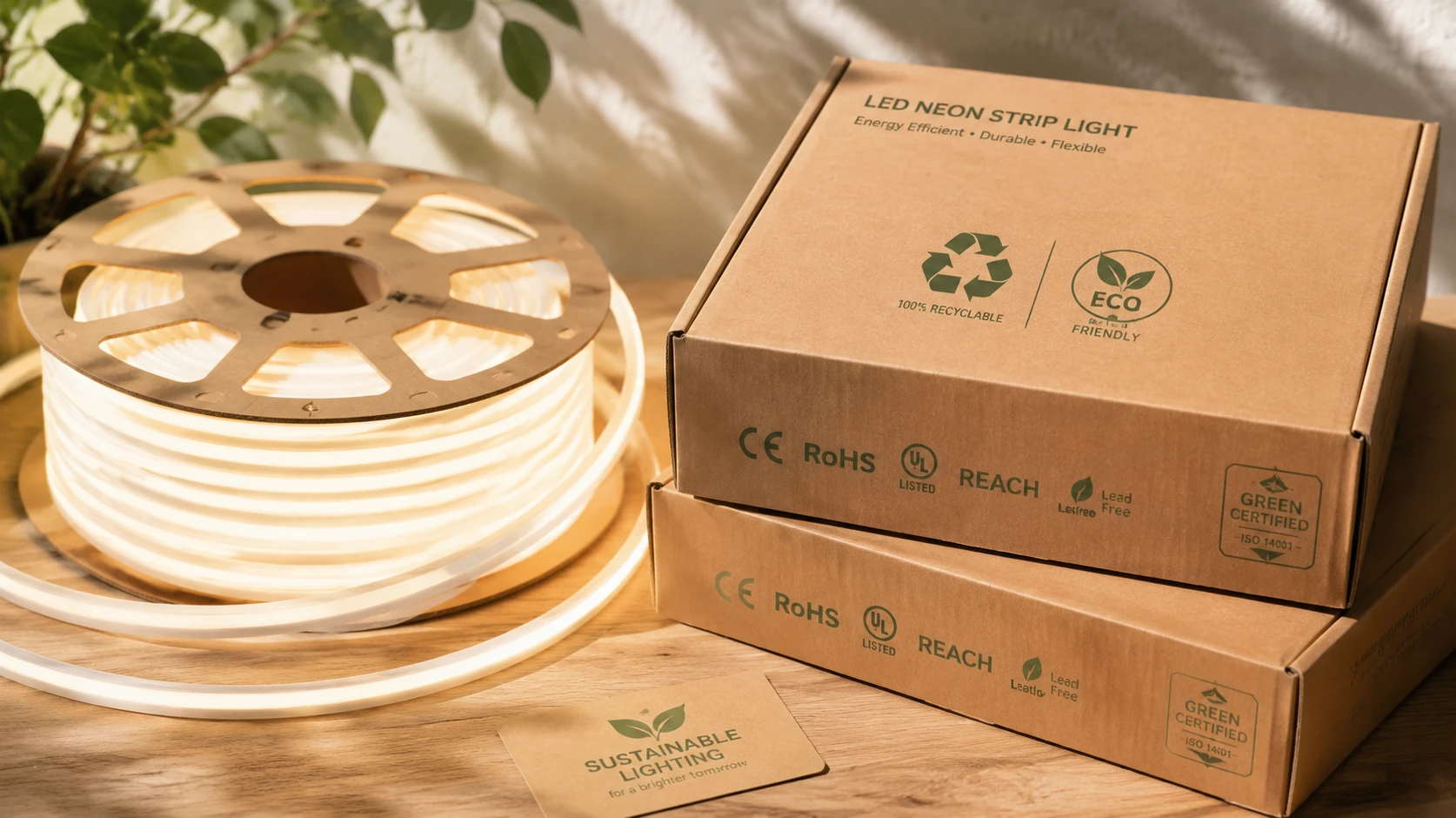
Traditional PVC profiles contain harmful halogens and heavy metals. In contrast, our silicone neon strips are manufactured by THINK TEAM KING using 100% halogen-free, non-toxic gas-phase silicone. They fully comply with RoHS and REACH standards, release no dangerous VOC gases during operation, and are completely recyclable, making them ideal for eco-certified construction projects.
Can these silicone neon strips be cut and resealed on-site without losing their IP67 waterproof rating?
Yes. Our flexible silicone channels feature precise field-cut markings along the side profile. When custom lengths are cut on-site, installation teams must apply our specialized factory silicone mastic gel into the injection-molded end-caps before locking them closed. This step completely seals the copper contacts, preserving true IP67 waterproof protection against heavy rain and moisture.
How does THINK TEAM KING support international distributors with large-scale OEM orders?
THINK TEAM KING specializes in manufacturing premium OEM/ODM linear systems for global industrial suppliers, engineering contractors, and custom sign manufacturing brands. We run fully automated extrusion lines that guarantee stable wholesale lead times, exact color binning, and flexible customization for bending axes (including top-bend, side-bend, and 3D flexible profiles). Every manufacturing batch passes strict quality checks, comes packed in eco-friendly packaging, and features low standby power consumption to meet international efficiency standards.
A comprehensive evaluation of modern commercial project specifications confirms a vital operational fact. Aligning with advanced silicone extrusion factories represents the only effective strategy to protect long-term wholesale investments. Cheap PVC strip lights often present an attractive upfront price on initial quotation sheets. However, their tendency to yellow under UV radiation, limited operational lifespans, and toxic environmental profiles quickly transform them into a costly legal and financial liability for engineering firms and product distributors.
Upgrading your corporate supply chain to high-density, 3-ounce copper silicone systems built inside certified production facilities delivers a superior, dot-free aesthetic. Selecting an experienced manufacturer for your eco-friendly silicone neon strip requirements effectively mitigates field failures, ensures structural compliance, and eliminates costly maintenance claims.
Are you looking to secure a reliable supply for a major sustainable commercial development, optimize an international procurement rollout, or upgrade your wholesale inventory with high-end led strip lights and premium led neon lights systems? Our engineering desk is prepared to analyze your project blueprints, calculate voltage distributions, and provide tailored, factory-direct wholesale pricing.

It provides all-round service for customers
and users 24 hours a day.
Enter your email for exclusive offers
and information on new upcoming products.


