



Commercial lighting buyers today need more than “bright.” For signage manufacturers, contractors, and project procurement teams, the right linear lighting must deliver uniform illumination, long service life, easy installation, and stable quality across batches. That’s exactly why Flexible neon strips have become a preferred solution for modern commercial applications—especially where traditional LED strips show visible LED dots and glass neon is too fragile and costly to maintain.
Unlike classic neon tubes, LED neon solutions use LED light sources mounted on a flexible circuit board and enclosed in a protective diffuser—commonly silicone—to create a continuous neon-like glow. This construction gives commercial projects the aesthetic impact of neon with the practical benefits of LED technology: lower energy consumption, safer low-voltage operation, and higher durability.
As a manufacturer-focused solution provider, TTKLED Neon supplies Flexible neon strips for commercial use with multiple specifications—covering waterproof performance, voltage options, and cuttable designs—so factories and project clients can standardize quality while keeping installation efficient.
What Are Flexible Neon Strips?
Flexible neon strips (often called neon flex LED strips) are linear LED lighting products engineered to replicate the smooth, continuous glow of neon—without the fragile glass and high-voltage requirements. The core
structure typically includes:
LEDs mounted on a flexible PCB (printed circuit board)
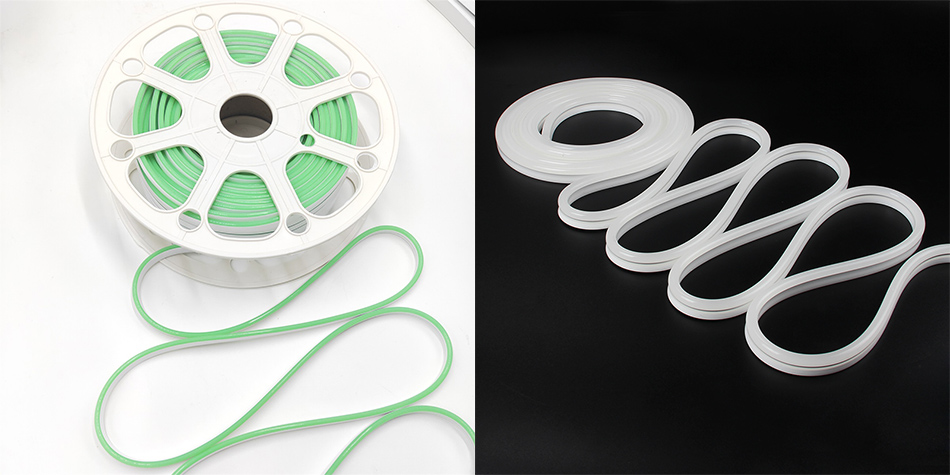
A diffuser housing (often silicone) that softens and evens the light output
Options for bending direction (top-bend or side-bend) depending on installation needs
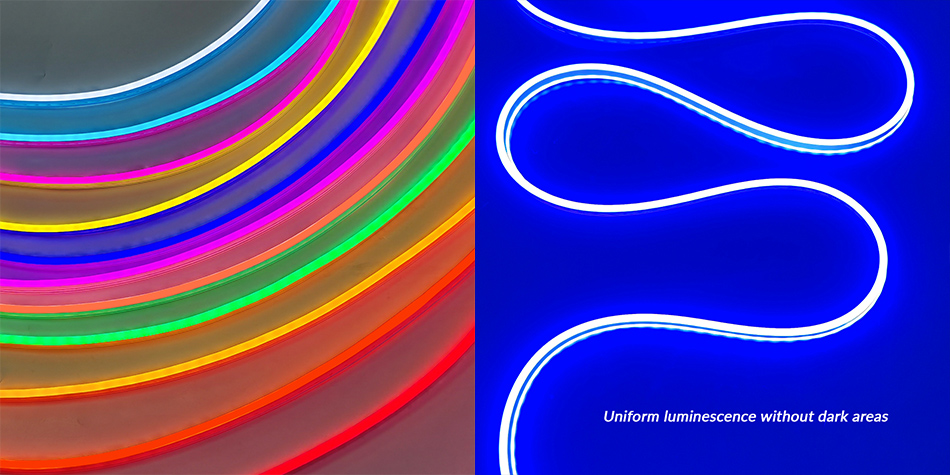
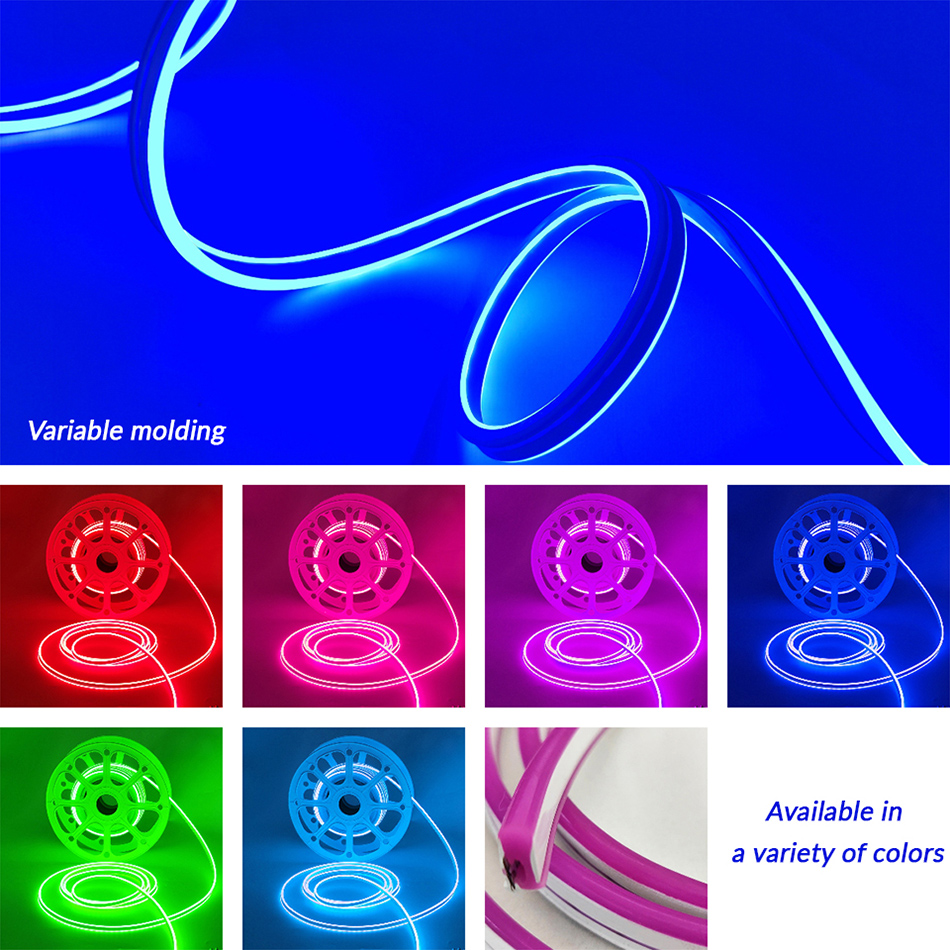
This structure produces a “dot-free” appearance—one of the biggest reasons commercial buyers choose neon flex over standard LED strip lights in visible installations like branding walls, storefront signage, and architectural outlines.
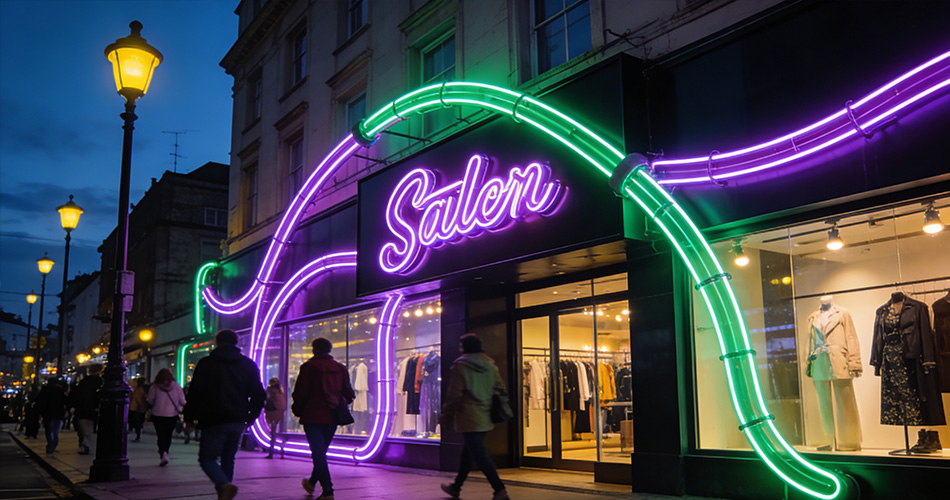
Why Commercial Projects Prefer Neon Flex Over Standard LED Strip Lights
When buyers compare neon flex and standard LED strip lights, the decision often comes down to light quality, durability, and installation environment.
1) Cleaner Light Output (No “LED Dots”)
Standard LED strips may show individual diodes, especially when installed in direct view. Flexible neon strips use a diffuser housing to create a continuous line of light—ideal for:
Logos and signage outlines
Retail feature walls
Architectural contours visible from street level
2) Better Protection for Commercial Installations
Commercial environments can be harsh: dust, cleaning chemicals, vibration, and frequent foot traffic. Silicone housings help protect internal components from moisture and physical impact, making neon strips more dependable in real-world usage.
3) Energy Efficiency for Long Daily Runtime
For storefronts, hotels, restaurants, and shopping centers, lighting can run 10–16 hours per day. Flexible neon strips provide high visual impact while remaining energy efficient, helping reduce operating costs for commercial projects.
Key Product Types for B2B Buyers
To help you specify the right solution, here are the most requested configurations for commercial and project orders.
Waterproof Flexible Silicone Neon Strips
Outdoor and semi-outdoor projects often require enhanced sealing. Waterproof flexible silicone neon strips are designed for environments where rain, splashes, or humidity are expected—such as:
Building outlines and façade accents
Outdoor signage and wayfinding
Canopies, entrances, and storefront perimeters
For projects requiring stronger protection—such as heavy rain exposure or wash-down zones—many buyers select higher ratings such as IP67 silicone neon led strip options. Always match the IP rating to the real installation risks and the project’s waterproof requirements.
12V Low Voltage Flexible Neon Strips
For signage factories and contractors, 12V low voltage flexible neon strips are popular because they support safer installation and easier integration with common power supplies and controllers. Low-voltage design is especially useful for:
Retail signage and indoor branding walls
POP displays and shopfitting projects
Hospitality interiors (bars, restaurants, hotels)
Low-voltage systems also simplify maintenance and reduce risk during installation—important when multiple signs are installed across many sites.
Cuttable Flexible Neon Strip Lights
Project installations rarely match standard roll lengths perfectly. Cuttable flexible neon strip lights allow teams to reduce waste, speed installation, and improve on-site flexibility. These products are designed to be cut at defined intervals (based on LED circuit design), which is valuable for:
Custom shapes and channel letter projects
Corner turns and perimeter tracing
Modular architectural segments
Important: Always follow cut marks and sealing instructions to maintain waterproof performance after cutting.
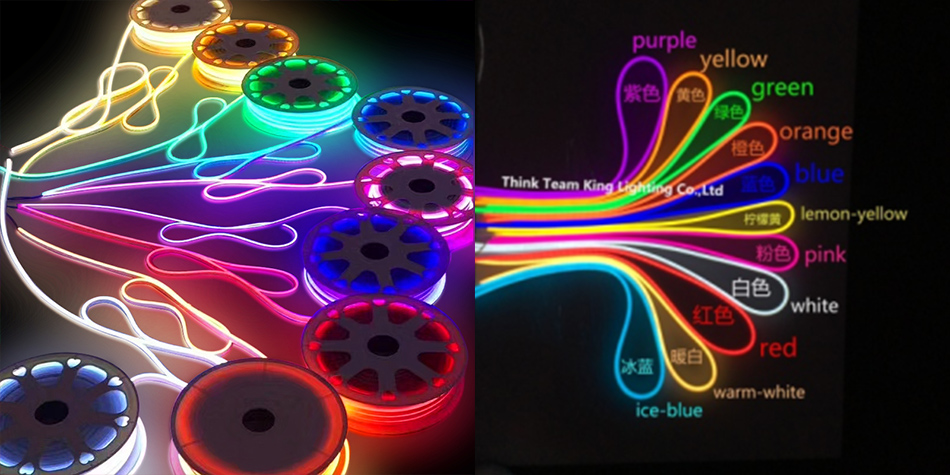
Flexible RGB Neon Light Strips
For entertainment venues, retail campaigns, themed spaces, and dynamic façades, Flexible RGB neon light strips deliver color-changing effects with smooth illumination and strong visual consistency. RGB is often chosen for:
Brand activations and pop-up stores
Stage and nightlife venues
Feature walls requiring programmable scenes
For advanced projects, buyers may also request compatibility with specific control systems depending on the overall lighting design.
Flexible Neon Strips for Commercial Use: Common Applications
Commercial buyers use Flexible neon strips for commercial use when they need both premium light appearance and dependable performance.
Signage & Branding
Storefront logos and brand names
Channel letters and outline lighting
Retail window features and promotional displays
Architectural Outlines
Building edges, façade lines, and soffits
Cove lighting and accent borders
Exterior visual identity for commercial properties
Retail & Hospitality Interiors
Feature walls behind reception desks
Bar counters, ceiling lines, and display accents
Photo-friendly décor elements supporting customer experience
What to Specify When Sourcing Flexible Neon Strips in Bulk
If you are a distributor, sign factory, contractor, or OEM buyer, specifying correctly upfront reduces revisions, delays, and field failures. Key points include:
Bending direction (top-bend vs side-bend)
Installation environment (indoor, outdoor, splash zones)
IP requirement (e.g., standard waterproof vs IP67 silicone neon led strip options)
Voltage (commonly 12V low voltage flexible neon strips for commercial safety)
Cut interval & sealing method (critical for cuttable flexible neon strip lights)
Control requirement (single color dimming or Flexible RGB neon light strips)
Light uniformity (dot-free diffusion, consistent brightness)
Batch consistency (important for multi-site rollouts and repeat orders)
Why Work with a Manufacturer for Commercial Projects?
For commercial rollouts and project pipelines, working with a manufacturer brings practical advantages:
Stable quality across production batches
Customization options (length, color, IP rating, mounting accessories)
Clear installation guidance and wiring documentation
Export-ready packaging for jobsite handling
Production planning aligned with project timelines
These factors reduce project risk and improve installation efficiency—especially for contractors and sign factories managing multiple sites.
Conclusion: A Practical, High-Impact Lighting Choice
For modern commercial lighting, Flexible neon strips deliver the visual impact of neon with the efficiency and durability of LED. Whether your project requires waterproof flexible silicone neon strips for outdoor outlines, 12V low voltage flexible neon strips for safe installation, cuttable flexible neon strip lights for precise fitting, or Flexible RGB neon light strips for dynamic color effects, the right specification—and the right manufacturing partner—makes all the difference.
If you’re planning commercial signage or architectural lighting and need stable quality for bulk orders, TTKLED Neon can support your sourcing with production-ready solutions and customization options built for long-term performance.
If you’re planning commercial signage or architectural lighting and need stable quality for bulk orders, TTKLED Neon can support your sourcing with production-ready solutions and customization options built for long-term performance.
FAQ: Flexible Neon Strips for Commercial Buyers
1) What are flexible neon strips, and why are they used in commercial projects?
Flexible neon strips are LED neon flex products with a silicone diffuser that creates a smooth, dot-free neon line. They are widely chosen as flexible neon strips for commercial use because they combine strong visual impact with durability, energy efficiency, and easier installation compared with glass neon.
2) Are waterproof flexible silicone neon strips suitable for outdoor signage?
Yes. Waterproof flexible silicone neon strips are designed for rain, humidity, and outdoor environments, making them ideal for building outlines and outdoor signage. For best results, sealing and end-cap protection must be handled correctly—especially if you cut the strip on-site.
3) Why do many projects choose 12V low voltage flexible neon strips?
12V low voltage flexible neon strips are popular for commercial projects because low-voltage systems improve installation safety and integrate easily with common power supplies. They also support stable operation for long daily runtime in retail and hospitality spaces.
4) Can cuttable flexible neon strip lights be used for custom shapes and channel letters?
Absolutely. Cuttable flexible neon strip lights are designed to be cut at specified intervals, which helps sign factories and installers create precise shapes, corner turns, and channel-letter outlines. After cutting, proper sealing is essential to maintain performance and waterproof protection.
5) What are flexible RGB neon light strips used for in commercial lighting?
Flexible RGB neon light strips are used when projects require color-changing effects—such as brand activations, themed retail spaces, entertainment venues, and dynamic architectural accents. They deliver smooth neon-style color output and can be paired with compatible controllers for programmed scenes.


