


Time:2026-06-03
The signage and commercial advertising industries are changing fast. Today, sign makers, workshop owners, and contractors avoid traditional glass neon. Classic glass work takes too much labor. It requires very careful handling and brings high voltage risks. Modern visual brands need flexible, lasting choices that make workshop cutting and field setup simple.
The main product leading this change is premium cuttable neon flex strip rolls. These bulk reels pack high-density, efficient technology inside flexible casings. This design helps sign factories build detailed scripts and complex logos quickly. Sourcing industrial bulk spools helps global procurement teams improve material yields, lower factory labor, and deliver clean, bright light for high-end custom neon flex led strip projects and corporate portfolios.
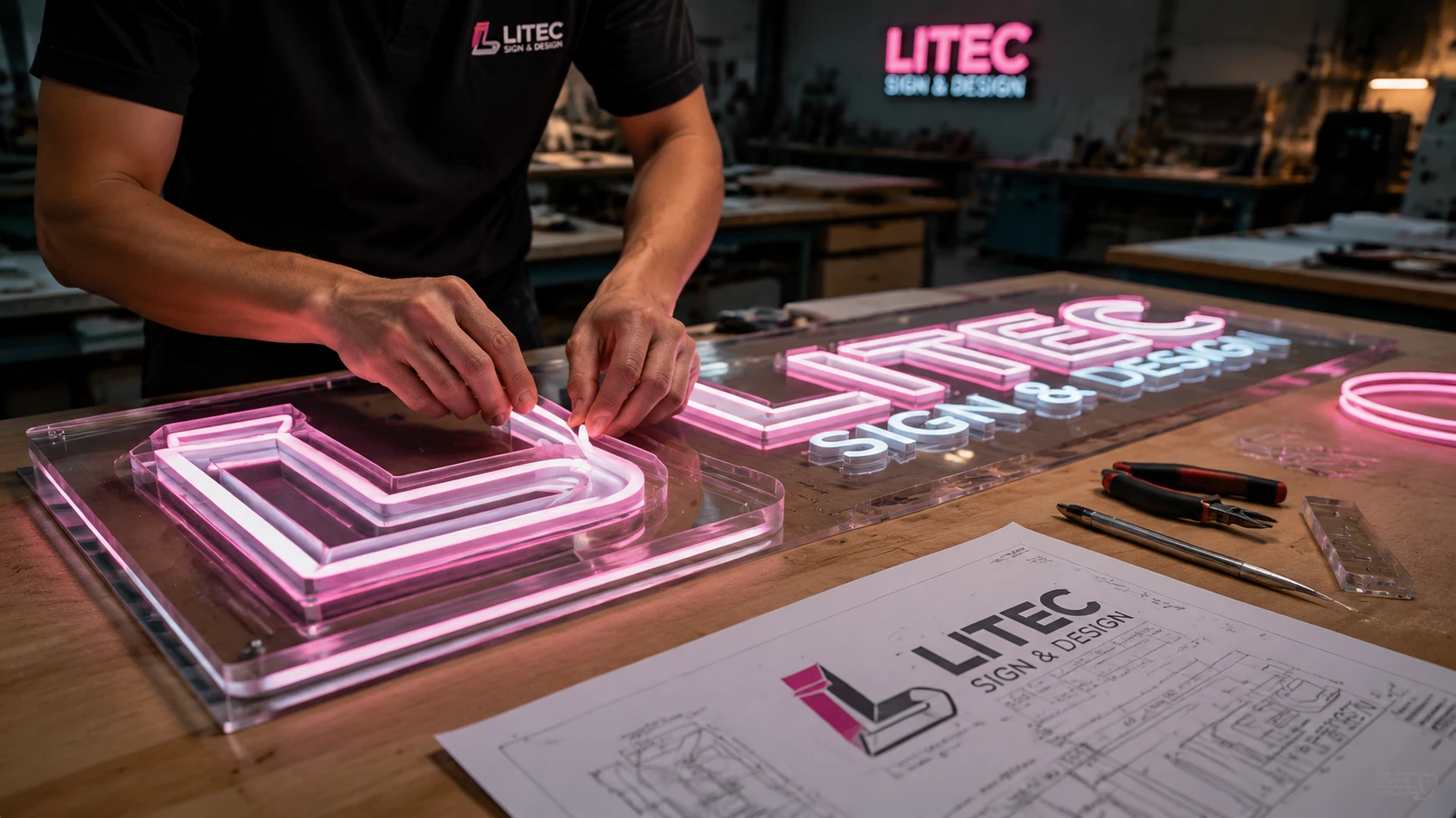
To get perfect results across complex sign patterns, production managers must check the internal circuit layout of their neon flex led strip options. The way a product handles cutting affects the physical reliability of the whole display.
Standard retail light strips use thin, 1-ounce copper layers inside their flexible circuits. Technicians often bend or twist these thin boards to follow a sharp curve or a tight letter angle. When they do, the copper paths face extreme physical stress. This stress creates tiny cracks over time. These fractures cause local electrical resistance, hot spots, or dead sections across a premium Led Neon Sign.
Industrial sign reels use thick, 3-ounce rolled dual-copper Flexible Printed Circuit (FPC) boards. This heavy copper layer acts as a solid backbone. It lets the bulk media bend tightly into complex alphabet shapes and sharp corners without breaking internal traces. Also, the thick copper tracks drop electrical resistance across the whole spool. This layout keeps your neon strip lights bright from the first power feed to the final cut piece.
When buying components for volume contract work, sign workshop owners need clear data instead of basic marketing talk. The matrix below compares the core specs of standard retail strips against professional silicone neon ropes used in demanding commercial lighting setups:
| Engineering Parameter | Standard Retail Light Strips | Professional LED Neon Systems | Direct Impact on Signage Workshop Yields |
| Real Operating Voltage | 12V DC (Typical) | 24V DC / Constant Current | Minimizes voltage drops. Ensures even brightness across large custom logos. |
| Circuit Board Material | 1-oz to 2-oz Copper Tape | 3-oz Rolled Dual-Copper PCB | Withstands tight workshop bending and twisting without breaking circuit paths. |
| Cut-Mark Interval | 50mm to 100mm | 10mm to 25mm (Ultra-Short) | Allows technicians to trim to precise script dimensions, dropping material waste to near-zero. |
| Lumen Output Per Watt | 60 - 80 lm/W | 95 - 120 lm/W (High Efficiency) | Delivers brilliant visual punch and daytime visibility while drawing less grid power. |
| Refresh Frequency Rate | ~1,200Hz (Camera flicker) | Over 4,000Hz (Flicker-Free) | Looks flawlessly smooth on social media videos, TV sets, and modern commercial studios. |
| Casing Insulation | Exposed Tape or Thin PVC | Gas-Phase Optical Silicone | Stops yellowing from UV rays. Guarantees long-term clarity on sunny store windows. |
| Ingress Protection (IP) | IP20 / IP44 (Indoor only) | IP67 / IP68 Dual Extrusion | Guarantees safe, long-term exterior performance through heavy rain and winter storms. |
The lifespan of a custom outdoor sign depends heavily on its outer jacket. This casing guards the inner light diodes against weather, room heat, and installation stress in premium architectural lighting configurations.
Cheap factories use Polyvinyl Chloride (PVC) plastic sleeves to save money on raw materials. However, PVC breaks down fast under heat and direct sunlight. Within a few years, a PVC jacket turns yellow, cloudy, and stiff. This shift ruins brand colors and turns clean whites into a dirty hue. Even worse, brittle PVC cracks easily during winter weather. These cracks let moisture creep onto the copper tracks, causing short circuits that trip main breakers.
Premium commercial sign projects avoid these risks by using gas-phase silicone extrusions. Silicone offers clear benefits for busy public spaces:
Total Optical Lifespan: Pure silicone molecules resist UV damage completely. The outer jacket stays clear for over ten years without yellowing.
Great Heat Dissipation: Silicone handles high temperatures easily. It routes heat away from the inner LED chips, keeping the diodes cool to stop early burnout.
Smooth Light Finish: The dense silicone blends raw light outputs naturally. This feature removes ugly pixel dots, creating a solid, smooth line of light. It stops glare on shiny acrylic or polished metal sign backers.
Building custom script signs brings a major challenge. Workers must handle tight angles, like cursive letter loops or sharp corporate logo shapes. Standard linear lights use long cut-points. They force users to cut only every 50mm or 100mm. This wide spacing leaves workshops with awkward extra lengths. Workers must hide these pieces behind the sign backer, which wastes material and creates extra labor.
Professional cuttable neon flex strip rolls solve this layout problem. Advanced circuit designs let technicians cut the media safely every 10mm to 25mm.
This tight cutting resolution helps your design team track letters exactly as drawn. You can match strict corporate fonts perfectly. It removes dark gapping at the joints. It also clears out dead material waste from your workshop floor, boosting your overall business profits.
The Project Setting: In early 2026, a sign factory won a contract to make 500 matching lit brand logos for a retail chain. The design used complex cursive fonts and tight shape borders that needed sharp daytime visibility.
The Initial Trial: The production team first tested standard retail 12V strips with PVC jackets to cut upfront costs. However, during early tests, the long 50mm cut-points failed. Workers could not finish letter tails cleanly. Technicians spent hours hiding extra lengths inside the sign backer, which slowed down the assembly line. Also, the thin copper paths cracked during tight bending, causing 15% of the test batch to fail quality checks due to dead sections.
The Professional Upgrade: The facility pulled out the retail media. They deployed premium 24V short-interval LED neon lines. These lines used 3-ounce dual-copper boards inside gas-phase silicone housings to assemble each Led Neon Sign correctly.
The Real-World Outcomes: The ultra-short cutting points helped workers trim lines to exact font sizes instantly. This step removed hidden extra material. Because the heavy copper tracks handled sharp curves smoothly, the workshop defect rate dropped to zero. The factory finished the production line 35% faster, saving massive labor hours. Most importantly, the high-efficiency silicone casing gave a smooth luxury glow that passed corporate visual checks on the first try.
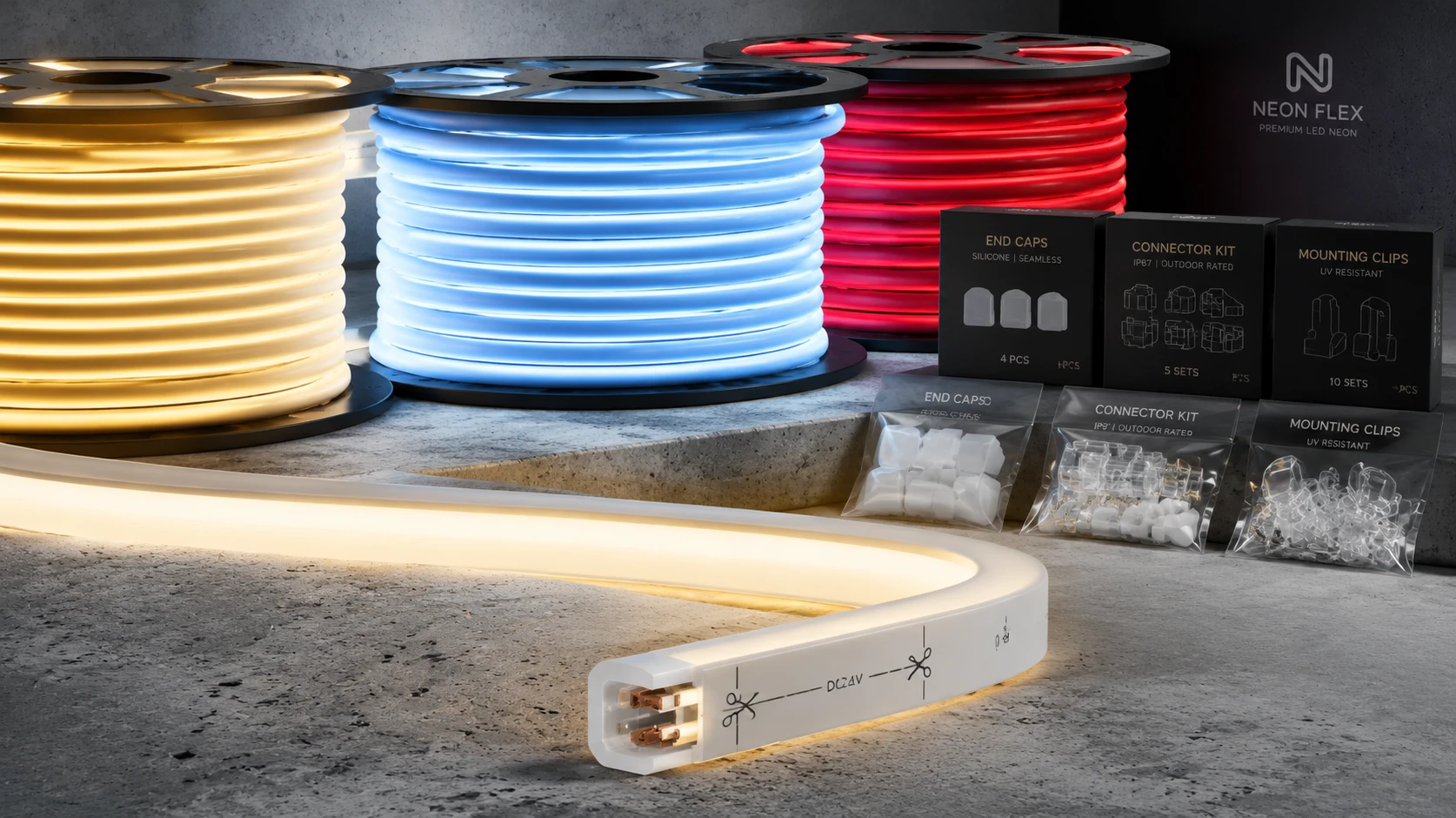
To protect hardware and keep energy efficiency high, sign makers must follow three practical layout rules:
Calculate and Balance Voltage Load Proactively: Sign makers must check total wattage needs before sealing a display. Ensure that the total power draw of your neon paths does not exceed 80% of the power supply's maximum limit. Leaving a 20% safety gap keeps power drivers cool and maintains top performance.
Follow the Factory Bending Axis: Factories build flexible neon paths to bend smoothly along one specific direction. This is either a side-bend or a top-bend design. Do not force a light tube to twist or bend against its shape. Doing so puts extreme stress on the internal copper tracks, creating high electrical resistance and dead sections.
Make Clean, Sealed Waterproof Connections: When cutting bulk neon spools to custom sizes on-site, technicians must cut cleanly. Trim only on the marked factory lines. Installers must seal every raw cut edge immediately using a matching factory endcap and silicone adhesive to protect the neon strip lights. Skipping this step lets moisture creep inside, corroding the copper tracks and dropping system signals.
Why are short cut-intervals critical for building a custom neon flex led strip?
Standard lights use wide cut-points that leave awkward extra lengths, causing material waste and slow assembly. Short cut-intervals let sign makers trim the media every 10mm to 25mm. This tight spacing lets you track cursive lettering and corporate logos exactly as drawn, removing dead waste from your workshop floor.
Can these flexible silicone neon strip lights handle harsh outdoor weather over time?
Yes. Cheap retail plastics turn brittle and crack under the sun, but professional systems use dual-extruded silicone housings. When you seal them correctly with factory endcaps and industrial adhesive, they earn an IP67 or IP68 waterproof rating. This protection lets them run smoothly through heavy rain, high heat, and freezing snow without yellowing or losing power flow.
How does THINK TEAM KING support wholesale sign manufacturers with bulk material choices?
THINK TEAM KING manufactures premium commercial-grade neon ceiling systems and heavy-duty lighting solutions for global distributors, sign factories, and contracting groups. We build our high-density wholesale neon lighting lines using certified 3-ounce rolled dual-copper circuit boards and ultra-short cut-points to ensure total design freedom and zero material waste. Every batch of our led neon lights lowers standby power and passes strict safety codes. Whether you need massive container shipments of bulk spools or custom setups for premium builds, THINK TEAM KING provides robust systems built for your exact technical specs.
Checking sign materials proves that sourcing high-quality bulk reels is vital. It secures strong profit margins and clean brand displays. Cheap consumer choices look cost-effective upfront, but their wide cut-points, thin copper circuits, and plastic casings cause high material waste and costly repairs. Upgrading to high-density, short-interval silicone neon lines driven by robust 24V networks delivers a clean finish while cutting workshop labor.
Are you running a high-volume sign factory? Or are you looking to update your wholesale distribution choices with certified, high-efficiency flexible light systems for commercial lighting or architectural lighting? Our engineering team is ready to provide custom wiring diagrams, specification sheets, and volume wholesale pricing built for your exact factory needs.

It provides all-round service for customers
and users 24 hours a day.
Enter your email for exclusive offers
and information on new upcoming products.


