


Time:2026-07-15
In large-scale commercial real estate developments, high-end hospitality venues, and immersive experiential retail flagship stores, architectural lighting is no longer a passive element. The global market has transitioned from static monochrome illumination to high-performance, dynamic installations. Modern project engineers, commercial lighting procurement directors, and electrical contractors face a tough operational challenge: integrating multi-zone linear accent lighting with smart building management systems (BMS) without introducing command latency or signal degradation.
When executing expansive architectural lighting plans, deploying generic consumer-grade hardware leads to immediate failure. High-volume commercial environments require industrial-grade voice-controlled rgb neon lighting sync systems. Sourcing systems with isolated signal pathways, high-density copper flexible printed circuits (FPCs), and advanced digital protocol decoders protects your project's margins, simplifies commissioning pipelines, and ensures long-term system stability.
Implementing voice control across thousands of linear meters of addressable neon flex requires an optimized, low-latency control topology. Consumer smart devices rely on crowded local Wi-Fi networks, which introduces unacceptable packet drops and command lag. In contrast, an enterprise-grade system isolates the voice processing layer from the hardware execution plane.
At the commercial level, the system processes voice commands through a localized edge computing gateway or a secure cloud API connection. The voice command is parsed into an architectural control payload, which is then fed into a central DMX512 or Art-Net master controller.
The Voice Processing Layer: Localized hardware decodes natural language voice inputs into discrete light scene index values within milliseconds.
The High-Speed Hardware Plane: The master controller translates those scene changes into raw data packets, routing them over a balanced RS-485 bus structure or an Ethernet backplane.
System Integrity: By handling voice inputs through a dedicated control gateway, the system isolates downstream LED drivers from network security risks and data bottlenecks.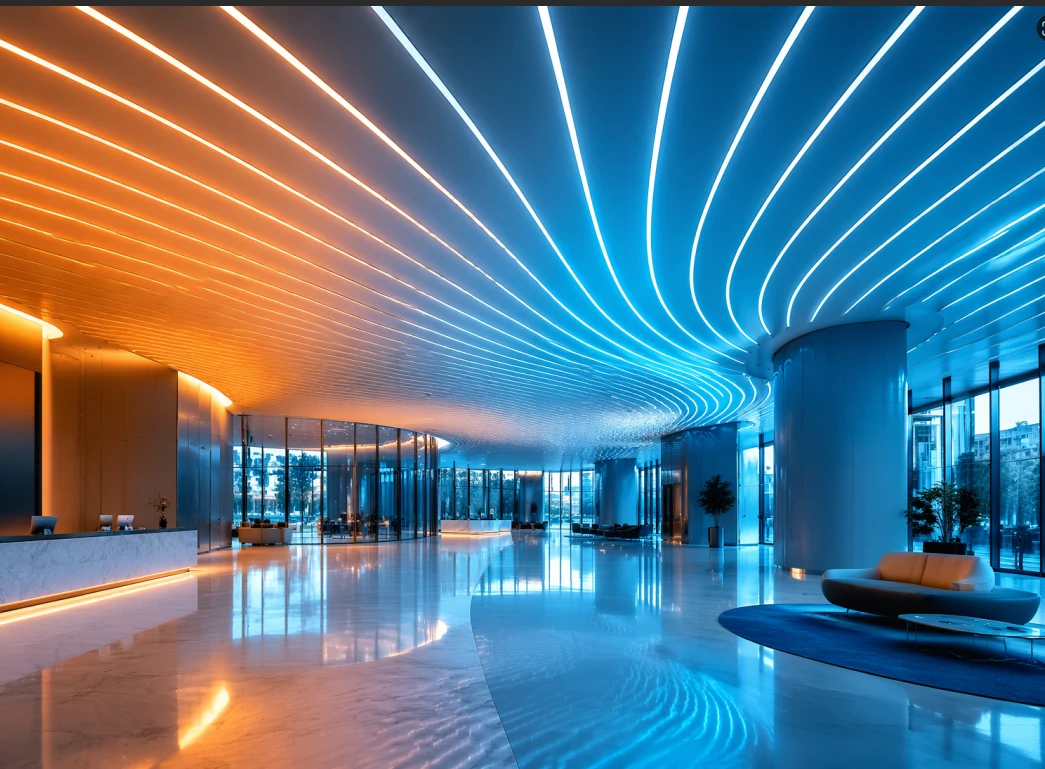
For engineering directors and automation integrators, managing protocol translation is the most critical factor in preventing visual stuttering. When a user changes color zones via voice command, the signal travels across multiple hardware interfaces before reaching the LED chips.
To maintain smooth color transitions across long lighting runs, industrial systems utilize robust hardware control methods. Sourcing managers can evaluate the three primary commercial data transmission options below:
| Protocol Typology | Maximum Bus Distance | Multi-Node Capacity | Latency Profile | Best Commercial Use Cases |
| DMX512 / RS-485 | 1200 Meters (Balanced) | 512 Channels per Universe | Less than 25ms (Highly Consistent) | High-end hospitality facades, linear architectural accents, stadium perimeters. |
| SPI (Serial Peripheral) | 5 Meters (Unbuffered) | Determined by IC Model | Less than 5ms (Ultra-Fast) | Short, high-density dynamic displays and localized custom signage modules. |
| Art-Net / sACN | 100 Meters per Node | Unlimited (Ethernet Scale) | Variable (10ms to 40ms) | Massive multi-building integrations and pixel-mapped experiential media walls. |
To ensure uniform brightness across expansive commercial installations, electrical engineers must carefully calculate signal decay over extended bus runs. The voltage drop along a balanced RS-485 data line is governed by the cable's characteristic impedance and the total system capacitance, expressed as:
Without proper line matching and isolated bus transceivers, high-frequency data pulses round off, leading to command drops and rendering errors. Industrial-grade systems solve this by embedding RS-485 signal refresh chips directly into every 5-meter neon flex sub-assembly module.
For a deeper dive into how addressable pixel architectures maintain structural stability across harsh operating conditions, read our technical breakdown on
To visualize how these multi-zone systems route signals without losing clarity, review the standard commercial installation blueprint below. This DMX512 control setup bridges your software management platform with long runs of high-density linear fixtures:
As shown in the engineering layout, the master control hub translates system commands into distinct, addressable outputs. Each localized decoder handles its own voltage input, preventing potential voltage drops across extended neon installations.
For corporate procurement managers and site engineering supervisors, long-term system reliability is a primary financial metrics. If an LED system fails prematurely due to poor thermal engineering or excessive voltage drop, the labor costs for field replacement can easily wipe out your project's profit margins.
When running high-density linear lighting beyond 10 meters, resistance within the copper traces causes the supply voltage to drop toward the end of the run. This drop reduces brightness and alters color accuracy, especially when rendering full-white light mixes.
Where L is the single-wire length, I is the total loop current, rho is the electrical resistivity of copper, and A is the cross-sectional area of the conductor trace. Top-tier systems solve this issue by using extra-thick, 3-ounce rolled annealed dual-layer copper flexible printed circuits (FPCs). This high-performance design keeps the voltage steady over extended installation runs, eliminating the need to add complex power injection points every few meters.
Operating high-density LED arrays inside a sealed flexible housing generates significant internal heat. If this heat cannot escape, it accelerates chip degradation, causing noticeable color shifts and reduced light output over time.
To combat this, leading manufacturers use premium, gas-phase optically pure silicone for their diffusion sleeves. Silicone offers significantly higher thermal conductivity than cheaper, halogenated PVC alternatives. It serves as an efficient thermal pathway, transferring heat away from the internal circuit board and venting it into the aluminum mounting tracks. This smart thermal design maintains a low junction temperature, extending the system's operational lifespan beyond 50,000 hours.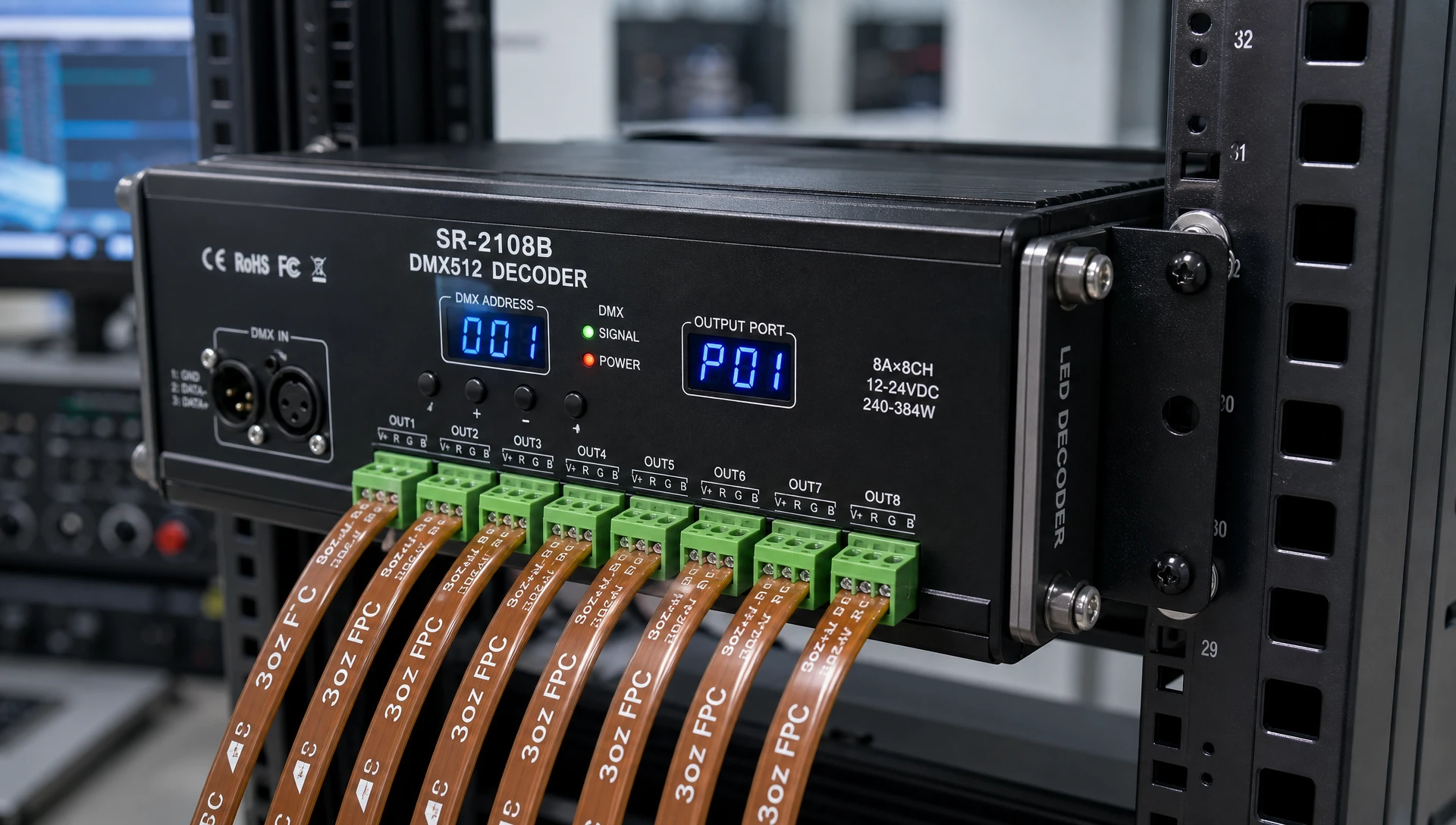
Managing bulk component orders for major real estate developments or large-scale retail buildouts requires strict quality control and logistical coordination. Relying on uncertified trading companies or non-specialized assembly shops introduces significant production risks.
Before signing a bulk supply contract, procurement teams should verify that the manufacturing facility holds key international safety and performance certifications:
UL94 V-0 Flame Retardancy: Verifies that the silicone housing self-extinguishes within 10 seconds, meeting strict commercial building codes.
Automated SMT Inline Inspection: Ensures every single surface-mount solder joint is laser-checked during production, eliminating dead pixels before shipping.
IK08 Impact Ratings: Confirms the neon flex assemblies can withstand mechanical impacts on public, high-traffic commercial job sites.
Our systems utilize high-frequency RS-485 balanced data buses combined with dedicated hardware decoders. This professional-grade architecture eliminates the data delays common in consumer wireless networks, ensuring flawless color sync across hundreds of meters of linear lighting.
Yes. By using our standard DMX512, Art-Net, or Modbus gateways, you can easily connect our voice-controlled systems with leading commercial automation platforms like Crestron, Lutron, and KNX.
Through our advanced OEM/ODM production lines, THINK TEAM KING provides fully customized solutions for your projects. We offer custom interior channel shapes, specific addressable IC profiles, custom cable wire harnesses, and pre-cut, job-ready installation kits built directly to your blueprints.
A comprehensive analysis of modern commercial lighting trends confirms a key operational fact: advanced system design directly determines project reliability and overall profitability. Investing in industrial-grade voice-controlled rgb neon lighting sync systems from an asset-heavy manufacturer eliminates installation headaches, satisfies strict building safety regulations, and prevents costly post-installation service calls. Lower-grade consumer alternatives simply cannot deliver the long-term reliability required for major commercial spaces.
Are you looking to secure a reliable, high-volume supply chain for an upcoming commercial development or retail rollout? Need to optimize your system topology for complex automation platforms? Our engineering support desk is standing by. We can review your electrical blueprints, calculate voltage distributions, and provide competitive, factory-direct wholesale pricing.

It provides all-round service for customers
and users 24 hours a day.
Enter your email for exclusive offers
and information on new upcoming products.


