


Time:2026-05-19
The global lighting market is moving fast. Today, project managers and engineers prioritize operational safety alongside visual impact. Traditional glass neon requires dangerous transformers pulling between 5,000V and 15,000V. This high voltage creates severe fire hazards and extreme electric shock risks during routine maintenance.
Modern engineering solves this liability with 12V low-voltage neon tube lights. This advanced led technology delivers the same vibrant, continuous glow as classic glass neon but operates on a completely safe, low-power Direct Current (DC) base.
For international buyers and distributors, sourcing these low-voltage systems is a vital business strategy. It ensures you pass municipal inspections and meet strict workplace safety laws without structural risk.
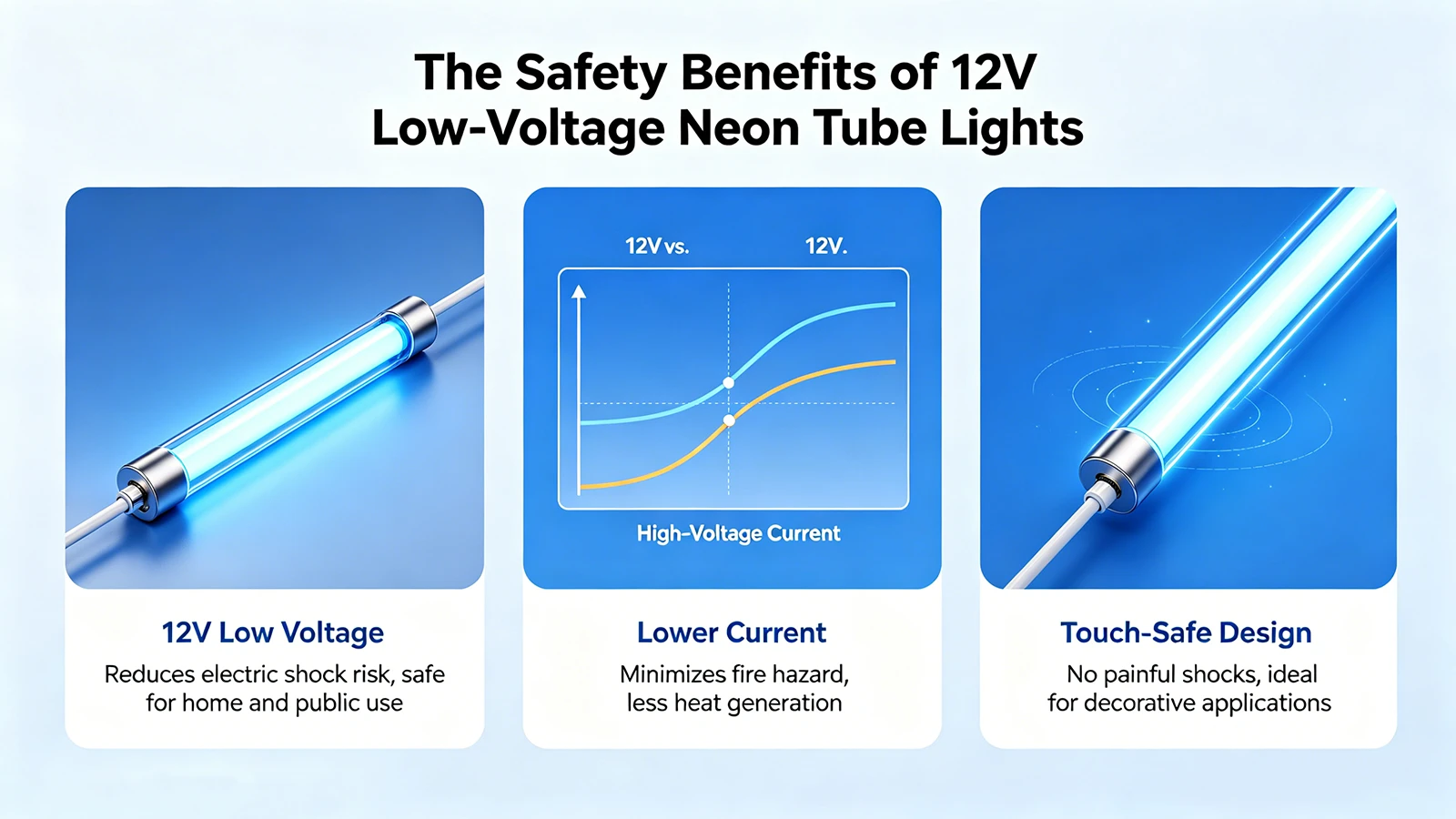
The most important benefit of 12V low-voltage neon tube lights is their natural safety design. High-voltage lighting systems always introduce liability risks to a commercial or residential space. These risks become real problems during field installation, everyday cleanings, or when a fixture suffers accidental physical damage from the public.
A 12V electrical current is very weak. It does not possess enough electrical pressure to pass through the natural resistance of human skin. Because of this, a 12V DC current cannot cause a dangerous or painful electric shock. This characteristics makes 12V low-voltage neon systems 100% "touch-safe."
If a maintenance worker, child, or customer accidentally punctures or cuts the flexible tube while the light is on, there is no risk of electrocution. This touch-safe feature is essential for wall lighting, museum displays, retail storefronts, and exhibition booths where people often touch the fixtures.
High-voltage lighting systems can create intense, super-heated electrical arcs if an internal wire snaps, wears down, or comes loose. These high-voltage arcs can easily ignite nearby building materials, such as drywall, plywood framing, wallpaper, or plastic trim.
12V low-voltage systems use very little electrical pressure, so they lack enough energy to create dangerous sparks or arcs. This low-power operation reduces the risk of electrical fires to near zero. For commercial properties, using touch-safe low-voltage systems makes it much easier to pass strict city building inspections. It can also help lower commercial property insurance premiums by Preventing high-voltage gear from the building plans.
Electrical safety inside an LED neon system depends heavily on the quality of the outer flexible shell. This shell protects the internal copper circuit boards and light-emitting diodes from external stress. The material chosen for this flexible jacket changes how the light handles physical impact, heat, and sunlight over many years of service.
In the past, many wholesale neon light global suppliers used Polyvinyl Chloride (PVC) plastic to manufacture flexible neon tubes. PVC was popular because the raw material cost was very low. However, field data shows that PVC has major safety and durability flaws when used in commercial environments.
Under hot sun or continuous UV exposure, PVC turns yellow and cloudy within months. It also loses its flexible plasticizers, causing the jacket to become hard, brittle, and cracked. When PVC cracks, water leaks inside the housing, causing immediate short circuits, electrical failures, or complete product burnout.
To solve these structural safety problems, premium low-voltage engineering grades use high-quality silicone extrusions in all their products.
Excellent UV Stability: Silicone jackets do not break down or yellow under heavy solar radiation. They stay completely clear and highly flexible for many years, ensuring the light output remains bright and true.
Superior Temperature Resistance: Flexible silicone handles massive temperature shifts easily. It operates safely in extreme conditions from -40°C up to +85°C without warping, stretching, melting, or losing its shape.
Flame Retardant and Non-Toxic:An external fire can cause PVC plastic to release black smoke and toxic chemical smells that are choking hazards. High-grade silicone is inherently non-toxic, chemically inert, self-extinguishing, and highly resistant to fire.
When sourcing commercial-grade led technology for large architectural developments, engineering teams must look past general marketing phrases. Professional buyers need precise, provable data to confirm that the lights meet international safety standards such as UL, CE, and RoHS.
The table below shows the key technical specifications that distinguish professional-grade 12V low-voltage neon systems from cheap retail-grade alternatives.
| Technical Specification | Standard Retail Grade | Low-Voltage Engineering Grade | Value to B2B Buyers & Project Engineers |
| Operating Voltage | High Voltage (110V/220V AC) | 12V / 24V Constant DC | Removes electrocution risks; meets OSHA safety codes instantly without heavy armor piping. |
| Blink & Refresh Rate | Below 1,200Hz (Causes eye fatigue) | Over 4,000Hz | Provides smooth, flicker-free light; looks perfect under professional HD video cameras. |
| Light Efficiency | 60–80 lm/W (High heat loss) | Over 110 lm/W | Delivers maximum brightness while keeping excellent overall energy efficiency. |
| Waterproof Rating | IP20 (Indoor only) or IP44 (Splash) | IP67 / IP68 Rated | Full protection against heavy outdoor rain, dust storms, and continuous water submersion. |
| Color Rendering Index | Below 80 Ra (Dulls visual space) | Over 92 Ra | Shows the true, rich colors of premium interior decorations, automotive paint, and fabrics. |
| Minimum Bend Radius | Over 30mm (Stiff and hard to style) | 10mm Side-Bend | Bends easily around sharp architectural corners and complex commercial signage shapes. |
| Internal Circuit Board | 1-ounce Copper (Breaks easily) | 3-ounce Rolled Copper | Heavy-duty internal board that handles high current and will not snap when twisted into tight spaces. |
Operating a building or a sign on a 12V low-voltage system naturally improves the facility's overall energy efficiency. Old-style high-voltage glass neon transformers waste a massive amount of incoming electricity. They convert electricity into excess heat instead of clean light. This high thermal output forces commercial air conditioning units to work harder to keep indoor spaces cool, which increases monthly utility bills.
Modern 12V low-voltage neon tube lights utilize highly efficient light-emitting diodes (LEDs). These solid-state components convert electric currents directly into cool light, creating very little thermal waste. Additionally, advanced commercial system designs integrate smart power grids and digital control boxes.
These intelligent controllers monitor the led neon lights constantly. They adjust the electrical current in real-time, delivering power only when and where the system demands it.
By preventing excess power consumption, the smart distribution system keeps all internal copper circuits running cool. This low operating temperature protects the main circuit board from heat degradation. It ensures the LED chips safely achieve their full 50,000-hour working life without fading or shifting colors.
The Operational Challenge: In mid-2025, a major entertainment group operating an outdoor theme park in Southeast Asia needed to update the accent lighting along its main pedestrian paths. The old high-voltage neon lighting systems failed constantly due to high ambient humidity, intense summer heat, and heavy tropical monsoons. The park operators required a tough, highly flexible replacement light. Most importantly, because millions of children visit the park each year, the new lights had to be completely safe to touch, shock-proof, and 100% waterproof.
The Solution: Engineering teams supplied a custom wholesale order of 12V low-voltage silicone neon tubes to replace the old high-voltage glass fixtures. The design engineers utilized specialized IP68 waterproof injection-molded endcaps and low-voltage constant-current power drivers. This custom low-voltage setup stopped all water entry, even when heavy seasonal rain caused flash floods along the park's walking paths.
The Result: The theme park completed the installation 40% faster than planned. The flexible low-voltage silicone lights simply snap into standard aluminum tracks, avoiding the slow, complex work of glass bending. Since the new system runs on safe 12V DC power, the park passed all municipal public safety checks immediately. The low-voltage system also cut the park's accent lighting energy use by 55%, proving excellent energy efficiency while keeping a safe, bright, and vibrant pathway for park guests.
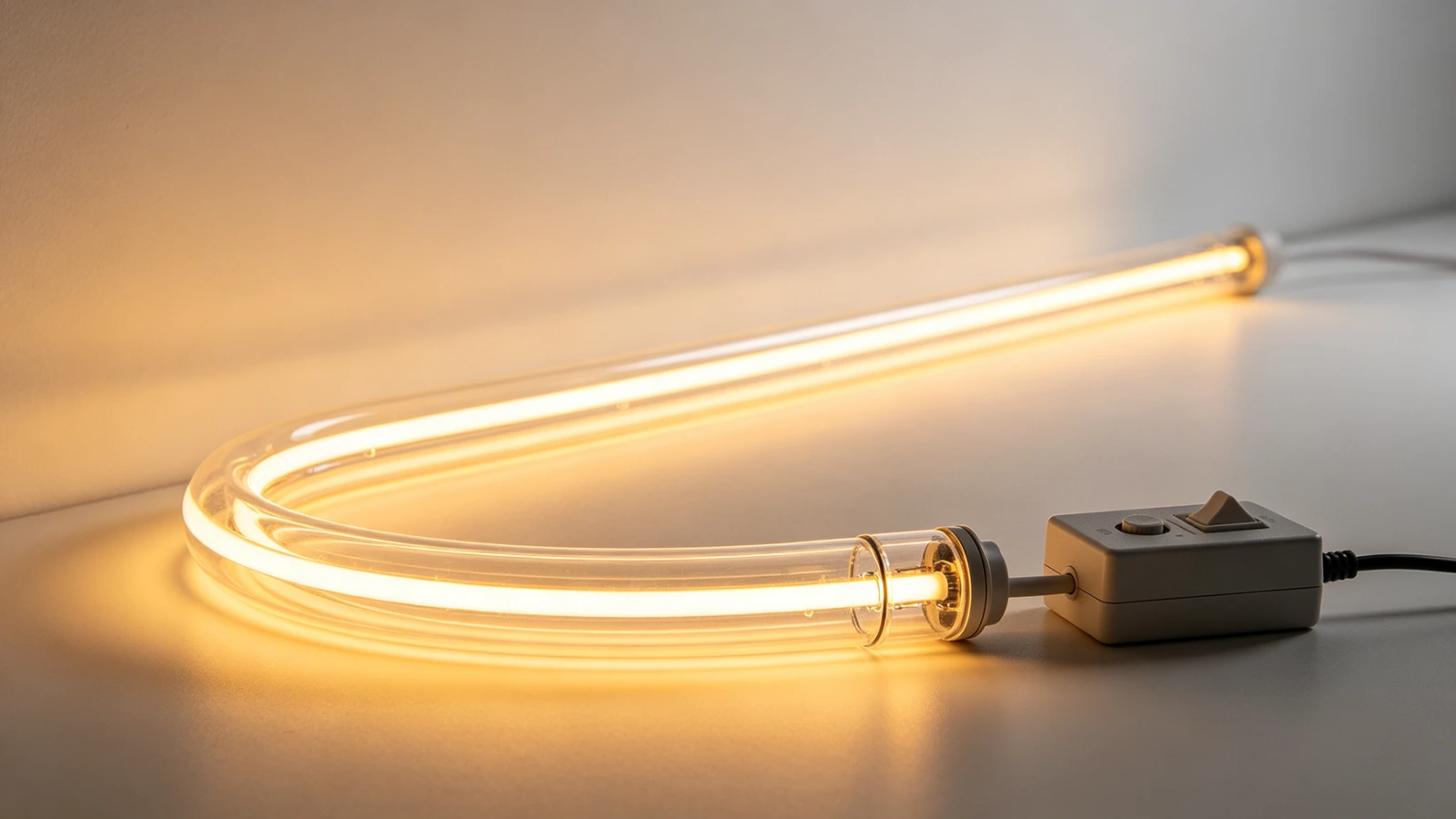
To secure the maximum safety benefits from low-voltage lighting systems, commercial installation teams must follow three strict rules during field setup:
Calculate and Control Voltage Drop: Because 12V systems run on a lower voltage base, electrical resistance inside the copper wire can cause light to fade over long distances. Installers must use the correct American Wire Gauge (AWG) thickness based on the distance from the power source. They must also limit the maximum length of a single continuous light run. Following these limits keeps the brightness perfectly even from the start of the line to the very end.
Secure the Main Power Supplies: The neon light strips themselves run on touch-safe 12V DC power. However, the main external transformers still connect directly to high-voltage wall power (110V/220V AC). Installation teams must house these main power supplies inside ventilated, locked NEMA-rated enclosures. These boxes must stay completely away from public reach, guest pathways, and wet areas.
Seal Every Custom Cut Correctly: When trimming a flexible neon tube to a custom size on-site, technicians must cut the strip exactly on the clearly marked cut lines. Every custom field cut must be sealed immediately. Teams must use professional silicone endcaps and strong, waterproof industrial glue. This step keeps air, high humidity, and moisture out of the internal copper circuit board.
Yes. When made with high-grade silicone housing and sealed correctly using waterproof endcaps, 12V neon lights get a full IP67 or IP68 rating. This means they are completely waterproof and safe for heavy rain, swimming pool borders, water fountain accents, and wet coastal weather.
High-voltage lights require heavy metal conduits, armored cabling, and licensed electricians to meet safety codes. Because 12V systems are naturally safe, you can install them with simpler wiring, lighter mounting clips, and fewer structural rules. This cuts your total labor, planning, and material costs significantly.
No. Cheap retail lights use PVC plastic, which gets hard, turns yellow, and cracks within a year under direct sunlight. High-quality commercial systems use premium, UV-stable silicone. The lights keep their soft flex, clean look, and clear color in temperatures ranging from -40°C up to +85°C.
Yes. These systems work perfectly with standard industrial protocols like DMX512, Dali, and Art-Net using low-voltage digital decoders. This makes it easy to connect the lights to custom smartphone apps, timers, motion sensors, or larger automated commercial lighting setups.
THINK TEAM KING specializes in manufacturing these compatible low-voltage systems. They offer three main products: custom low-voltage control setups, wholesale flexible neon lines, and commercial-grade neon ceiling systems. All of these are designed to fit perfectly with modern smart building layouts and safety standards.

It provides all-round service for customers
and users 24 hours a day.
Enter your email for exclusive offers
and information on new upcoming products.


