


Time:2026-07-10
The global marine and yacht manufacturing sectors change fast. Today, international shipyards, luxury boat builders, and marine engineering contractors face a severe technical bottleneck. When installing elegant linear accent lighting on boat hulls, decks, flybridges, or swimming platforms, engineering teams must deploy flexible fixtures that survive continuous exposure to harsh marine environments. However, typical exterior lighting setups fail rapidly at sea. Standard materials degrade quickly under heavy saltwater spray, intense UV radiation, and constant humidity. These factors lead to structural cracking, severe yellowing, moisture ingress, and sudden electrical failure.
To protect your manufacturing margins and maintain a flawless brand reputation, your production line needs industrial-grade saltwater-resistant silicone neon strip for boats. Sourcing pre-tested, high-efficiency flexible channels removes marine environmental risks entirely. Working directly with a certified, asset-heavy production facility ensures that your automated assembly lines receive perfectly matched, reliable hardware every single time.
For boat factory sourcing managers and marine electrical engineers, choosing flexible linear lighting goes far beyond matching a basic IP67 or IP68 submersibility rating. Standard moisture protection certifications only account for temporary freshwater immersion. They do not test for the highly corrosive, chemically active nature of saltwater and marine environments.
Many vessel assembly lines buy raw neon strips and separate connection end-caps from low-end trading brokers. While individual parts pass basic factory bench tests, deploying them into open-sea environments introduces severe system errors:
Saltwater Chemical Corrosion: Saltwater contains highly corrosive ions that rapidly eat through standard plastic compounds and thin copper circuits. Once sea salt penetrates the outer jacket, it oxidizes the internal wiring, causing instant dark spots and electrical failure.
Accelerated Solar UV Degradation: Boats operate under intense, direct sunlight amplified by water reflection. Standard Polyvinyl Chloride (PVC) or low-grade silicone formulations break down rapidly under this extreme UV exposure, turning brittle, yellowed, and cracked within months.
Capillary Moisture Ingress: Changes in temperature at sea create a vacuum effect inside flexible light housings. If the end-caps are poorly sealed or hand-glued, saltwater is sucked directly into the internal circuitry, destroying the entire installation.
Top OEM/ODM yacht production lines stop these component problems completely. Elite component factories build marine flexible systems using 100% high-purity, UV-stabilized gas-phase silicone. They co-extrude the outer protective jacket directly over the internal circuitry to form an airtight, solid bond that is chemically inert to sodium chloride, marine oils, and specialized boat detergents.
Using a verified, pre-tested flexible architecture lets your assembly line scale up vessel production with absolute confidence. This hardware tuning ensures a perfect physical and electrical seal that withstands rough ocean waves and intense tropical sun. It delivers uniform, flicker-free illumination across thousands of demanding maritime layouts.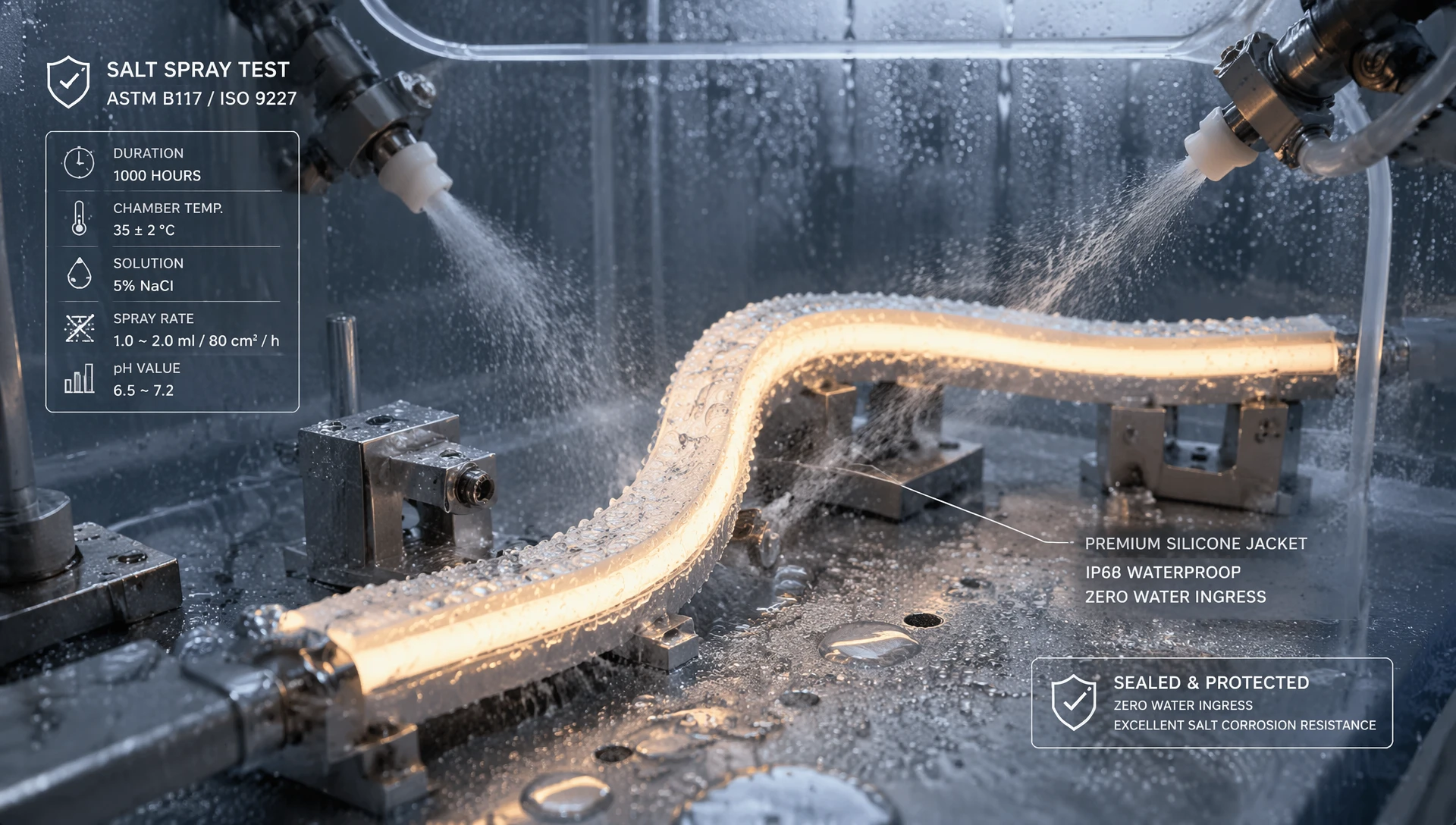
Marine sourcing directors, yacht project auditors, and industrial procurement managers need clear data to make smart buying decisions. Look at the data table below. It shows why cheap retail lights fail compared to our tough, vessel-certified commercial systems:
| Technical Specs | Consumer Retail Flexible Strips | Premium Factory Marine Systems | Supply Chain & Corporate Benefits |
| Chemical Resistance | Low (Corroded by Salt & Marine Iodine) | 100% Saltwater & Corrosion Resistant | Immune to ocean salinity, diesel fuels, hydraulic oils, and harsh hull cleaners. |
| Jacket Composition | Standard PVC Compound with Halogens | Gas-Phase Silicone (UV-Stabilized) | Zero yellowing or chalking under direct sunlight; retains 95% transparency over time. |
| Thermal Endurance | 0°C to 40°C Operating Range | -40°C to 60°C Operating Spectrum | Performs flawlessly in freezing arctic waters or hot tropical engine rooms. |
| PCB Copper Density | 1-oz Standard Copper FPC | 3-oz Rolled Annealed Dual-Copper | Prevents voltage drops over long runs; keeps deck brightness perfectly uniform. |
| System Lifespan | 15,000 to 20,000 Hours | Over 50,000 Hours Certified (L70) | Reduces long-term replacement costs and field maintenance claims to absolute zero. |
Achieving a flawless yacht or cruise ship installation requires inspecting a manufacturer's underlying engineering methods. You must evaluate both the material architectures and the structural mechanics to ensure long-term operational satisfaction.
When building custom vessel cabins, step lighting, or fine under-gunwale linear details, space and flexibility are essential. Standard industrial lighting products feature bulky housings that cannot bend around tight hull curves or fit inside recessed fiberglass tracks. If your engineering team needs a line of light exactly fitted within tight boat architecture, a massive housing creates installation bottlenecks and ruins design blueprints.
Professional certified factories resolve this design challenge effectively. They layout high-density component arrays inside streamlined profiles, such as compact side-bending or top-bending cross-sections. This precise engineering lets your assembly staff route the strip through tight marine channels without sacrificing the rugged durability of the outer shell. It removes dark zones completely, enabling your team to execute intricate, custom-shaped yacht layouts seamlessly.
When custom linear lights stretch continuously along massive yacht decks, walkways, or long hull lines, internal electrical resistance creates a common problem called voltage drop. The light near the power source glows bright, while the far end looks dim and faded. This uneven performance looks unpolished and compromises strict maritime quality inspections.
To prevent this issue, top-tier production facilities build their flexible systems using heavy-duty 3-ounce rolled annealed dual-copper Flexible Printed Circuits (FPC). This thick copper pathway carries low-voltage current uniformly over continuous extended runs from a single power feed. It reduces internal operating temperatures by up to 15°C, improving electrical efficiency and ensuring matching brightness from the first inch to the very last link on the vessel.
Modern B2B text must provide real-world application tips. Reviewing new material designs shows how integrated component setups can optimize factory product development and reduce yacht assembly times.
For global shipyards building high-end vessels, traditional single-color white lighting is no longer enough to satisfy wealthy buyers. Moving toward vibrant, customized color profiles streamlines product lines and opens up premium luxury markets.
Using high-purity silicone channels allows production managers to pack dense RGB, RGBW, or addressable pixel chipsets inside an airtight housing. These systems give lighting designers the freedom to program complex chasing effects, striking underwater hues, and dynamic brand matching without compromising the rugged protective structure of the outer shell.
For marine equipment distributors and yacht manufacturing hubs executing large production rollouts, speed and compliance are equally vital. Pairing high-density LED arrays with pre-engineered, factory-molded plug-and-play connectors allows factories to build modular lighting kits.
Instead of sending long, difficult-to-manage spools to a shipyard, your plant can supply pre-cut, pre-labeled sections that snap together instantly on the hull. This smart layout strategy minimizes installation labor errors, keeps project timelines on track, and ensures matching color temperatures across different shipment batches.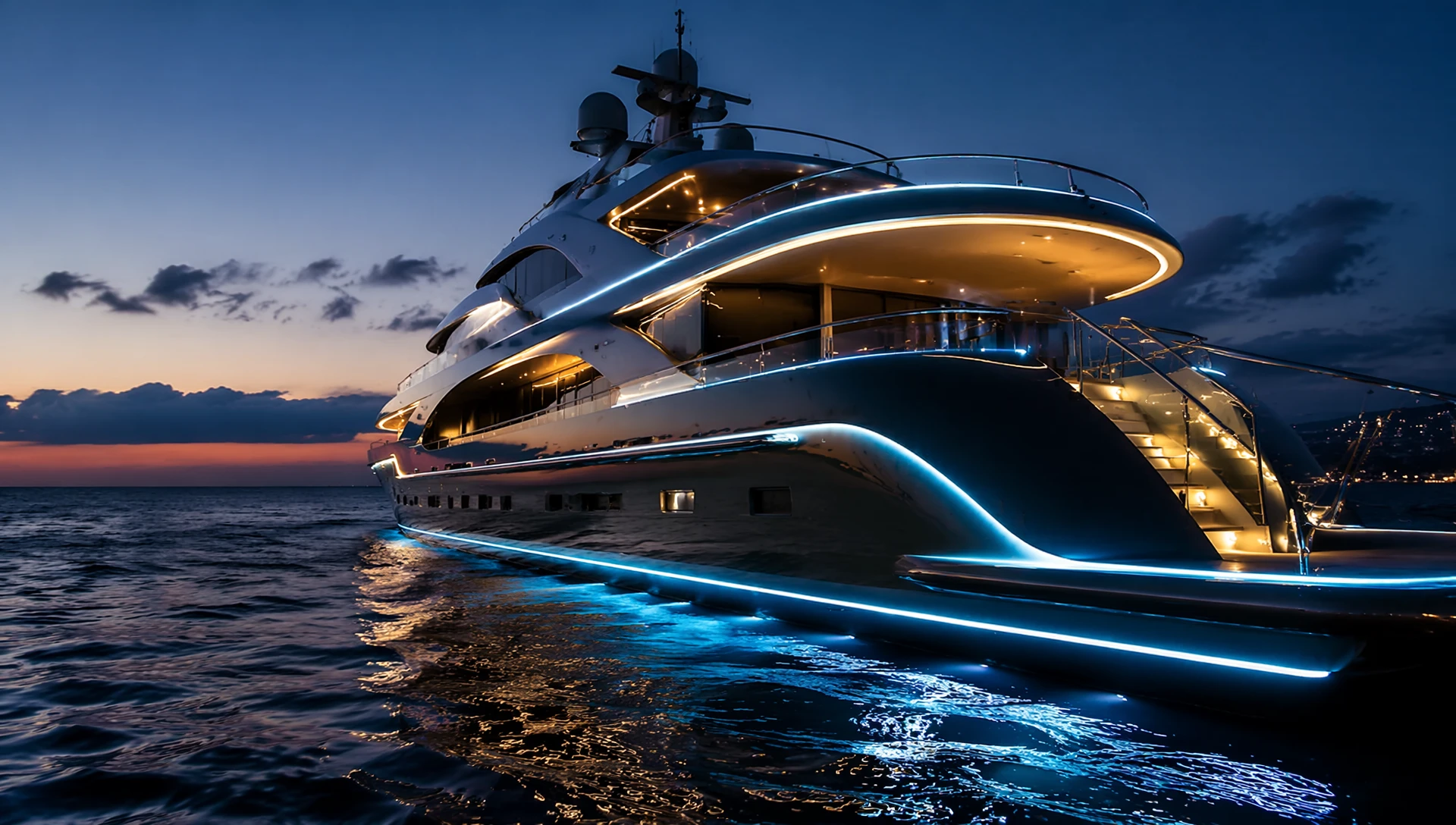
When auditing potential manufacturing partners in major global lighting hubs, procurement agents must look past basic product brochures. Commercial buyers should check three critical factory metrics to guarantee a stable supply chain:
In-House Co-Extrusion Automation: Verify that your supplier runs automated, high-temperature silicone co-extrusion lines inside their own facility. Sourcing from premium production plants ensures the jacket and circuit board form a single, solid bond. Separate external workshops introduce dust, quality variations, and extra middleman costs.
Comprehensive Marine Environment Testing: Top-tier manufacturers enforce strict automated testing for every production batch. Ensure the vendor uses real laboratory equipment to verify IP68 waterproof compliance, high-pressure steam jet chambers, UV aging chambers, and salt spray testing before components enter final shipping containers.
Single-Bin LED Chip Sorting: Premium linear brands enforce strict single-bin MacAdam Ellipse sorting systems. This industrial process ensures all reels match perfectly in color temperature (like an exact 3000K or 4000K) across hundreds of meters, removing any visible color shifts in large vessel installations.
When you source your flexible systems from a certified commercial manufacturer like THINK TEAM KING, the hardware is engineered specifically for open-ocean deployments. Our specialized boat strips use 100% gas-phase silicone, which is chemically inert. This structural engineering prevents sodium chloride and marine minerals from bonding with or penetrating the jacket, completely stopping the corrosion of internal copper circuits.
Yes, absolutely. Unlike cheap retail-grade PVC lights that turn brittle, yellow, and crack under intense sun or freezing weather, our premium linear channels are built with advanced UV-stabilized silicone. The material maintains its perfect flexibility and optical clarity in extreme environments. It operates flawlessly in temperatures ranging from -40°C up to 60°C, fully resisting outdoor dust and moisture.
Yes, we provide extensive custom manufacturing support. THINK TEAM KING specializes in engineering and manufacturing premium OEM/ODM linear flexible systems for global assembly plants, shipyards, and marine equipment distribution networks. Operating our own automated extrusion lines, we ensure fast wholesale lead times, custom cutting increment spacing, and pre-assembled connector kits tailored precisely to your engineering blueprints.
An exhaustive evaluation of modern industrial assembly trends confirms a vital operational fact: material engineering dictates product reliability and factory profitability. Choosing high-density, pre-tested flexible silicone channels from a verified reference manufacturer removes field failures, satisfies international maritime safety codes, and cuts costly maintenance claims to zero. Cheap alternatives create high financial risks due to yellowing and cracked connection joints.
Are you looking to secure a reliable supply chain for an upcoming marine or yacht lighting rollout? Do you need to upgrade your current commercial inventory with premium, high-efficiency flexible systems? Our engineering desk is ready to help. We can analyze your layout schematics, calculate voltage distributions, and provide tailored, factory-direct wholesale pricing.

It provides all-round service for customers
and users 24 hours a day.
Enter your email for exclusive offers
and information on new upcoming products.


