


Time:2026-05-29
The luxury interior design and commercial contracting markets are changing fast. Today, estate developers, hotel designers, and electrical contractors want to move past old lighting. Modern properties need hands-free systems. These systems must blend smoothly into smart building setups.
The main product leading this change is voice-controlled smart neon strips. This technology pairs advanced voice-recognition chips with high-density, dotless neon channels. The system delivers easy, hands-free light control. You no longer need physical wall switches or complex manual dimmers.
For global B2B buyers, wholesale distributors, and commercial contractors, sourcing engineering-grade smart lighting is vital. This setup ensures fast wireless connections across large floor plans. It also reduces hard wiring tasks during on-site installation. Finally, it gives modern users the integrated voice control they want. The system works easily with Amazon Alexa, Google Assistant, or Apple Siri. This guide breaks down the network rules and material standards needed for large commercial and home setups.
B2B buying teams often find voice control confusing. They want to know how a verbal command changes light brightness or color. When setting up lights in large projects, contractors can choose between two clear paths.
Many retail light strips rely heavily on a mobile app paired with distant cloud servers. For example, a user says, "Alexa, dim the living room neon to twenty percent." This voice command travels from the local smart speaker up to the internet cloud. The cloud server reads the voice data. Then, it sends a digital instruction back through the home router to the light's Wi-Fi receiver.
This setup works well for a single room. However, it poses risks for large buildings. If the local internet connection slows down, or if the cloud server goes offline, the voice commands fail. Users will notice long lag times.
Professional lighting systems bypass the unstable public cloud. They use local smart hubs running on industrial automation networks. These networks include Zigbee or Bluetooth Mesh. In this setup, the local smart speaker passes data directly to an on-site gateway box.
The gateway reads the command instantly. It sends a direct signal to the light controllers over a local, self-healing wireless grid. This system cuts control lag to under 100 milliseconds. It also ensures that your voice-controlled lights keep working perfectly even if the main building internet goes completely offline.
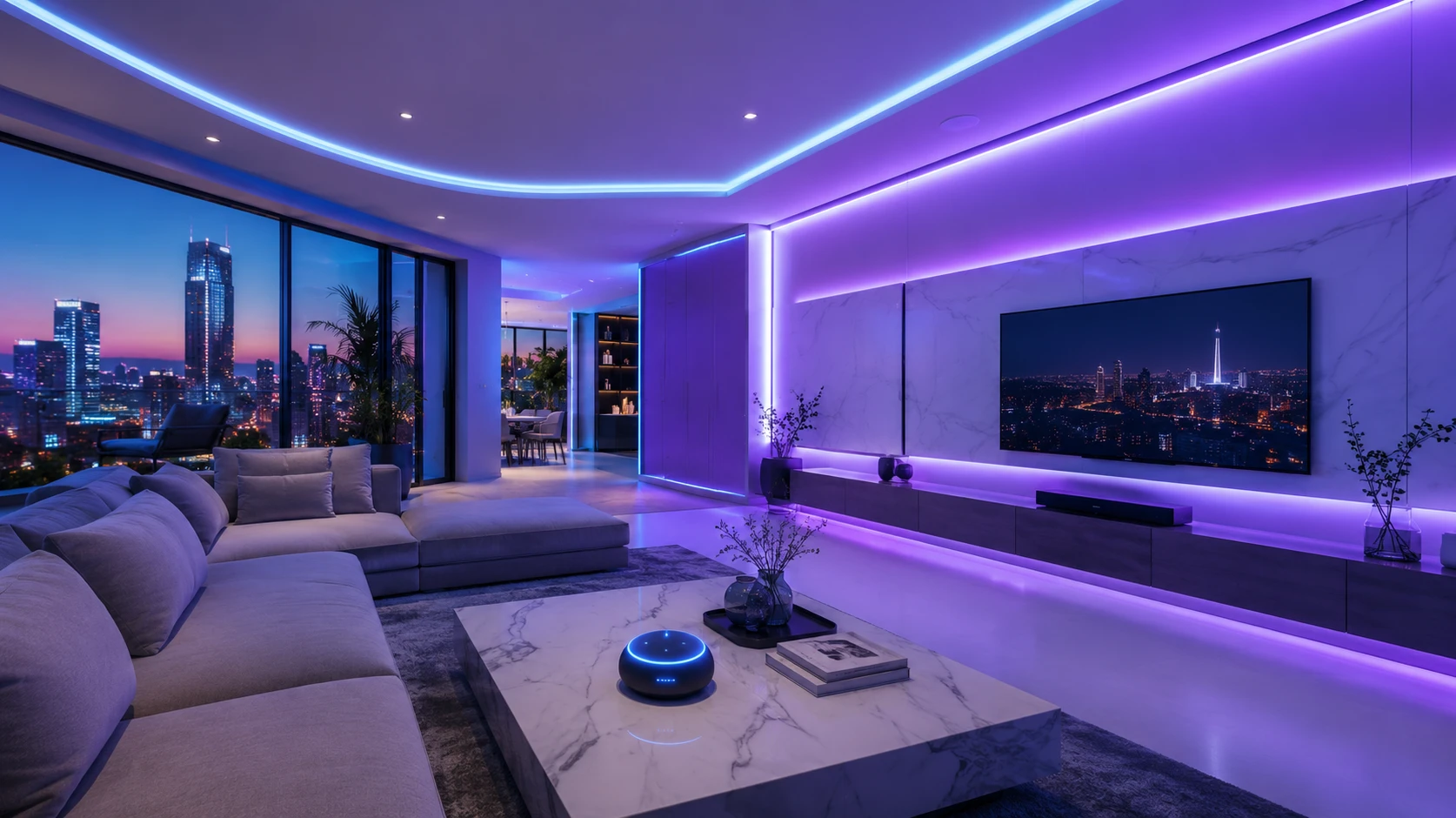
Selecting commercial-grade led technology for premium projects requires looking at real specs. Wholesale buyers must look past basic marketing words to find proven data.
The technical matrix below outlines the core metrics of professional smart neon installations. It compares them directly to standard retail alternatives:
| Engineering Specification | Standard Retail Light Strips | Professional Smart Neon Systems | Direct Asset Value for Commercial Projects |
| Wireless Protocol | 2.4GHz Wi-Fi Only | Wi-Fi + Bluetooth Mesh / Zigbee Dual Chips | Eliminates router congestion and prevents signal dropouts in crowded wireless areas. |
| Voice Processing Speed | 1.5 to 3.0 Seconds (Cloud dependent) | Under 100 Milliseconds (Local Hub) | Delivers a premium user experience with instant lighting transitions. |
| Visual Finish | Visible LED pixel dots | 100% Seamless, Dotless Glow | Provides a luxury look without needing extra frosted diffuser tracks. |
| Circuit Board Layout | 1-ounce Single Copper Foil | 3-ounce Rolled Dual Copper | Prevents voltage drop and dim tail ends across continuous linear runs. |
| Refresh Frequency Rate | Below 1,200Hz (Camera flicker) | Over 4,000Hz (Flicker-Free) | Looks perfectly smooth under high-definition security cameras and video studios. |
| Material Shell | Low-Cost PVC Plastic | Gas-Phase Optical Silicone | Resists yellowing from sun rays and prevents cracking over time. |
| Ingress Protection (IP) | IP20 or IP44 | IP67 / IP68 Dual-Extrusion | Guarantees absolute safety in humid bathrooms, kitchens, and outdoor landscapes. |
Large hotels and custom homes use hundreds of feet of accent lights. If managed poorly, these lights create huge electric bills. Standard accent ropes run at full power constantly, wasting energy through high heat.
Modern voice-controlled smart neon strips feature smart driver modules. These modules connect deeply with building power software. This connection allows managers to use smart energy-saving rules through simple voice commands:
Precise Voice Dimming: Users can change brightness down to exact percentages by voice. For example, they can say, "Set lobby neon to fifteen percent." These smart drivers reduce power use in a flat, linear way. Dropping the brightness level lowers the building's live power draw immediately.
Voice-Activated Zones: Large floors can be split into distinct digital zones. Evening maintenance crews do not need an entire floor lit up. Instead, managers can use quick voice commands to activate only specific paths. This step keeps total utility bills low.
Smart Sensor Links: Voice systems link directly with local occupancy sensors. Suppose a meeting room is left empty for a long time. The system dims the neon tracks to a low 5% safety glow automatically. The lights ramp back up to full brightness the moment they detect a voice or movement.
The physical toughness of your flexible lights is critical. The outer casing protects the inner circuits from room heat and setup stress.
Historically, budget factories used Polyvinyl Chloride (PVC) plastic sleeves to save money. However, PVC degrades quickly under indoor heating and direct sunlight. Over a few short years, a PVC jacket turns amber, cloudy, and stiff. This yellowing ruins the true output of your red, green, and blue chips. It turns clean architectural lighting into a dirty, uneven hue. Even worse, brittle PVC cracks easily during winter building shifts. These cracks let room moisture creep onto the copper tracks, causing short circuits.
Professional architectural lighting projects avoid these problems by using high-density, gas-phase silicone extrusions. Silicone offers multiple engineering advantages for busy commercial spaces:
No Yellowing: Pure silicone molecules resist UV damage completely. The outer jacket stays clear and white for over ten years.
Better Heat Path: Silicone handles extreme temperatures easily. It routes heat away from the inner LED chips. This keeps the diodes cool to stop premature dimming.
Smooth Light Diffusion: The dense nature of silicone blends raw light outputs naturally. This feature removes ugly pixel dots. It creates a solid line of light with zero reflection glare on shiny marble walls or wood panels.
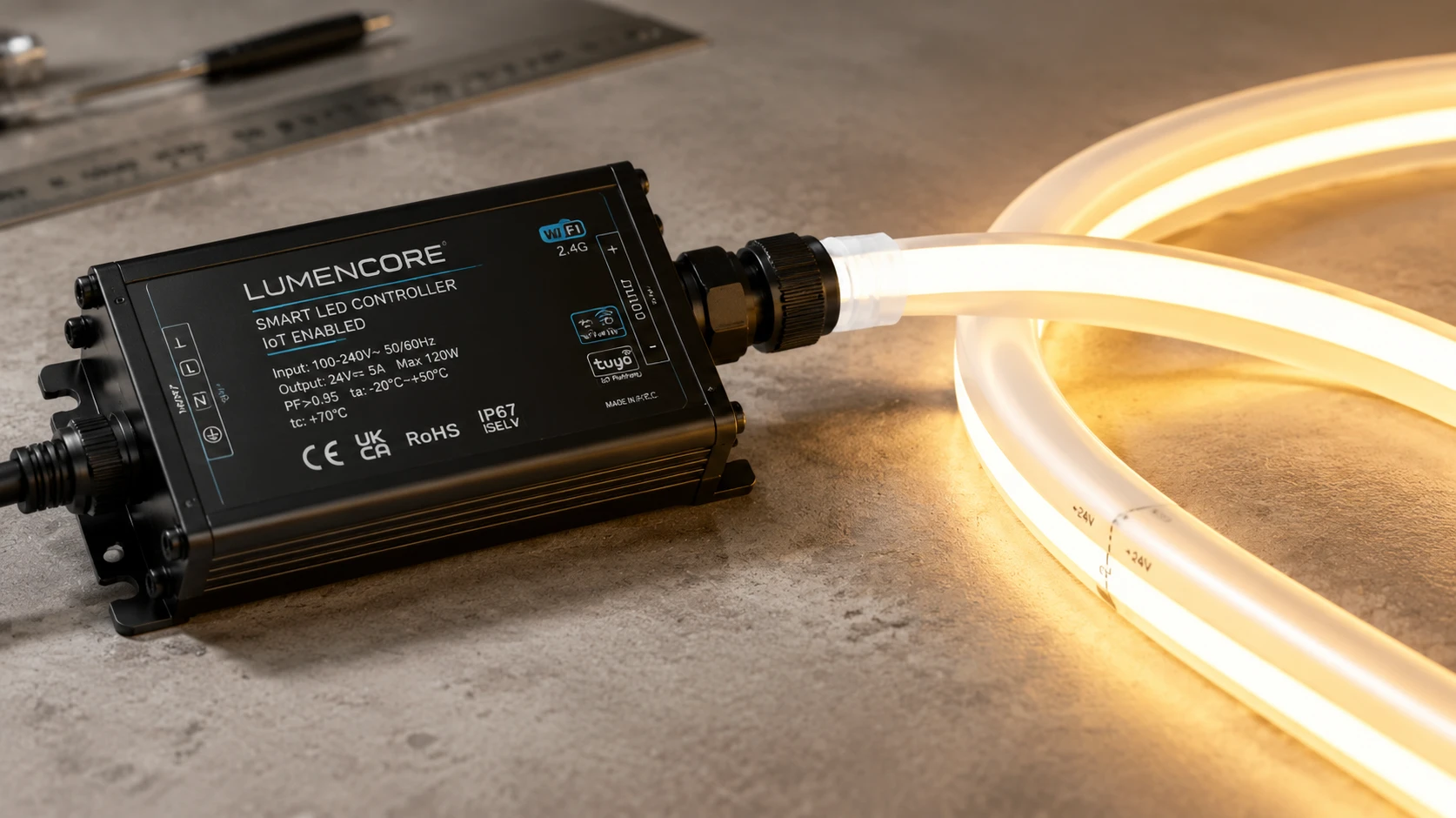
The Operational Challenge: In early 2026, a hotel development group started a renovation project for a luxury boutique hotel. The layout required 600 meters of color-changing accent lines. The design team wanted these lines inside crown moldings, under beds, and around bathroom mirrors across 50 high-end suites.
The first worker set up retail Wi-Fi smart strips. However, during early testing, multiple guest rooms tried to use voice commands at the same time. The signals suffered from huge lag times up to 4 seconds. Furthermore, the cheap plastic covers displayed individual LED dots on the polished marble bathroom counters. The hotel management rejected the look. They said it looked cheap and lacked luxury appeal.
The Integrated System Upgrade: The main contractor removed the retail strips. They upgraded the whole project to professional voice-controlled smart neon strips running on native Bluetooth Mesh systems. The supplier delivered long spools cut to the exact size of the room slots. These lines featured premium, UV-stable silicone housings.
The Final Result: The setup crew linked the system quickly. They saved time because the dual-chip controllers connected with the hotel room hubs instantly upon power-up. Guests could use simple voice commands to switch between preset room moods easily. For example, they could say, "Activate Relax Mode." The neon lines dimmed and shifted colors in under 80 milliseconds.
The thick silicone casing completely removed the ugly pixel dots. It created a smooth bar of luxury light with zero reflection glare on the polished marble counters. By dropping the background idle power use in each room, the hotel cut its monthly energy costs while lifting its luxury guest experience.
To get a clean installation and long-term reliability, electrical crews must follow three practical layout rules:
Follow the Correct Bend Direction: Flexible neon structures are built to bend smoothly along one specific direction (either side-bend or top-bend). Forcing a light tube to twist or bend against its factory design puts extreme stress on the circuit board. This stress creates dead dark areas.
Calculate and Stop Voltage Drop: Low-voltage DC networks (12V/24V) experience electrical resistance over long distances. This resistance makes the end of long light lines look dimmer. Setup crews must use the right wire thickness (AWG). They must also inject raw power feeds at proper intervals to ensure flat, even brightness across the layout.
Seal All Cut Edges Cleanly: When trimming flexible neon tubes to custom sizes on-site, technicians must cut strictly on the marked factory lines. The raw cut edge must be sealed immediately. Use a matching endcap and high-grade industrial silicone adhesive. Skipping this sealing step lets room humidity creep inside. This moisture corrodes the copper traces and causes network drops.
Why do voice-controlled smart neon strips perform better than standard smart strips in large properties?
Standard smart strips feature exposed diodes. These bare bulbs create bright pixel dots and ugly reflections on shiny walls. Smart neon strips use dense silicone jackets to blend the light outputs into a smooth, high-end glow. Also, professional neon lines use advanced multi-chip wireless networks. These systems respond to voice commands instantly without lagging or overloading your internet router.
Can these smart neon systems connect with commercial building management platforms?
Yes. Cheap consumer light strips are locked into basic mobile apps. In contrast, professional-grade smart neon systems use open control units. These units interface cleanly with commercial automation networks and advanced digital decoders. This setup allows building operators to link voice commands, automated sensors, and central dashboards into one unified system.
Are custom silicone neon tubes safe for high-moisture spaces like luxury bathrooms or outdoor patios?
Absolutely. When factories use high-quality silicone extrusion methods and seal the ends with proper caps, neon lines achieve full IP67 or IP68 waterproof protection. This rating allows them to operate safely through kitchen steam, heavy bathroom humidity, and outdoor rain for many years. They will not lose wireless connection or suffer from material decay.
How does THINK TEAM KING support international B2B buyers with smart neon custom choices?
THINK TEAM KING specializes in manufacturing premium commercial-grade neon ceiling systems and tailored residential lighting solutions for global wholesale buyers, contractors, and design groups. We build our high-density wholesale neon lighting lines using certified, dual-chip wireless chipsets. These chips pair effortlessly with global voice control networks and professional automation gateways.
Every batch of our led neon lights uses premium 3-ounce rolled dual copper circuit boards and gas-phase silicone housings. These choices ensure absolute color accuracy and stop voltage drops across long runs. Whether you need a volume shipment for private estate developments or customized systems for premium commercial lighting builds, THINK TEAM KING delivers robust systems. Our products are engineered to pass strict safety codes and operate flawlessly in large structural environments.

It provides all-round service for customers
and users 24 hours a day.
Enter your email for exclusive offers
and information on new upcoming products.


