


Time:2026-07-07
The global commercial lighting landscape changes fast. Today, international LED factories, bulk assembly plants, and sign manufacturing brands face a critical engineering bottleneck. When building high-end linear lighting systems or custom illuminated displays, engineering teams must achieve stable wireless synchronization. However, low-end control setups cause severe field failures. These problems include signal transmission lag, dropouts, and sudden component burnout.
To protect your factory production margins, your line needs industrial-grade wifi-enabled neon light controllers. Sourcing pre-tested, high-efficiency smart controls removes cross-brand connection risks entirely. Working directly with a certified, asset-heavy production facility ensures that your automated assembly lines receive perfectly matched IoT hardware every single time.
For factory sourcing managers and engineering directors, choosing wireless control hardware goes far beyond matching basic voltage numbers. Incompatible or low-grade control chips cause costly delays on factory floors. They also trigger expensive warranty claims from your commercial clients.
Many assembly lines buy LED strips, power drivers, and wireless receivers from separate low-end trading brokers. While individual parts pass basic bench tests, combining them into large commercial networks introduces severe system errors:
Signal Lag and Dropouts: Basic wireless chips cannot handle crowded network environments. This causes delayed control responses or complete signal drops during continuous industrial use.
Pulse-Width Modulation (PWM) Glitches: Incompatible dimming curves between cheap smart controllers and external light sensors cause visible strobe effects. This intense flickering ruins user comfort and fails strict building inspections.
Parasitic Current Leakage: Low-quality control boards often leak minor power even when turned off. This leak keeps high-density LED arrays glowing faintly at night, leading to serious client complaints.
Top OEM/ODM production lines stop these component problems completely. Elite component factories test and verify every single smart chip against central control microprocessors inside in-house testing labs.
Using a verified component matrix lets your assembly line build smart lighting systems with absolute confidence. This hardware optimization ensures perfect data flow between wireless network routers and control motherboards. It delivers uniform, flicker-free dimming across thousands of linear fixtures.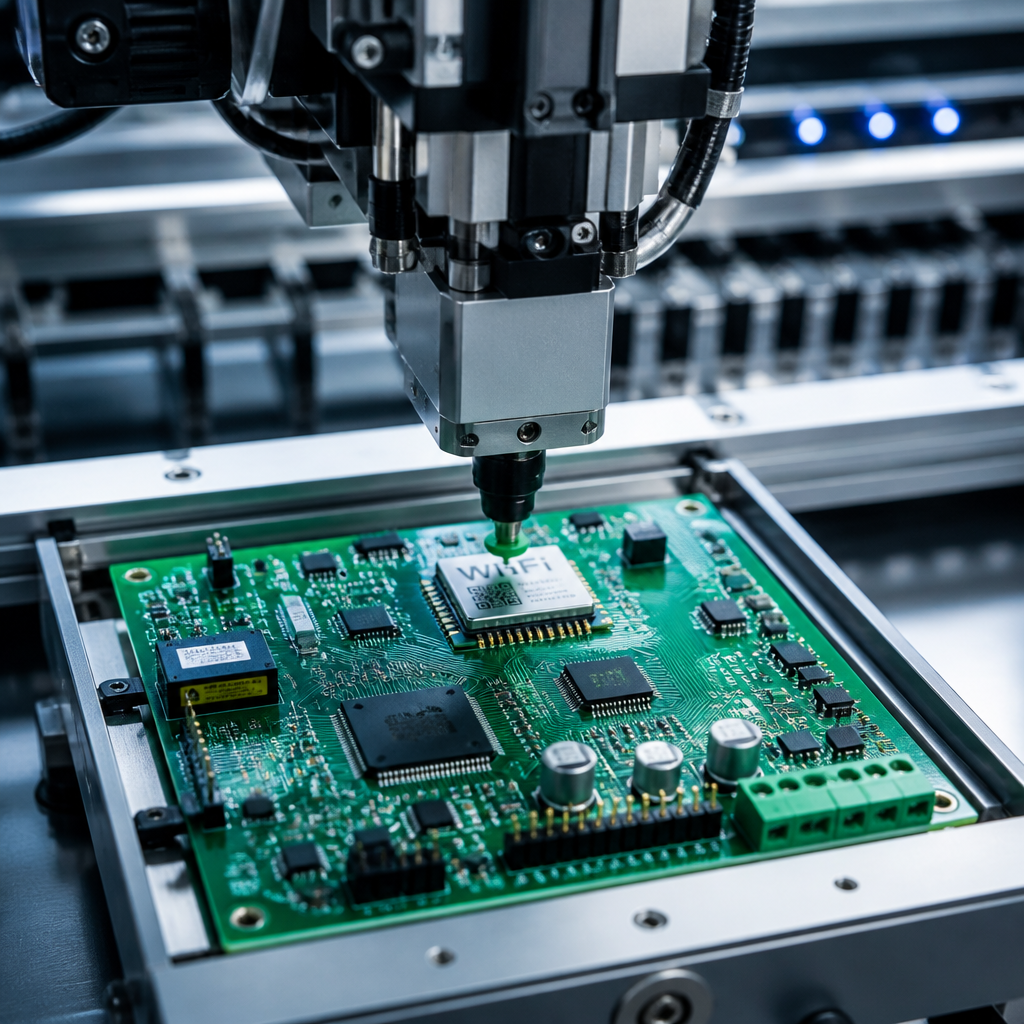
Engineering teams and procurement managers need clear, structured data to optimize mass assembly lines. This technical matrix acts as your standard factory reference guide for selecting the exact smart lighting components required for your specific product lines:
| Controller Model Type | Supported Network Triggers | Verified Protocol Standards | Factory Assembly & Performance Benefits |
| Smart WiFi IoT Series | Microwave Radar, PIR Motion | Tuya, Smart Life, MQTT | Connects perfectly with smart networks; stops setup lag during installation. |
| High-Power DMX512 | Active Photoelectric, Laser | Standard DMX512, RDM | Supports long 100-meter runs with zero signal loss; best for facade projects. |
| 0-10V / 1-10V Analog | 0-10V Daylight Harvesting | Standard Analog Dimming | Delivers smooth dimming from 1% to 100%; stops step flickering completely. |
| SPI Digital Pixel | Addressable Gesture Control | WS2811, UCS1903, SPI | Enables complex chasing effects and moving light walls for retail spaces. |
| Low-Voltage RF Wireless | Compact Door Contact, Touch | Protected 2.4GHz RF | Long-range wireless tracking up to 30 meters; goes through walls easily. |
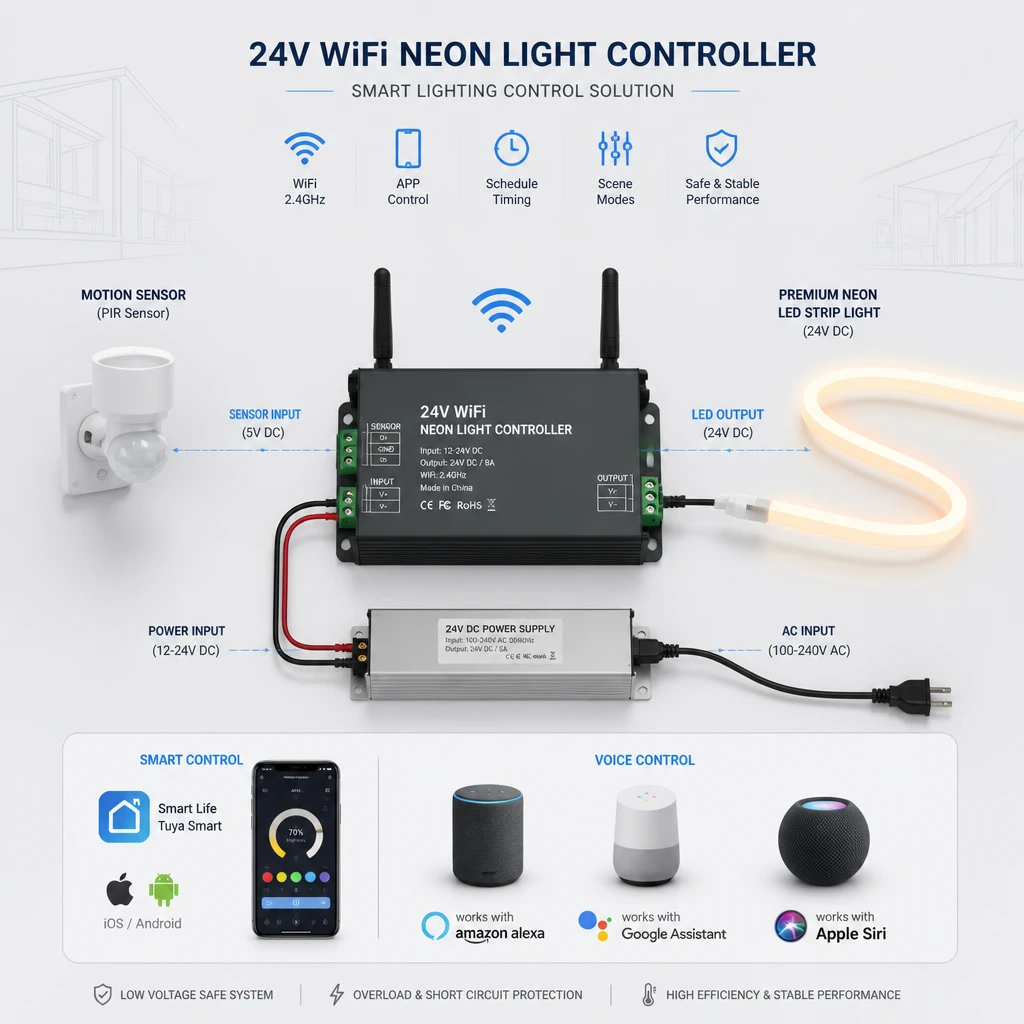
This detailed chart ensures your production team never wastes time troubleshooting mismatched parts. It forms the backbone of modern industrial lighting controls, giving your staff a clear blueprint to build complex hardware systems safely. Additionally, incorporating a reliable motion sensor into this framework lets your factory deliver automated, energy-saving fixtures that modern commercial buyers demand.
Commercial building demands are changing rapidly. Factory-type buyers must look beyond basic automated hardware. Modern end-users want complete smart controls that connect smoothly with existing building management networks and consumer smart home systems.
In premium buildings and luxury hotels, old physical wall switches are fading away. Architects and designers now want linear fixtures that work seamlessly with advanced voice assistants. This means factory engineers must build control motherboards that can process complex cloud-based commands instantly.
To win this high-end market, your production line must use control chipsets that work natively with top platforms like alexa google assistant. When these systems get a voice command to change scenes, the internal microchips must translate the cloud signal instantly without any visible delay. This tight integration ensures a premium user experience. When an end-user says a command to adjust brightness, the linear fixtures dim smoothly. They do not make a sudden, jarring jump in light output.
Engineering a control board to adjust brightness smoothly across a huge commercial installation requires high-performance internal parts. Cheap control cards use low-frequency dimming. This causes thin black lines to appear on smartphone cameras and video conferencing screens.
Professional component factories fix this issue entirely. They use high-resolution, 16-bit dimming microchips that run at frequencies above 4KHz. This industrial-grade hardware design keeps the light output perfectly stable at any dimming level. It works smoothly from 1% low night modes to 100% full brightness. This stable performance is crucial for securing contracts with big offices, TV studios, and luxury retail brands.
Modern B2B text must provide real-world application tips. Reviewing new wireless designs shows how integrated component setups can optimize factory product development and reduce assembly times.
For global manufacturing plants building high-end linear systems, old wired control cables add huge assembly steps. They also increase labor costs significantly. Moving toward strong wireless networks makes factory testing faster. It also cuts material expenses.
Engineering teams can read technical deep dives on
Using pre-tested wireless modules lets factory engineers remove physical data cables from their blueprints. These integrated wireless chips let production managers program and test thousands of smart fixtures at the same time during final quality control testing. This automated setup speeds up factory delivery times. It also keeps batch performance perfectly uniform across big production runs.
A common problem with cheap smart parts is jerky dimming performance when a sensor triggers a lighting change. This visual jump looks unpolished and ruins high-end commercial projects. Factory buying teams can study how
This stable dimming quality relies on high-resolution microprocessors running at high frequencies. When a microwave sensor detects movement, the controller reads the signal instantly. It scales brightness up or down smoothly without steps or jumps. This high performance satisfies demanding commercial clients and helps your factory secure profitable, long-term contracts.
When assembling thousands of smart fixtures for global export, factory engineers must prepare for bad electrical conditions in the field. Protecting delicate control circuits from electrical interference is vital to maintaining a low warranty claim rate.
In modern industrial lighting projects, factory-type buyers want smart wireless features. However, putting standard parts into metal-shielded fixtures can weaken signals. Busy WiFi traffic also blocks signals, causing dropped connections, slow sensor responses, and uneven lighting states across multi-fixture zones.
Professional component factories solve this wireless bottleneck by engineering dual-frequency designs and adding high-gain signal amplifiers. These systems use smart auto-frequency adjustments to bypass busy channels smoothly. This advanced hardware ensures fast, sub-millisecond response times between sensor triggers and lighting outputs. It keeps performance stable in busy commercial spaces or heavy industrial zones.
When high-density LED power drivers turn on, they create brief but intense electrical surges called inrush currents. If your parts lack good protection, these power spikes flow backward through control lines. This spike damages delicate sensor chips and causes complete system failures.
To protect your assemblies from these field risks, professional production lines put dedicated isolation chips and solid-state relays onto every controller motherboard. This design forms a safe electrical barrier between high-power lines and low-voltage sensor inputs. It reduces component operating temperatures, increases electrical safety, and extends the operational life of the whole system.
The Project: A large-scale OEM lighting assembly plant won a big contract. They needed to supply 15,000 smart, sensor-activated linear fixtures for a series of international airport terminals. The project blueprints demanded that every fixture dim smoothly when empty and brighten instantly when passengers walked nearby.
The Sourcing Challenge: The factory's initial engineering team sourced basic controllers and motion sensors from different low-end component brokers to save upfront money. During initial batch testing on the factory floor, more than 18% of the assembled fixtures showed bad signal lag. When the sensors triggered, the lights flickered violently before changing brightness. This erratic performance failed the client's strict quality checks, threatening the factory with heavy cash penalties.
The Production Solution: The plant managers stopped production immediately. They database-searched suppliers and consulted the engineering desk at THINK TEAM KING. Our engineers provided a fully verified, hardware-matched controller sensor compatibility list tailored to their power drivers. We replaced their mixed-protocol parts with our integrated smart lighting components, featuring built-in 16-bit dimming microchips and isolated sensor inputs.
The Results: The technical change fixed the assembly line's performance issues completely. The signal lag dropped to under two milliseconds, and all visible flickering stopped completely. The factory resumed full-speed mass assembly. They passed the airport authority's strict technical inspections with a 100% compliance rating. By using pre-tested, compatible hardware, the plant cut its quality testing times by 40% and eliminated field warranty risks entirely.
Sourcing directors and factory owners must look past basic product catalogs when auditing component suppliers. To achieve an excellent content score, you must verify real manufacturing power on the factory floor.
foreign trade operations require verifying the Surface Mount Technology (SMT) workshop first. Top-tier vendors print and assemble their own circuit boards using high-speed, automated pick-and-place machinery. Suppliers that outsource their circuit board printing to external workshops cannot guarantee consistent component tracking. This structural weakness introduces big quality variations between production batches, leading to unexpected component failures on your assembly line.
For businesses in high-volume sign manufacturing or commercial light box assembly, component life under continuous use is non-negotiable. Illuminated signs often run 24 hours a day inside sealed housings that trap heat. If the internal control parts lack proper thermal engineering and certified protocol matching, they will fail fast. This results in incredibly expensive on-site replacement labor.
Always ask for official laboratory test reports for CE, RoHS, and FCC compliance before placing large wholesale orders. A reliable manufacturing partner must provide transparent engineering files. This data proves their control hardware can handle continuous operational stress without signal drops or thermal degradation.
When you buy control hardware from a certified manufacturer like THINK TEAM KING, safe electrical protection is built right into the motherboard design. Our industrial-grade controllers feature built-in transient voltage suppressors and isolation barriers. This engineering safety blocks high-voltage power surges from reaching delicate sensor microchips, reducing field component failure rates to zero.
Yes, absolutely. Cheap retail-grade controllers fail under extreme temperatures or high humidity. However, our premium commercial control boards are built with industrial-grade silicon chipsets. We finish every board with a thick protective conformal coating. This special layer lets the hardware work flawlessly in temperatures ranging from -40°C up to 60°C, fully resisting factory dust and floor moisture.
Yes, we do custom engineering. THINK TEAM KING provides extensive OEM/ODM linear control systems for global assembly plants, industrial lighting brands, and corporate sign manufacturing networks. Running our own automated SMT lines, we ensure fast production lead times, exact single-bin component matching, and custom firmware programming tailored to your engineering blueprints.
A full review of modern industrial assembly trends confirms a vital operational fact: component synchronization controls product reliability and factory profits. Choosing pre-tested components from a verified list removes field failures, satisfies international building codes, and cuts costly maintenance claims to zero.
Are you looking to secure a reliable supply chain for an upcoming smart lighting project? Do you need to upgrade your current commercial stock with premium, high-efficiency control systems? Our engineering desk is ready to help. We can analyze your system drawings, verify protocol layouts, and provide factory-direct wholesale pricing.

It provides all-round service for customers
and users 24 hours a day.
Enter your email for exclusive offers
and information on new upcoming products.


