


Time:2026-04-17
The lighting industry has witnessed a massive shift from traditional glass neon to flexible LED alternatives. However, not all flexible neon is created equal. For high-end architectural projects and harsh environments, Silicone Material has emerged as the gold standard.
If you are a project manager, wholesaler, or a manufacturer of silicone neon light strip products, understanding the technical superiority of silicone over PVC or PU is essential for long-term project success. This guide explores why an outdoor silicone neon light strip is the only logical choice for 2026 and beyond.
For decades, PVC (Polyvinyl Chloride) was the primary material for flexible neon. While cheap, PVC fails quickly when exposed to the elements. Silicone Material, on the other hand, is a high-performance polymer that offers a unique combination of flexibility, transparency, and environmental resistance.
| Feature | PVC Neon Strip | Silicone Material Neon |
| UV Resistance | Low (Turns yellow/brittle) | Excellent (Remains clear) |
| Operating Temp | -10°C to 45°C | -40°C to 60°C |
| Flexibility | Rigid when cold | Consistently flexible |
| Salt Spray Resistance | Poor | High (Ideal for coastal projects) |
| Lifespan | 2–3 Years | 5–10+ Years |
As shown, Silicone Material Neon maintains its integrity in conditions where PVC would crack or discolor. This is particularly vital for the outdoor silicone neon light strip, where direct sunlight and temperature swings are constant.
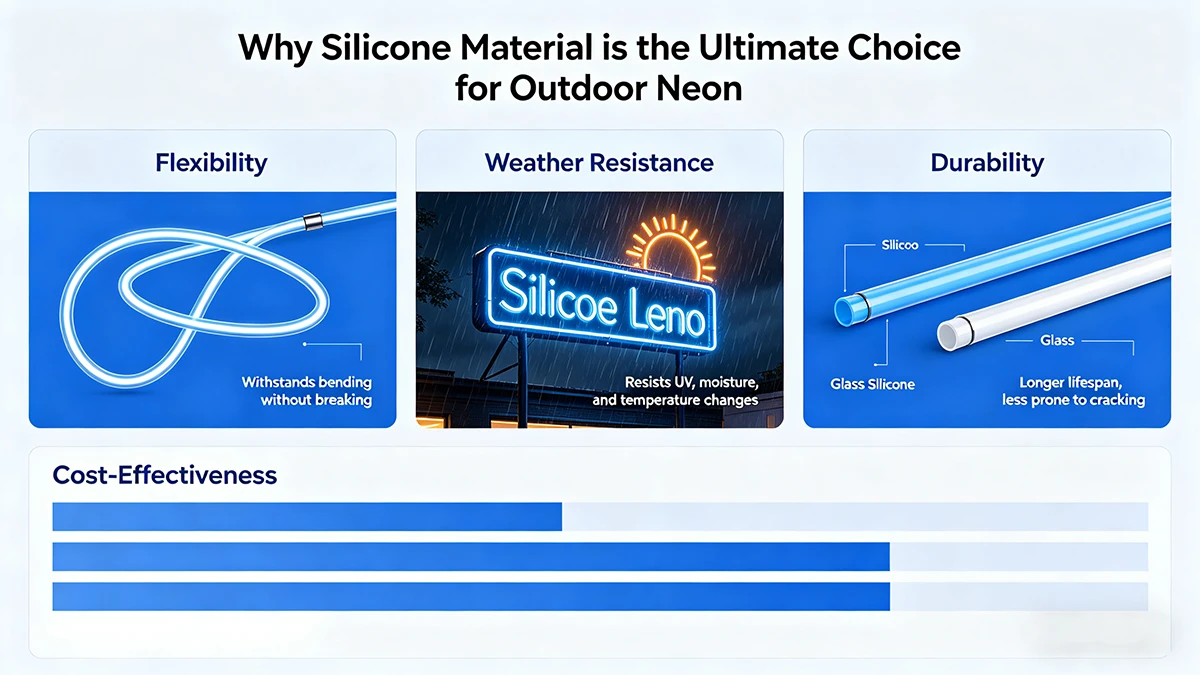
When specifying an outdoor silicone neon light strip, weatherproofing is the most critical factor. Silicone is naturally hydrophobic, meaning it repels water.
Most high-quality Silicone Material Neon light solutions carry an IP67 or IP68 rating.
IP67: Protected against immersion in water for short periods. Ideal for building facades and garden paths.
IP68: Fully submersible. Required for pool lighting or water features where the strip is constantly underwater.
Coastal environments are "neon killers" due to salt air. PVC and PU (Polyurethane) often react with salt, causing the light to dim or the casing to degrade. Silicone Material is chemically inert. It does not react with salt, acid rain, or most cleaning chemicals, making it the safest bet for seaside resorts and industrial landscapes.
In the world of B2B lighting, color consistency is everything. A manufacturer of silicone neon light strip must ensure that the "Neon Red" on the first meter looks exactly like the "Neon Red" on the 500th meter.
Silicone Material has a high refractive index. When used as a diffuser, it creates a perfectly uniform, dot-free light. This is essential for:
Architectural Outlining: Clean lines of light without visible LEDs.
Signage: High-definition Silicone Material Neon color that remains vibrant even in daylight.
Unlike other materials, silicone does not "gas out" or change color over time. Whether you choose a 2700K warm white or a vibrant RGB system, the Silicone Material Neon light will maintain its original hue for years without fading.
Sustainability is no longer a "nice to have"; it is a procurement requirement. An energy-efficient silicone neon strip reduces the total cost of ownership (TCO) for your clients.
Low Power Consumption: Modern silicone neon uses high-efficiency SMD2835 or SMD5050 chips, typically drawing only 8W to 12W per meter.
Reduced Heat Sink Requirements: Silicone dissipates heat better than PVC. This prevents the LEDs from overheating, which maintains high lumen output and extends the chip's lifespan.
Voltage Drop Mitigation: Professional energy-efficient silicone neon strip designs often use 24V DC to allow for longer runs without a loss in brightness.
Project Background: A luxury hotel in a high-humidity, high-salt environment needed to outline its 20-story facade with continuous light.
The Challenge: Previous PVC strips failed within 14 months due to UV yellowing and salt corrosion.
The Solution: The contractor switched to an outdoor silicone neon light strip with a 24V energy-efficient silicone neon strip configuration.
Result: After 18 months, the light output remains at 98% of the initial installation.
ROI: The hotel saved over $45,000 in labor costs by avoiding the "replacement cycle" associated with cheaper materials.
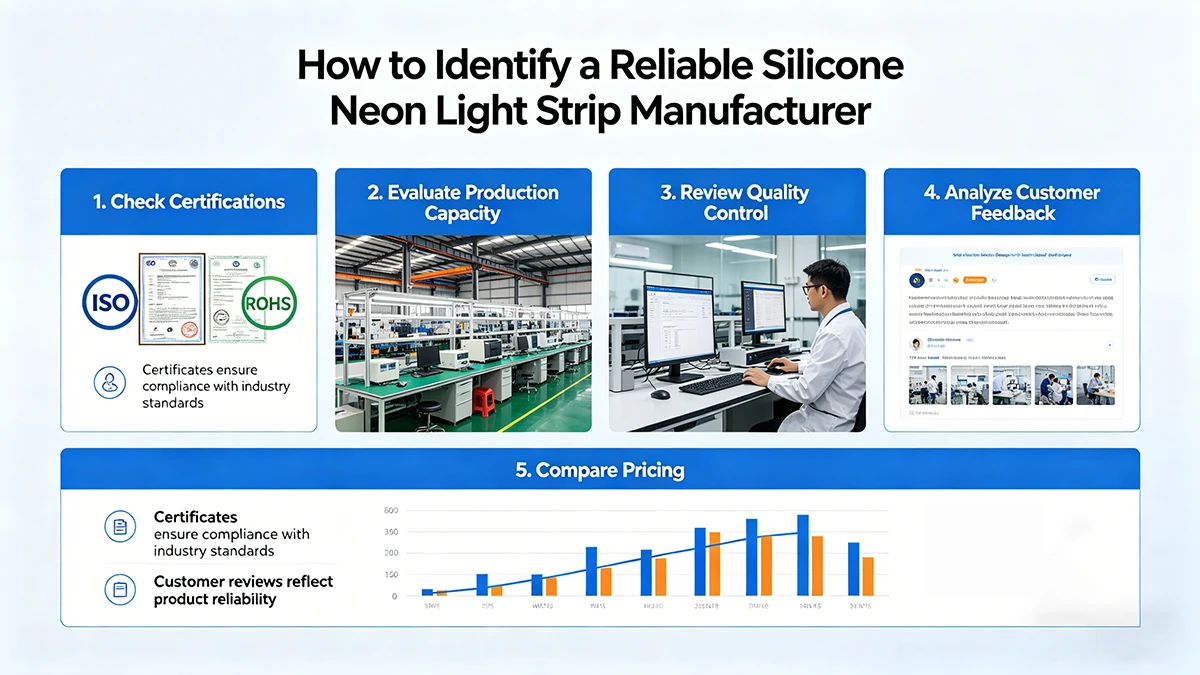
Not all silicone is medical-grade or architectural-grade. When vetting a manufacturer of silicone neon light strip, ask for these three technical benchmarks:
Co-Extrusion Process: The best strips are made using integrated silicone extrusion. This means the silicone jacket and the internal light engine are extruded together, leaving no air gaps for moisture to enter.
Certification: Ensure the products have UL, CE, and RoHS certifications. For outdoor projects, a salt spray test report is non-negotiable.
Warranty: A professional manufacturer should offer a minimum 3-to-5-year warranty on an outdoor silicone neon light strip.
Because Silicone Material Neon is highly flexible, it allows for creative designs that PVC cannot handle. However, there are specific rules:
Bending Diameter: Always check the "minimum bend radius." Forcing a Silicone Material Neon light into a sharp 90-degree angle can break the internal PCB.
Cutting Points: Only cut at the designated copper pads. Cutting elsewhere will kill the entire segment.
Seal the Ends: When cutting an outdoor silicone neon light strip, you must use specialized silicone end-caps and waterproof glue to maintain the IP rating.
Choosing Silicone Material for your next lighting project isn't just about aesthetics; it’s about engineering resilience. At THINK TEAM KING, we understand that whether you are a wholesaler looking to stock reliable inventory or a designer aiming for architectural perfection, Silicone Material Neon must provide the durability, color stability, and energy efficiency required for the modern market.
By partnering with THINK TEAM KING and choosing our premium energy-efficient silicone neon strip, you ensure your projects shine brighter, last longer, and resist the toughest outdoor conditions. Trust our expertise to bring high-performance, long-lasting illumination to your global projects.

It provides all-round service for customers
and users 24 hours a day.
Enter your email for exclusive offers
and information on new upcoming products.


