


Time:2026-05-18
The global car accessory market is changing very fast. Today, international buyers and car owners want more than just basic transport. They want a premium, high-end experience inside the vehicle cabin. Ambient lighting has become a major part of modern car design. It changes the mood inside the vehicle and makes a standard car look like a luxury one.
At the center of this big change are neon flex strips for car interiors. In the past, old automotive LED strips were ugly. They showed bright "dots" of light that looked cheap and hurt the eyes. Modern product designers and sourcing managers now use a much better solution. They choose advanced, seamless silicone neon strips. These strips create a smooth, continuous line of light that fits perfectly into the layout of any vehicle.
For global distributors, wholesale buyers, and car modification shops, finding a reliable factory partner is the most important step. THINK TEAM KING is a professional maker of high-grade lighting solutions. We design and produce top-tier commercial-grade neon ceiling systems, outdoor festival lights, and ultra-thin car light strips. Our systems combine beautiful design, extreme energy efficiency, and strong circuit safety. This comprehensive guide will explain the technology, specs, and trends driving the car ambient light industry today.
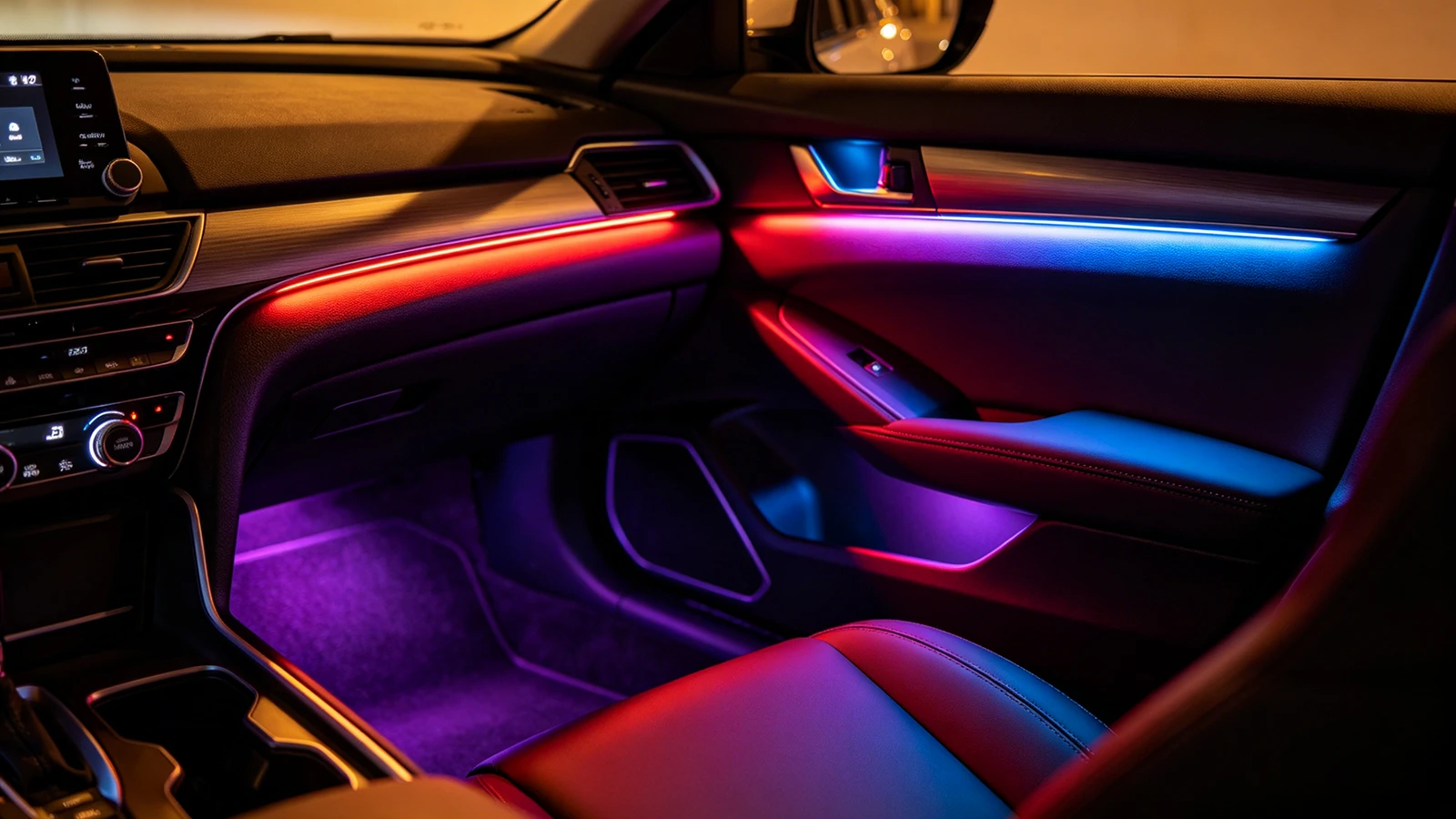
Modern car interior styling takes many ideas from luxury home design and professional stage lighting layouts. Designers no longer want people to see raw light bulbs or open LED chips. Harsh, direct light can blind the driver and make the cabin feel uncomfortable. Instead, the industry now prefers hidden, diffuse light sources.
Using a flexible separated led neon strip architecture helps installers place light exactly where they need it. Technicians can outline the dashboard curves, center consoles, door seams, and footwells. This lines highlight the car's structural shapes. Most importantly, it gives a soft glow that does not create a dangerous glare on the windshield at night.
To achieve this premium look, you must use high-quality products. Low-grade consumer retail strips often fail to distribute light evenly. They look bright in some spots and dark in others. On the other hand, professional led neon lights use advanced silicone diffusion layers. This design mixes the light inside the jacket before it leaves the strip. It ensures a clean, solid beam of light from the start of the strip to the end. This uniform look keeps the car cabin looking like a factory-installed system under both bright daylight and dark midnight conditions.
The environment inside a car cabin is incredibly harsh. Vehicles parked outside face intense sunlight and strong ultraviolet (UV) rays for hours. Also, internal temperatures can shift wildly in a short time. In cold regions, the cabin can drop below freezing at night. In hot summer months, the dashboard surface temperature can easily go past 85°C. For b2b buyers, product material directly determines your brand's reputation and return rates.
In the past, many wholesale neon light global suppliers used Polyvinyl Chloride (PVC) plastic to make flexible neon tubes. They chose PVC because the raw material cost was very low. However, PVC fails quickly in car interiors. Under hot sun, PVC turns yellow and gets very brittle. It cracks easily when the car moves over bumps. Even worse, hot PVC releases chemical smells inside the sealed vehicle, which is bad for passenger health.
Today, the professional market has fully shifted to premium gas-phase silicone formulations. As a top wholesale silicone flex neon strip supplier, THINK TEAM KING uses high-grade silicone for all automotive lines.
Zero Yellowing: Our silicone does not change color under intense UV rays. It stays perfectly clear for years.
Extreme Temperature Resistance: The silicone jacket handles temperatures from -40°C up to +85°C without changing its shape.
No Smells: Our material is completely stable and safe. It will not release any bad odors inside a hot car.
High Flexibility: Silicone stays soft and bendable. This allows installers to press it into tiny gaps between plastic car panels easily.
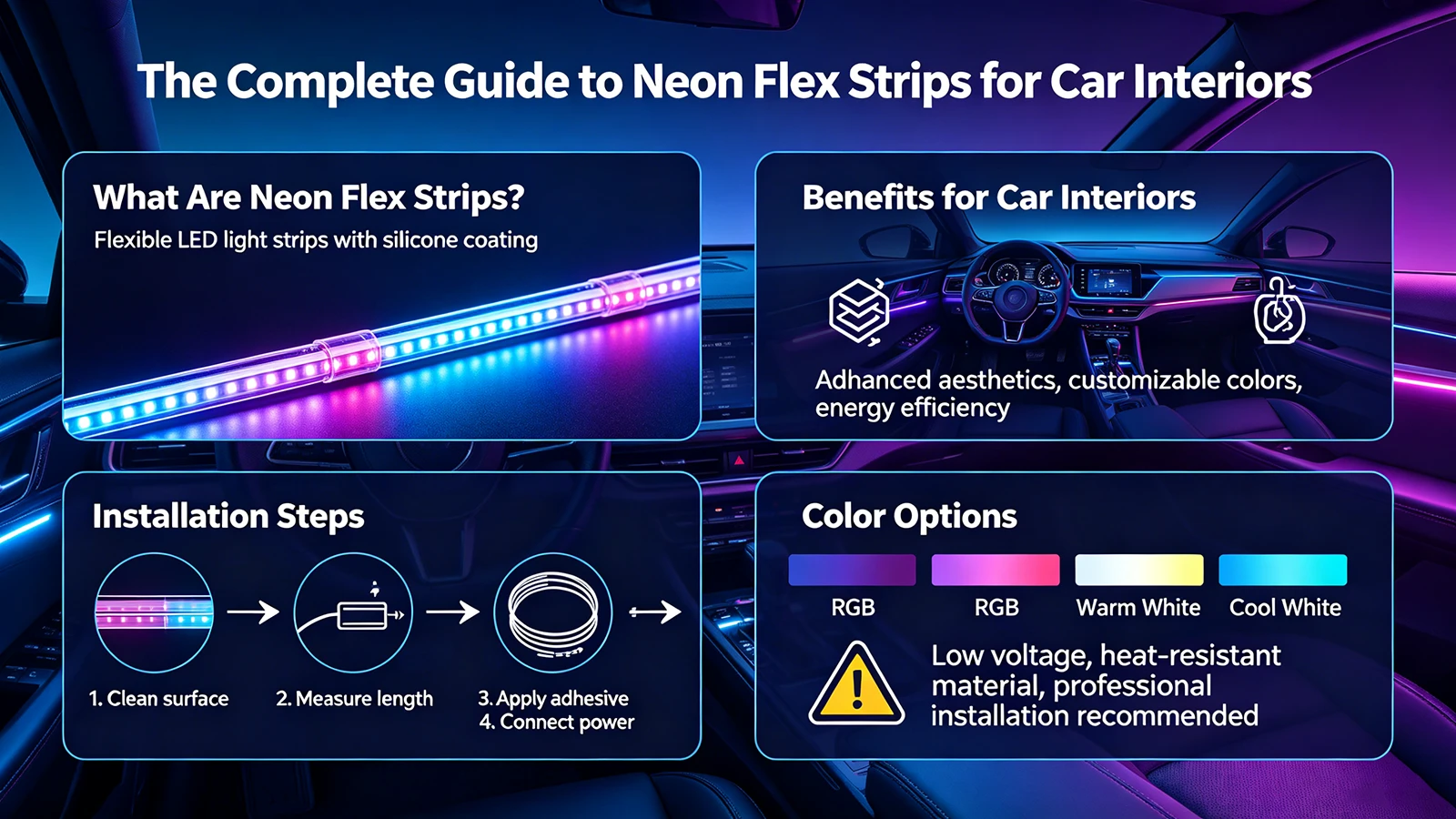
When global procurement managers source led technology for high-volume distribution, they cannot rely on marketing words alone. They need real data. A professional automotive light strip must balance high light output with low power draw to protect the vehicle's electrical system.
Here are the technical specs that separate commercial-grade car neon from cheap retail options:
| Technical Item | Standard Retail Grade | THINK TEAM KING Edge | Why It Matters to B2B Buyers |
| Blink & Refresh Rate | Below 1,200Hz | Over 4,000Hz | Eliminates eye strain; looks smooth on smartphone cameras. |
| Luminous Efficiency | 60–80 lm/W | Over 110 lm/W | Provides maximum brightness while saving vehicle battery power. |
| Waterproof Rating | IP20 or IP44 | IP67 Fully Sealed | Protects the lights against spilled drinks and wet cleaning sprays. |
| Color Rendering (CRI) | Below 80 Ra | Over 92 Ra | Makes premium leather seats and wood trim look rich and true. |
| Minimum Bend Radius | Over 30mm | 10mm Ultra-Flex | Allows the strip to make tight turns around sharp dash corners. |
| Internal Circuit Board | 1-ounce Copper | 3-ounce Rolled Copper | Prevents the internal board from snapping when bent into car gaps. |
The market for neon flex strips for car interiors is moving toward smart control systems. High-end customers no longer want simple, single-color lights that just stay on. They want dynamic, pixel-addressable systems that can change colors and react to the vehicle's actions.
By using advanced micro-chips inside the strip, modern led technology allows each section of the light line to show a different color at the same time. This opens up amazing possibilities for car integration. Professional modification shops can connect the neon light controller to the car’s safety computer (the CAN bus system).
For example, the ambient lights can stay an elegant blue during normal driving. If the vehicle's blind-spot sensor detects a dangerous car nearby, the neon strip on that door can instantly flash bright red. This changes the neon light from a simple decoration into an active safety feature that protects the driver's life.
Additionally, using a diy separated neon strip layout with smart power distribution ensures optimal energy efficiency. These advanced power controllers communicate with the LED chips continuously. They adjust the electrical current in real-time, sending power only when and where it is needed. This smart control prevents heat buildup behind the plastic dashboard panels, extending the lifespan of both the car's electronics and the LED lights.
The Operational Challenge: In early 2025, a major fleet upgrade company in Western Europe won a contract to customize 2,500 luxury electric transport vans. They needed an ultra-thin ambient light strip to line the passenger cabins. The requirements were very strict: the strip had to fit into extremely tight trim gaps, require zero cutting of the original car frame, and use very little power so it would not drain the van's primary traction battery.
The Custom Solution: THINK TEAM KING stepped in as the primary wholesale silicone flex neon strip supplier. Our engineering team designed a custom, ultra-slim 4mm side-emitting silicone light guide. We supplied these specialized kits pre-wired with automotive-grade voltage regulators that protect against power spikes. We sealed the entire system using our high-grade IP67 silicone extrusion process.
The Final Result: Thanks to our custom-molded mounting fins, the installation teams cut their labor time by 35%. The light strips slid into the dashboard gaps without any glue or screws. Testing showed a 45% reduction in power use compared to standard aftermarket lights, delivering excellent energy efficiency. The fleet owner was thrilled, and the beautiful 3D interior lighting became a viral hit on social media apps, helping them win more corporate clients.
To make sure your car interior neon lights last for years without failing, installation teams should follow these three industrial rules:
Thorough Surface Cleaning: Car interior plastics are often coated with manufacturing release agents, glossy waxes, and dust protectants. Installers must clean all gaps thoroughly using isopropyl alcohol solutions before running the light guide. If you skip this, any mounting tape or clip will slide out over time.
Mechanical Strain Relief: Cars are constantly moving, shaking, and hitting bumps on the road. This creates continuous vibrations. Teams must use mechanical strain-relief clips at the point where the power wire connects to the light strip. This protects the fragile internal solder points from cracking under stress.
Smart Thermal Routing: LED lights and control boxes create heat. Installers should place the main control boxes away from the car's central heating vents. Fixing the control nodes to the metal interior body frame helps pull heat away, keeping the system cool and safe.
Yes. Our silicone light strips feature clear, pre-marked cut lines along the internal circuit board. Technicians can cut the strip to the exact length of the car's door or dash panel. After cutting, you must place our matching silicone end-caps over the cut end and seal it with industrial glue to keep the system waterproof.
THINK TEAM KING uses high-brightness LED chips that offer superior light output while drawing very little current. Combined with our high-efficiency power drivers, our systems minimize battery drain, allowing drivers to enjoy the ambient look without worrying about a dead battery.
No. Cheap aftermarket lights use PVC plastic, which turns brown or yellow and cracks within a year under the sun. We use gas-phase, UV-stabilized silicone. Our materials retain their perfect flexibility and optical clarity in all weather conditions, surviving years of direct sunlight.
Yes. We are custom neon light oem suppliers. We can build our systems to work with standard automotive controllers, LIN/CAN bus networks, or Bluetooth smartphone applications, giving your customers total control over colors and modes.

It provides all-round service for customers
and users 24 hours a day.
Enter your email for exclusive offers
and information on new upcoming products.


