


Time:2026-05-22
The global outdoor architectural lighting and landscape markets are growing fast. Today, project managers, electrical contractors, and builders care about safety just as much as looks. Standard lighting products often fail when they face harsh weather. Rain, dust storms, freezing winter cold, and strong sun rays constantly damage outdoor installations.
Modern engineering has delivered a reliable solution to this problem. This solution is the use of ip67 waterproof outdoor neon tubes. This advanced led technology provides a continuous, smooth bar of bright light. It works beautifully across building facades, walkway borders, and public parks. Most importantly, it operates safely under wet conditions.
For international B2B buyers and wholesale procurement managers, sourcing properly rated fixtures is a vital business strategy. It protects your financial investment and ensures you meet local electrical safety codes. This complete guide covers the technical specifications, material advantages, and field installation rules for successful commercial lighting projects.
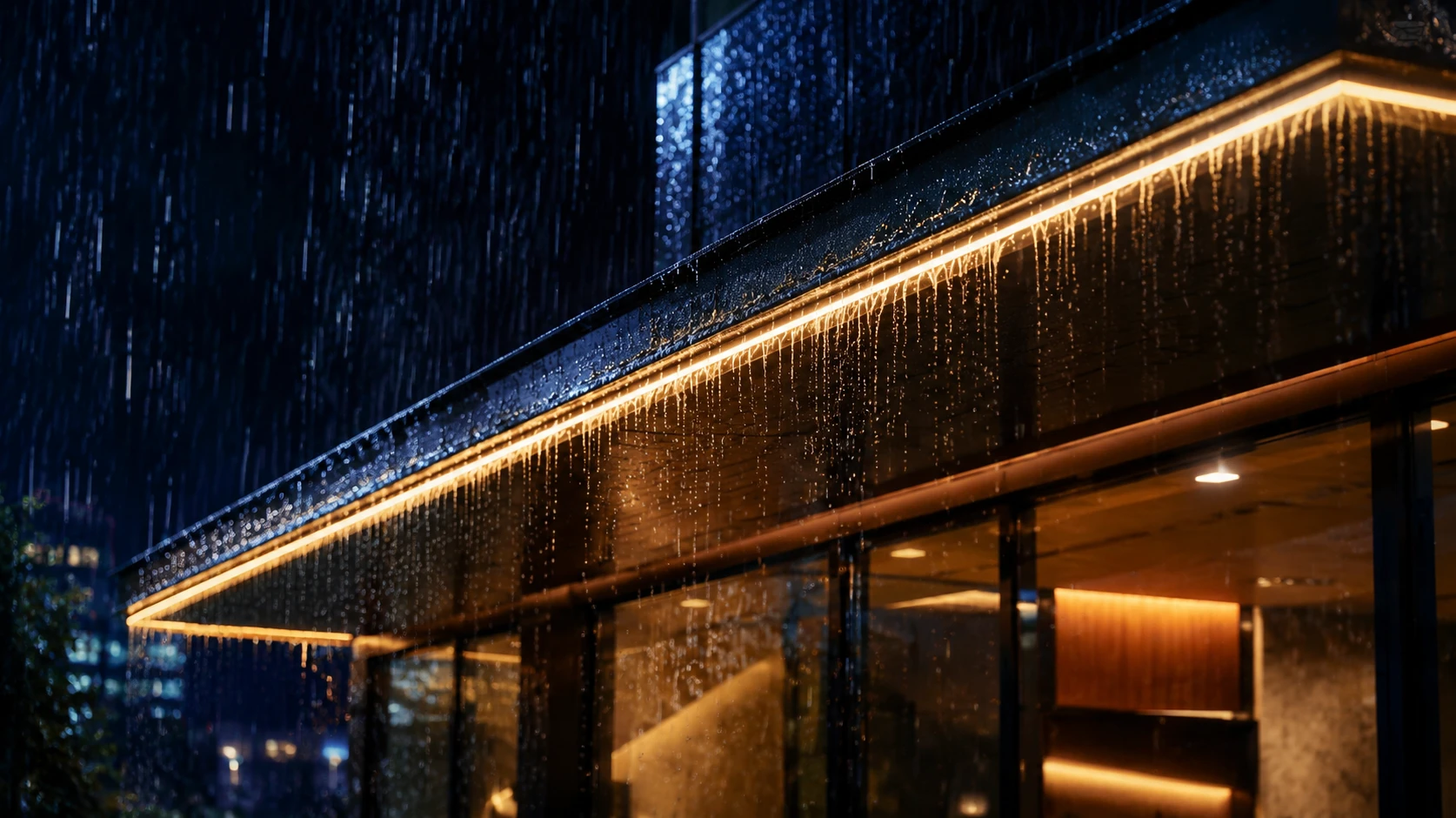
Understanding the technical structure of an Ingress Protection (IP) rating is the first step in selecting outdoor lighting. The IP system is an international standard. It measures how well a light fixture resists solids and liquids.
The first number in an IP rating ranges from 0 to 6. It defines the level of protection against solid objects, dust, and accidental human touch. A rating of 6 is the highest possible standard. It guarantees that the linear fixture is completely dust-tight. No microscopic sand or airborne particles can pass through the outer jacket to damage the internal circuit board.
The second number ranges from 0 to 9. It measures resistance against moisture and water leaks. A rating of 7 indicates high-level water resistance. It means the fixture can handle temporary immersion in water up to one meter deep for 30 minutes. This high safety level protects the light against flash floods, heavy tropical downpours, and melting ice pack conditions.
The lifespan of ip67 waterproof outdoor neon tubes depends directly on the chemical quality of their outer flexible housing. This housing must shield the internal electronics from weathering for many years of service.
In the past, low-cost factories used Polyvinyl Chloride (PVC) plastic to make flexible linear tubes. PVC is cheap to buy, but it fails quickly when placed outdoors. Under direct sunlight, ultraviolet (UV) rays break down the plastic paths. This degradation causes the PVC jacket to turn yellow and cloudy, which lowers the light output. Additionally, PVC becomes hard and brittle in freezing weather, causing it to crack during structural shifts. Water enters through these cracks, causing immediate short circuits.
Professional engineering projects specify gas-phase silicone extrusions to eliminate these business liabilities. Silicone offers superior advantages for outdoor use:
Complete UV Stability: Silicone molecules resist solar radiation. The jacket maintains perfect clarity and soft flexibility for over ten years without turning yellow.
High Temperature Resistance: Structural silicone retains its shape and elasticity across a wide temperature range. It operates safely from -40°C up to +85°C without warping or melting.
Chemical Resistance: High-grade silicone resists salt air spray in coastal regions. It also withstands chlorinated pool water and acidic rain in heavy industrial zones.
When sourcing commercial-grade linear systems, project engineers require real technical data. This data ensures the product matches local utility demands and safety rules.
The matrix below outlines the core technical data that separate professional-grade outdoor neon systems from consumer retail products:
| Engineering Metric | Standard Retail Grade | Professional Outdoor Engineering Grade | Practical B2B Value |
| Ingress Protection | IP20 or IP44 | IP67 / IP68 Dual-Extrusion | Guarantees complete safety during heavy rain and temporary flooding. |
| Jacket Material | Standard PVC Plastic | Gas-Phase Optical Silicone | Prevents yellowing, cracking, and chemical smell emissions. |
| Light Efficiency | 50–70 lm/W (High heat loss) | Over 110 lm/W | Delivers maximum brightness while maintaining high energy efficiency. |
| Refresh Frequency | Below 1,200Hz | Over 4,000Hz (Flicker-Free) | Looks perfectly smooth under high-definition security and media cameras. |
| Circuit Board Base | 1-ounce Single Copper | 3-ounce Rolled Dual Copper | Handles high current smoothly and prevents trace breaks during installation. |
| Color Index (CRI) | Below 80 Ra (Dulls space) | Over 92 Ra | Displays true architectural colors and landscaping elements accurately. |
| Minimum Bend Radius | Over 40mm (Stiff) | 10mm Side-Bend Flexibility | Forms tightly around sharp building corners and complex custom signs. |
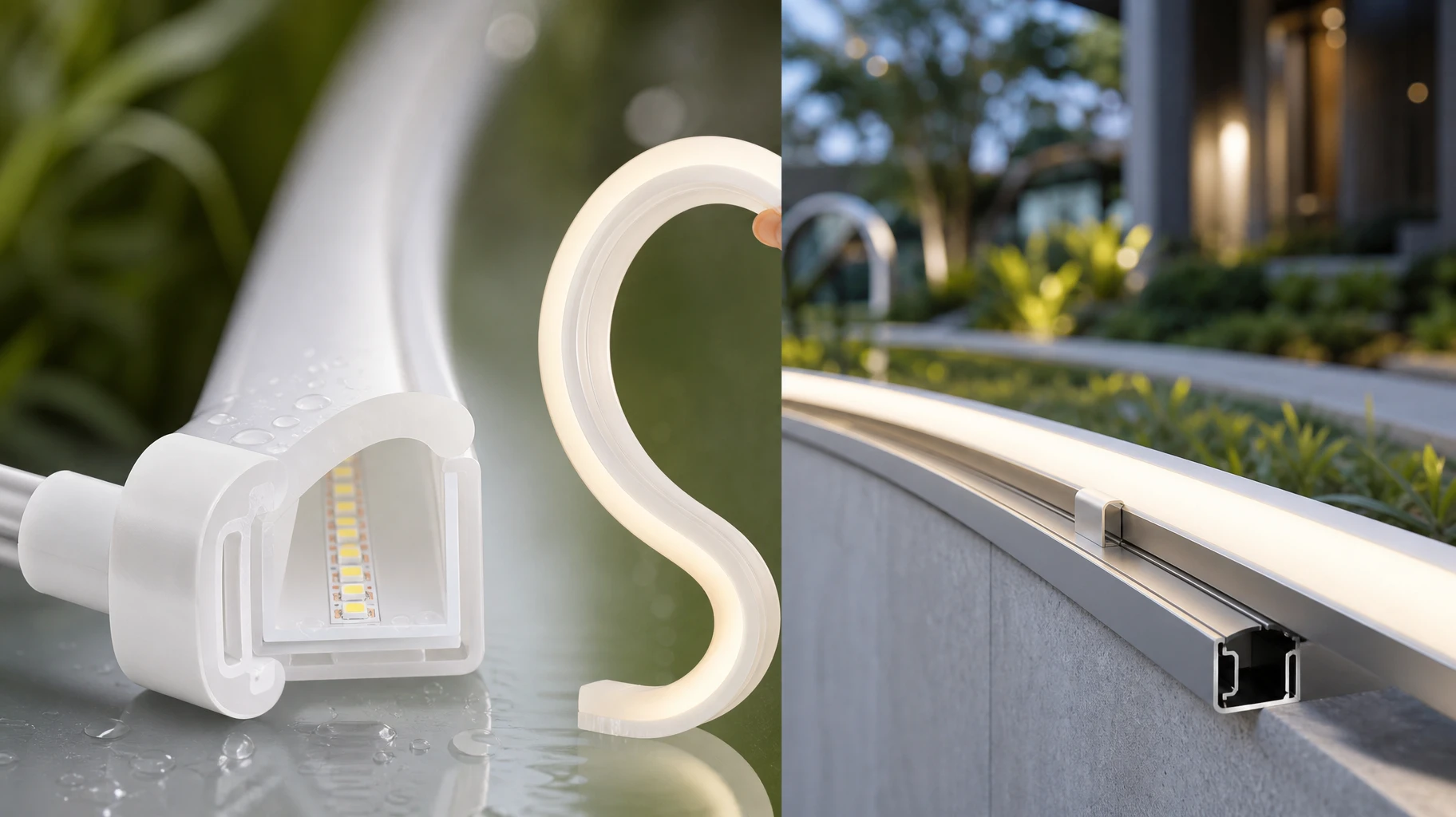
Operating large-scale outdoor lighting layouts requires smart energy management. Old high-voltage systems waste a significant amount of electricity through heat generation. This thermal waste drives up commercial energy bills and shortens component lifespans.
Modern ip67 waterproof outdoor neon tubes use highly efficient light-emitting diodes (LEDs). These solid-state chips convert electrical energy directly into cool light with minimal thermal output. Furthermore, professional engineering layouts integrate constant-current low-voltage power drivers. These drivers regulate the incoming electrical current perfectly, keeping the internal copper circuit board running cool.
By preventing excess power draw, the system optimizes overall energy efficiency. Keeping the interior temperature low protects the light-emitting diodes from lumen depreciation. This careful thermal management ensures the system safely reaches its full 50,000-hour operational life without fading or shifting colors.
The Operational Challenge: In early 2025, an international contracting group needed to install 5,500 meters of linear accent lighting along a luxury shopping resort facade. The installation site faced constant salt air spray, high ambient humidity, and intense summer sun. Previous low-cost linear models yellowed and failed within nine months because of moisture ingress.
The Engineered Solution: Project planners specified silicone-extruded, high-density IP67 outdoor neon tubes. The manufacturing factory supplied pre-cut, customized lengths equipped with heavy-duty molded waterproof connectors. To ensure absolute resistance against coastal salt fog, the factory utilized specialized anti-corrosion internal coatings and IP67-rated constant-voltage power drivers.
The Final Result: The installation crew completed the setup 35% faster by using custom-engineered aluminum mounting tracks. The new silicone jacket completely blocked moisture entry, passing all local electrical safety inspections. Testing verified a 50% reduction in total power consumption compared to the old lighting system. The resort achieved its goal of beautiful, seamless structural accent lighting while lowering its ongoing maintenance and utility costs.
To secure the maximum protection and durability from your waterproof linear lighting, installation crews must follow three strict field protocols:
Calculate and Control Voltage Drop: Low-voltage DC systems face electrical resistance over long distances. This resistance causes the light to dim at the tail end of the run. Installers must use the correct wire thickness (AWG) based on the distance from the power box. They must also inject power at proper intervals to maintain uniform brightness from start to finish.
Proper Power Supply Enclosures: The neon tubes themselves carry a safe IP67 waterproof rating. However, the main external transformers still convert high-voltage building mains (110V/220V AC). Teams must house these transformers inside ventilated, weather-proof NEMA-rated boxes located far away from standing water and public access.
Seal Every Custom Cut Correctly: If a technician trims a flexible neon tube on-site, they must cut only along the factory-designated cut lines. The cut end must be sealed immediately using a matching silicone endcap and structural industrial adhesive. Skipping this step voids the IP67 protection rating and allows humidity to ruin the internal copper circuit board.
An IP65 rating means the fixture can resist low-pressure water jets from a hose nozzle. An IP67 rating provides a much higher level of protection. It guarantees that the light tube is completely sealed against temporary submersion in water up to one meter deep for 30 minutes. This extra safety makes IP67 fixtures ideal for outdoor areas that face heavy downpours or standing puddle water.
Cheap outdoor lights use PVC plastic housings, which crack, yellow, and fail within a year under direct sunlight. Premium silicone systems are immune to UV yellowing and handle extreme weather variations cleanly. This structural endurance eliminates frequent replacement costs and high labor fees for high-rise facade maintenance.
Yes. Modern low-voltage systems connect easily to commercial automation networks using specialized digital decoders. They support common industry protocols like DMX512, Dali, and Art-Net. This allows property managers to automate schedules, adjust colors dynamically, and track real-time power metrics to maximize energy savings.
Our production facilities use advanced gas-phase silicone dual-extrusion processes to build premium led neon lights. We ensure complete quality control by testing every batch under deep water pressure immersion. THINK TEAM KING specializes in manufacturing these durable lighting solutions, providing custom low-voltage power distribution networks and factory-molded waterproof endcaps to protect your system from moisture entry. Whether your project requires high-volume wholesale neon lighting or custom-engineered commercial-grade neon ceiling systems, THINK TEAM KING delivers certified systems built to survive the harshest outdoor environments.

It provides all-round service for customers
and users 24 hours a day.
Enter your email for exclusive offers
and information on new upcoming products.


