


Time:2026-06-09
Smart commercial automation and professional architectural lighting markets are changing fast. Today, facility managers, system integrators, and hospitality designers avoid old cloud-dependent lighting. They also avoid weak plastic LED strips that fail under harsh weather. Modern business automation demands high-efficiency linear lights. These systems must connect easily to local smart networks. They also need to handle tough outdoor weather without losing connection or power.
The main product leading this industry change is a premium line of zigbee-compatible neon with local control systems. These bulk light spools feature a true IP67 waterproof design. They bundle bright, high-density light-emitting diodes inside a solid silicone shield. This setup gives a perfectly smooth line of light. Sourcing these smart local-mesh linear lights helps engineering teams lower their field maintenance costs. It cuts down on network setup labor and protects commercial project investments from internet outages.
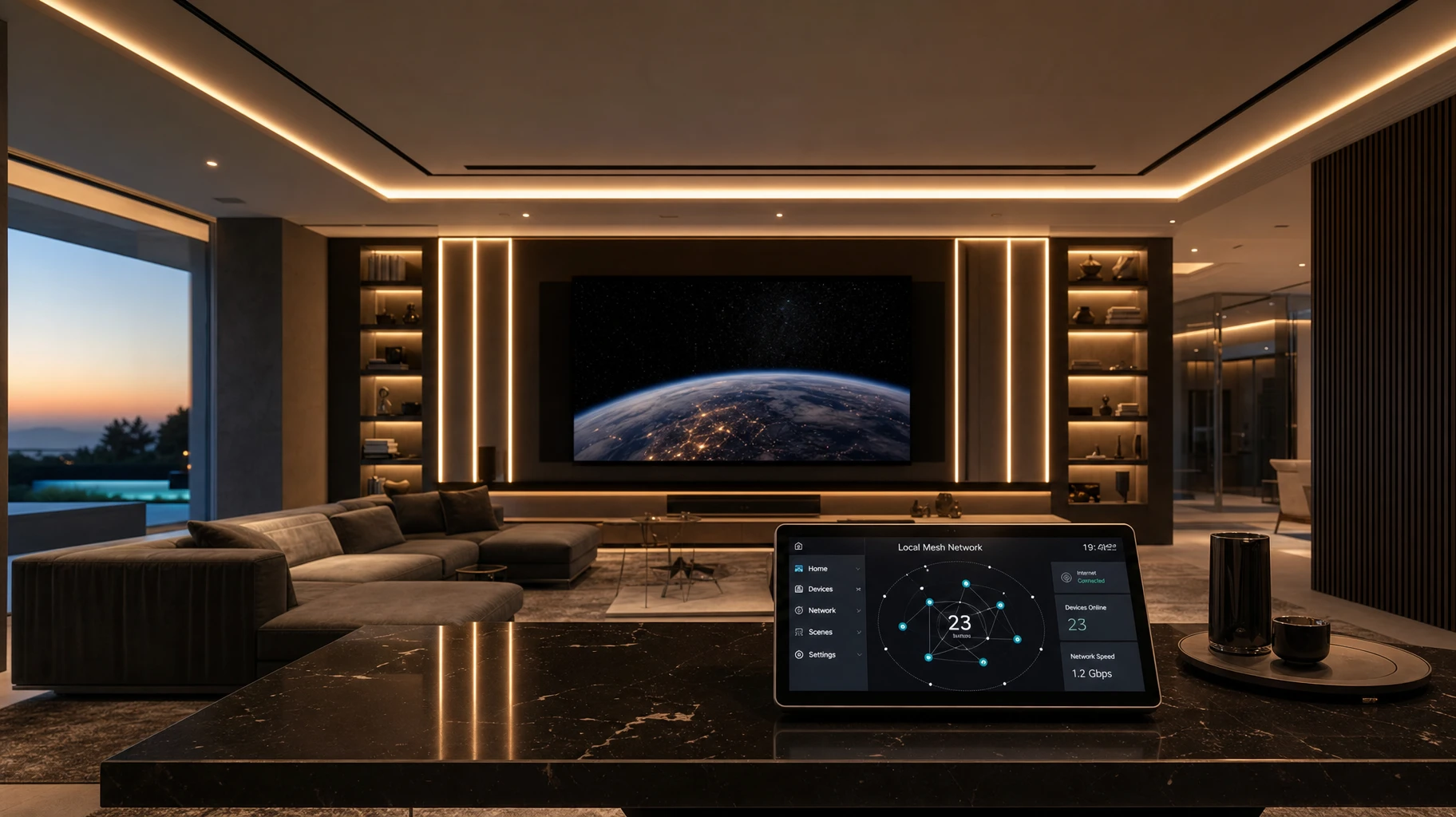
Large smart buildings need robust local networks to run safely. Standard smart lights often depend on continuous cloud connections over public Wi-Fi networks. However, this cloud-dependent setup creates major risks for high-end commercial spaces.
When a smart light strip relies on remote cloud servers, any web delay drops system responsiveness. If a resort or store experiences an internet drop, cloud-tied lighting lines lock up immediately. They stop responding to automation rules, timers, or wall switches.
Furthermore, standard Wi-Fi smart lights put a heavy strain on local wireless routers. Connecting dozens of individual light strips can crash a local network. This issue creates a large security risk, exposing corporate systems to external digital hacks.
Professional smart linear lights use a localized Zigbee hardware mesh network. A Zigbee network does not talk directly to the open internet. Instead, it processes all lighting schedules, sensor triggers, and color changes locally at the edge through a local gateway hub.
If your main business internet line drops completely, the localized Zigbee light system keeps running perfectly without any interruptions. The wireless mesh handles signals across light segments easily. Each added neon strip acts as a network signal repeater. This design extends the system's smart range across vast building complexes without slowing down your local corporate network.
To protect project budgets and justify smart building costs to corporate boards, procurement teams must look at hard engineering facts. The detailed matrix below outlines the major operational differences between low-grade cloud light strips and professional local mesh smart neon tubes:
| System Engineering Parameter | Standard Cloud Wi-Fi Strips | Professional Local Zigbee Neon Systems | Direct Financial Impact on Smart Project Profits |
| Network Control Center | Remote Internet Cloud Server | Local Edge Gateway (No Web Needed) | Guarantees zero downtime; stays running during major web outages. |
| Max Network Node Count | ~30 units before router crashes | Up to 65,000 nodes per local mesh | Allows massive scaling across large hotels and shopping malls. |
| Signal Transmission Delay | 500ms to 2,000ms (Cloud lag) | Under 20ms (Instant local execution) | Delivers perfect, real-time light sync for live musical events. |
| Outer Insulation Jacket | Thin PVC Plastic Casing | Gas-Phase Co-Extruded Silicone | Guaranteed zero yellowing or cracking under hot sun for 10+ years. |
| Ingress Protection (IP) | IP20 or IP44 (Indoor only) | True IP67 / IP68 Sealed Enclosure | Withstands deep seasonal floods, heavy snow, and power washes. |
| System Security Shield | High risk (Open Wi-Fi ports) | AES-128 Banking-Grade Encryption | Protects corporate buildings from digital hacks and safety leaks. |
| Working System Voltage | 5V DC or 12V DC (Unregulated) | 24V DC Constant Current Drivers | Ensures perfectly uniform brightness across long linear runs. |
Outdoor smart lights face constant weather abuse. They must endure heavy rainstorm downpours, thick winter snowpack, automatic lawn water sprayers, and thick morning fog. To keep smart signals clear without dropping out, these light tubes need a perfect water seal.
Cheap commercial light strips only carry an IP65 protection rating. These lower-grade models rely on glued endcaps, mechanical seams, or thin plastic clips. Over time, outdoor summer heat and cold winter freezes make these glued joints pull apart. When a light strip cools down at night, a tiny vacuum forms inside the empty tube. This vacuum sucks damp outdoor air directly inside the casing. The damp air turns into real water drops over the LED chips, rusting the copper tracks and short-circuiting the smart chips.
True IP67 shatterproof smart tubes use an advanced automated co-extrusion molding process. The factory does not slide a smart light strip into an empty plastic tube. Instead, the outer silicone shield and the internal heavy-duty circuit board are molded together at the exact same time. This airless setup means there are no empty gaps inside the tube. Water cannot pool inside. This solid build gives full protection against water immersion down to 1 meter deep for 30 minutes. The system easily handles heavy rainstorms and high-pressure water cleanups.
Building large-scale signs or long accent lines across a building facade requires highly stable power. Moving light patterns need perfect current flow to deliver true, rich colors across every single meter.
Low-cost retail light strips use thin, 1-ounce copper layers inside their flexible circuits. When an installer twists or bends these thin boards around corners, the copper tracks face immense physical stress. This stress leads to high electrical resistance. In smart color systems, high resistance cuts the power reaching the light chips unevenly. As a result, a smart line programmed to show pure white turns a dirty yellow or dim pink at the far end of the run.
Professional smart spools use thick, 3-ounce rolled dual-copper Flexible Printed Circuit (FPC) boards. This thick copper layer carries heavy currents easily over long runs. It prevents voltage drop completely, even during fast color-chasing or flashing effects. Your smart lighting installation stays bright and color-perfect from the first power feed down to the final meter segment.
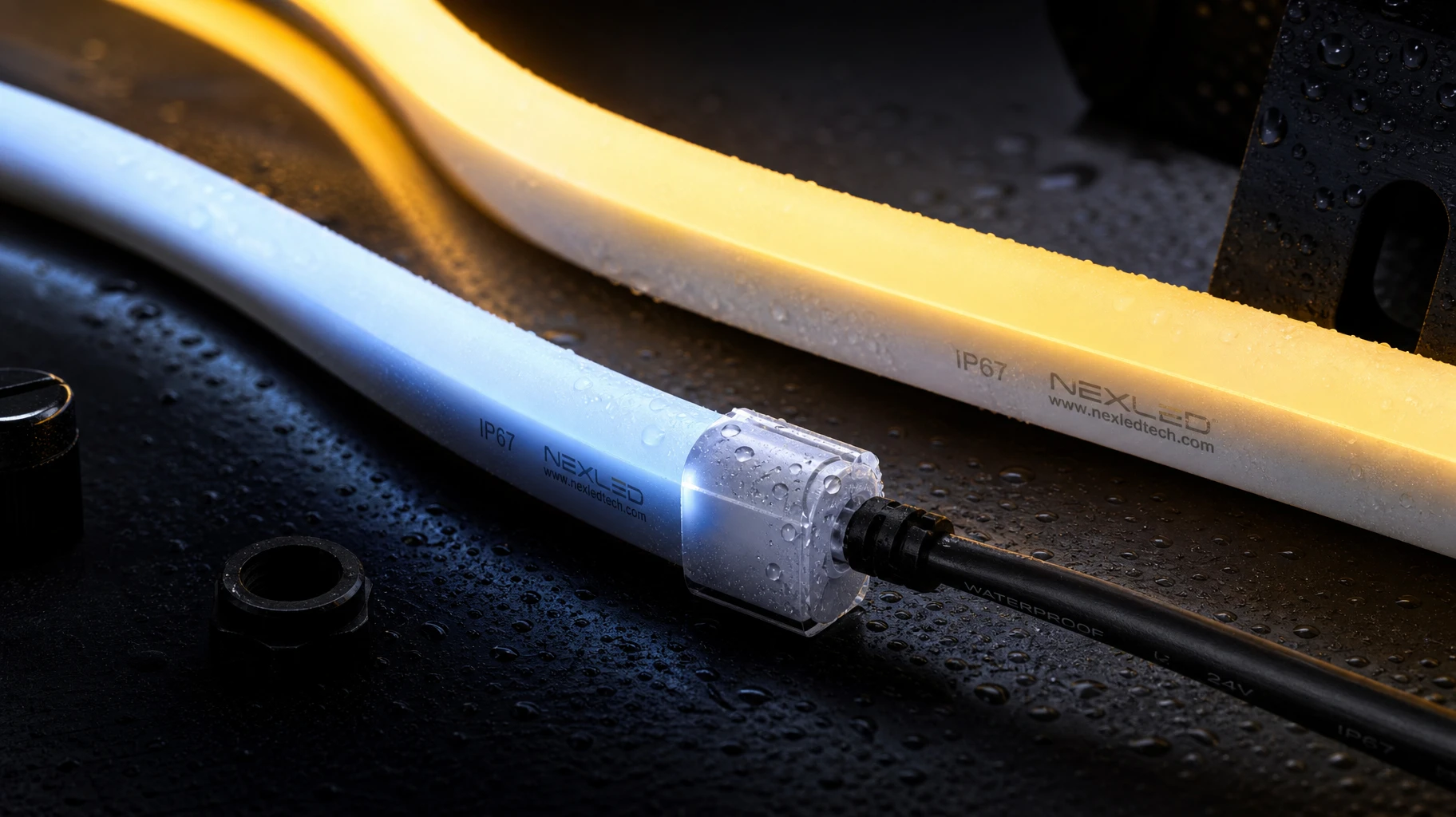
The Project Setting: In early 2026, an elite electrical contracting group started a major smart lighting upgrade on a busy coastal resort promenade. The project needed continuous lines of color-changing accent lighting. Workers installed them under pedestrian handrails, beneath outdoor park benches, and along open-air restaurant pathways. The system needed to connect to a centralized smart building controller to dim the lights automatically during late-night hours.
The Initial Trial: The engineering team first installed standard IP65 cloud-connected Wi-Fi light strips to cut down on initial raw material procurement costs. However, within months of use, the resort's public Wi-Fi network faced heavy tourist traffic overload. The cloud-dependent light strips regularly lost connection to the server. They failed to turn off on time and flickered wildly due to signal delays. Even worse, ocean moisture crept inside the glued plastic covers, causing short circuits across 18% of the initial test batch.
The Professional Upgrade: The resort group ordered the immediate removal of the cheap Wi-Fi fixtures. They approved the deployment of premium zigbee-compatible neon with local control tubes built with 3-ounce rolled dual-copper PCBs and solid co-extruded silicone housings, supplied by THINK TEAM KING.
The Real-World Outcomes: The hardware upgrade completely resolved the resort's operational and financial struggles. Because the new Zigbee system processes all smart rules locally inside the edge hub, the lights never fail to dim on time, even when the main hotel internet slows down. The high-density silicone housing completely blocked ocean moisture, bringing the network failure rate down to absolute zero. The project finished its season with zero maintenance callouts, saving the resort thousands of dollars in yearly repair labor.
To protect your hardware and keep your smart network running perfectly for years, setup teams must follow three simple rules:
Keep Wireless Smart Nodes Within Range: Zigbee devices pass signals to one another automatically. However, you should still place your first smart light segment within 15 to 20 meters of your main edge hub. This step ensures a strong initial data lock before the mesh extends further out across your building project.
Follow the True Side-Bend Axis: Flexible neon structures are built to bend smoothly along one specific direction. Do not force a side-bend tube to twist or curve upward against its shape. Forcing the material puts too much stress on the internal copper circuits, which can break the smart chip data lines.
Use Safe Low-Voltage Class 2 Power Boxes: All smart linear installations must use high-quality, regulated DC24V Class 2 power units. Workers should lock these power units inside central electrical cabinets away from public reach. Make sure every power circuit has dedicated short-circuit and over-voltage protection to shut down the system automatically during an external power grid surge.
Can this Zigbee light system function properly if the local internet goes completely down?
Yes. Because these tubes feature an advanced local control architecture, all your automation rules, schedules, and sensor links keep running smoothly through your local edge gateway. They do not need an active internet connection to process commands.
Does an IP67 rating mean these smart light tubes can be washed with pressure cleaners?
Yes. An IP67 rating certifies that the co-extruded silicone sleeve is fully sealed against dust and heavy water submersion down to 1 meter for 30 minutes. It easily survives torrential rainstorms and regular high-pressure water cleanups during routine facility
maintenance.
How to Source and Purchase These Smart Local-Mesh Neon Spools from THINK TEAM KING?
THINK TEAM KING specializes in manufacturing premium, infrastructure-grade commercial-grade neon ceiling systems and heavy-duty lighting solutions for global distributors, sign factories, and contracting groups. We build our high-density wholesale neon lighting lines using certified 3-ounce rolled dual-copper circuit boards and ultra-short cut-points to ensure total design freedom and zero material waste. Every batch of our led neon lights lowers standby power, passes strict safety codes, and integrates perfectly with smart control networks. Whether you need massive container shipments of bulk spools or custom setups for premium public plaza builds, THINK TEAM KING provides robust systems built for your exact technical specs.
Reviewing smart architectural materials for commercial development proves that buying premium bulk reels is essential. It protects operational safety and secures long-term city or corporate investment. Low-cost consumer choices look cheap upfront, but their wide cut-points, thin copper circuits, and fragile cloud-dependent connections cause high material waste and frequent field repairs. Upgrading to high-density, short-interval silicone neon lines driven by stable local edge networks delivers a clean, premium visual style while cutting down system repair labor.
Are you managing a high-volume building transformation project? Or are you looking to upgrade your wholesale distribution choices with certified, high-efficiency flexible light systems for smart business automation? Our engineering team is ready to provide custom wiring diagrams, light specification sheets, and volume wholesale pricing tailored to your exact project demands.

It provides all-round service for customers
and users 24 hours a day.
Enter your email for exclusive offers
and information on new upcoming products.


