


Time:2026-06-02
For commercial electrical contractors, hospitality procurement managers, and wholesale distributors, choosing architectural accent lighting is no longer just about aesthetics. In large-scale installations—such as luxury hotels, multi-unit residential developments, and commercial office complexes—long-term operational costs take priority. A major factor driving these ongoing expenses is power consumption and structural efficiency.
When evaluating options for premium project portfolios, B2B buyers frequently weigh consumer-focused tech against engineering-grade installations. This guide looks past basic retail marketing to analyze govee strips vs neon light power consumption. We evaluate the electrical engineering, thermal performance, and system stability of both options. This helps you protect your project budget and satisfy strict regional green building codes.
To find real energy use, engineering teams must check circuit-level specs. You need to look closely at low-voltage linear light designs. How a product handles electrical resistance changes its real-world power draw.
Retail-oriented smart strips, such as standard Govee light models, are built for the consumer home market. They fea
ture an exposed Flexible Printed Circuit (FPC) board, typically made with thin 1-ounce or 2-ounce copper traces. The light-emitting diodes (LEDs) and small surface-mount resistors sit directly on this thin tape.
Because the copper layer is thin, these strips experience high electrical resistance over long wiring distances. To force current through the entire line, the system must work harder. This process wastes energy through localized heat generation rather than turning it into usable light output.
Engineering-grade LED neon systems use a robust structural design. They feature a much thicker circuit board, typically utilizing a 3-ounce rolled dual-copper layer. The individual light diodes sit much closer together. This high-density layout fits inside a unified, co-extruded optical diffusion sleeve.
Thick copper paths lower electrical resistance across the whole spool. This structural advantage helps the system save energy. The power supply does not have to overdrive the circuit to keep brightness uniform from start to end. Every watt of electricity drawn is used efficiently to produce clean, dotless illumination.
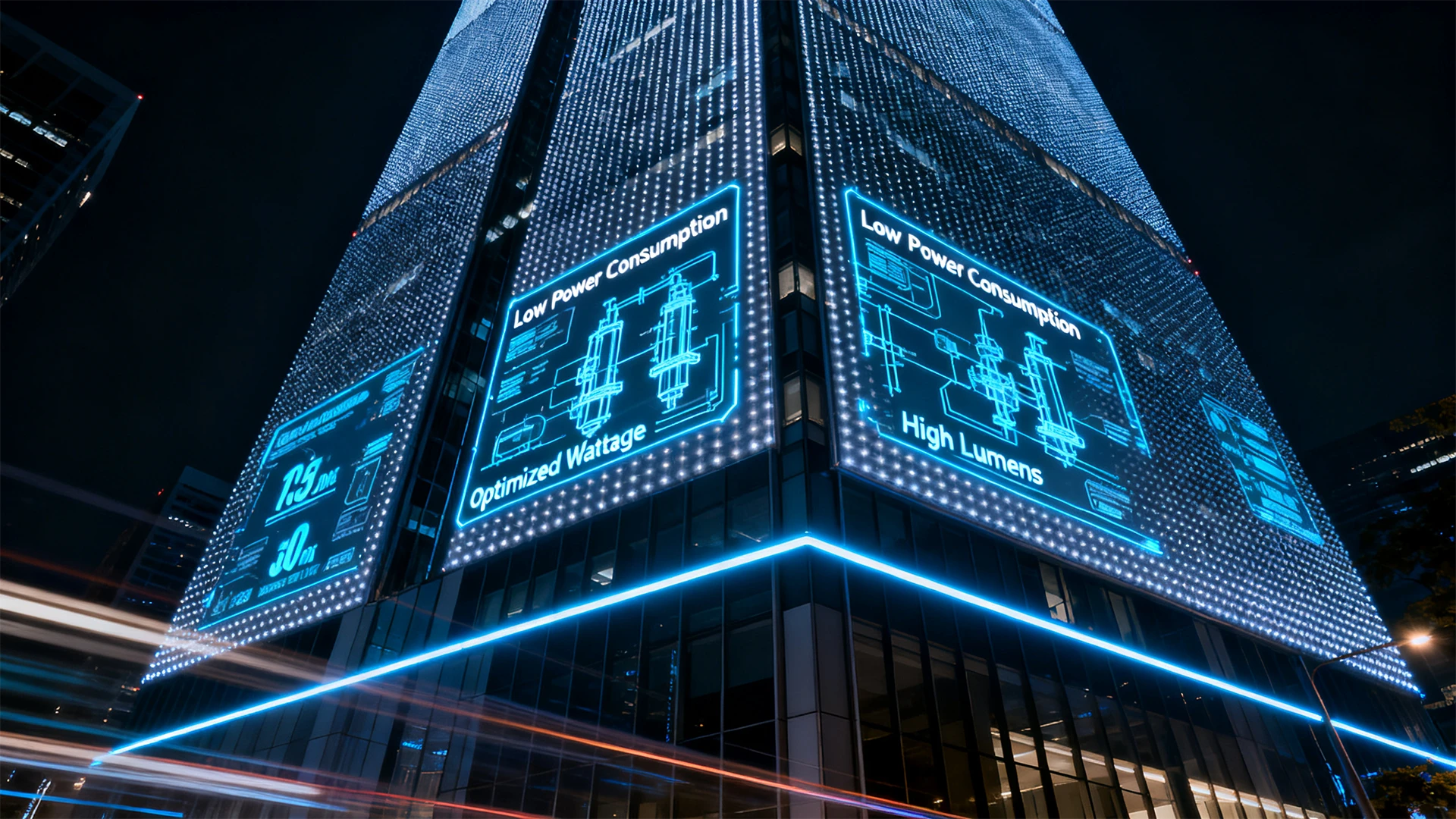
When specifying components for large commercial contracts, procurement teams require clear data over basic promotional text. The matrix below contrasts the core electrical and physical parameters of standard consumer-grade smart strips against professional-tier silicone LED neon ropes:
| Engineering Parameter | Standard Retail Smart Strips | Professional LED Neon Systems | Direct Impact on Commercial Project ROI |
| Real Operating Voltage | 12V DC (Typical) | 24V DC / Constant Current | Higher voltage drops line loss. It moves power safely across long runs. |
| Standby Power Load | 1.2W to 2.5W per controller | Less than 0.3W per node link | Cuts background power drain. Saves money across hundreds of light zones. |
| Circuit Board Material | 1-oz to 2-oz Copper Tape | 3-oz Rolled Dual-Copper PCB | Ensures smooth power delivery. Stops voltage drop over long linear paths. |
| Lumen Output Per Watt | 60 - 80 lm/W | 95 - 120 lm/W (High Efficiency) | Gives higher visual brightness while drawing less grid electricity. |
| Refresh Frequency Rate | ~1,200Hz (Prone to camera flicker) | Over 4,000Hz (Flicker-Free) | Keeps video feeds clean. Works perfectly under HD security cameras. |
| Casing Insulation | Exposed Tape or Thin PVC | Gas-Phase Optical Silicone | Stops yellowing from UV rays. Prevents physical cracks over time. |
| Ingress Protection (IP) | IP20 / IP44 (Indoor only) | IP67 / IP68 Dual Extrusion | Guarantees safe usage in wet kitchens, bathrooms, and outdoor walls. |
A critical factor in real-world energy waste is thermal degradation. Many buyers overlook how heat changes electrical efficiency over thousands of operating hours.
When an LED diode runs hot, its internal resistance rises. As resistance grows, the chip requires more current to generate the exact same amount of light. This loop creates a serious issue. Higher heat leads to higher power draw. That extra draw creates even more heat. This bad cycle speeds up light decay.
PVC Material Performance: Budget smart lights use Polyvinyl Chloride (PVC) plastic sleeves to protect their circuits. PVC acts as a thermal blanket, trapping heat inside the casing. This heat buildup raises the running temperature of the diodes. This issue drives up power use. It also causes the plastic casing to turn yellow and crack.
Silicone Material Performance: Professional systems use gas-phase optical silicone extrusions. Pure silicone is an excellent thermal conductor. It routes heat away from the internal circuit board efficiently, allowing the diodes to stay cool. Keeping running temperatures low maintains flat energy use and extends the system's operational lifespan past 50,000 hours.
How a lighting system connects to the main building power grid alters its real-world efficiency during idle hours.
Retail smart strips rely heavily on constant wireless connections. They keep internal Wi-Fi and Bluetooth radios running 24/7 to listen for app or voice commands. In a large project with hundreds of individual controllers, this background standby draw adds up quickly. It creates a massive, silent power drain that runs constantly, even when the lights are completely turned off.
Professional LED neon networks bypass the unstable public cloud. They use open, low-power industrial networks. These include Zigbee 3.0, Bluetooth Mesh, or wired DMX/DALI digital decoders.
These smart control tools use tight sleep schedules. They drop background standby power draw down to near-zero. Also, they link directly into central building management systems (BMS). This allows operators to set up automated energy-saving rules across the entire property. These rules include occupancy-linked dimming and daylight harvesting.
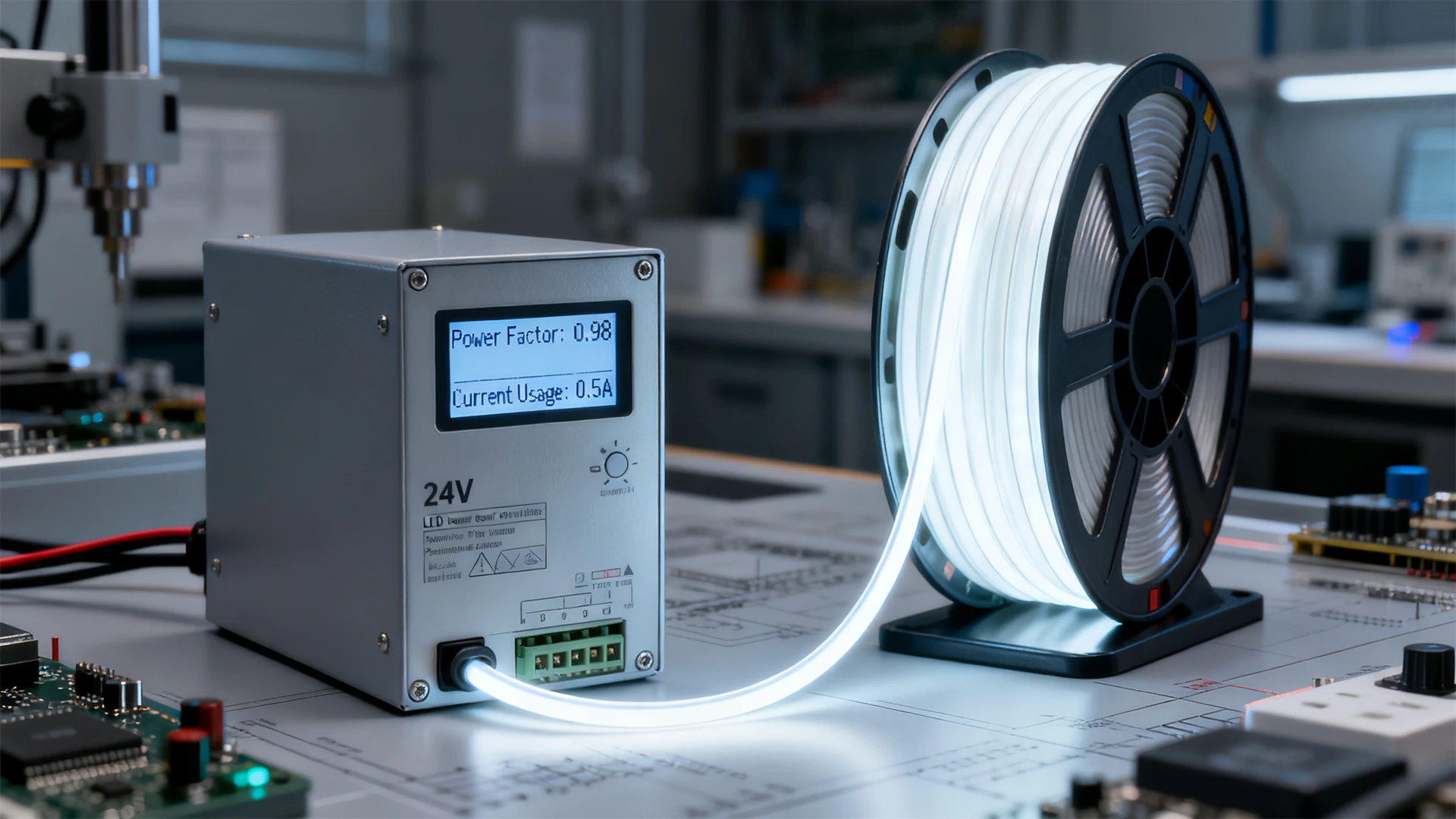
The Project Setting: In late 2025, an electrical engineering firm managed a lighting remodel. The project updated a 200-room luxury boutique hotel. The blueprint required 1,200 meters of color-changing linear accent lighting. Crews placed these lines across guest room coves, hallways, and outdoor terrace paths.
The Initial Trial: The procurement team originally considered a popular brand of consumer app-controlled smart strips. They wanted to save money on upfront material costs. However, during early field tests, the 12V retail strips failed. They suffered from clear voltage drops over continuous 10-meter runs. The ends of the lines looked very dim. Additionally, 200 individual Wi-Fi controllers searched for networks constantly. This load overloaded the local network, causing slow response times and high standby power bills.
The Professional Upgrade: The firm removed the retail strips. They deployed premium 24V constant-current LED neon lines. These systems used UV-stable silicone housings. Centralized, highly efficient power supplies drove these new lines. The team linked everything to the hotel's central automation system using low-power digital decoders.
The Real-World Outcomes: The professional 24V neon system fixed all visible voltage drops. It created a smooth, clean line of light across all corridors. By moving past standard Wi-Fi setups and using low-power automation links, the hotel dropped its background standby power use by 78%. Most importantly, the high-efficiency neon lines reduced live power usage by 43% compared to the consumer strips. This optimization saved the hotel thousands of dollars in annual utility costs while delivering a premium guest experience.
To maximize energy efficiency and prevent hardware damage on job sites, installation crews must follow three practical rules:
Calculate and Balance Voltage Load Proactively: Installers must check total wattage before turning systems on. Ensure that the load of a continuous neon run does not exceed 80% of the power supply's maximum limit. Leaving a 20% safety gap keeps power drivers cool. This step maintains top electrical efficiency.
Adhere Strictly to the Factory Bend Axis: Flexible neon structures are built to bend smoothly along one specific direction. This is either a side-bend or a top-bend design. Do not force a light tube to twist or bend against its shape. Doing so puts extreme stress on the internal copper traces. This stress creates small fractures, leading to high electrical resistance and dead sections.
Execute Clean, Sealed Waterproof Connections: When cutting neon spools to custom lengths on-site, technicians must cut cleanly. Trim strictly on the marked factory lines. Every raw cut edge must be sealed immediately. Use a matching factory endcap and industrial-grade silicone adhesive. Skipping this step lets ambient moisture creep inside. This moisture corrodes the copper traces and causes short circuits that trip main breakers.
Professional neon systems run on higher 24V DC constant-current networks and utilize thick 3-ounce copper circuit boards. This design lowers electrical resistance across long distances. In contrast, standard consumer strips use thin 1-ounce copper tape that experiences high resistance over long runs, wasting energy as heat and causing visible voltage drops.
THINK TEAM KING designs neon systems with open control units. While retail smart strips are locked into closed consumer mobile apps, professional LED neon systems interface cleanly with commercial automation setups and digital decoders. This allows building operators to coordinate voice commands, automated sensors, and central energy dashboards easily.
THINK TEAM KING specializes in manufacturing premium commercial-grade neon ceiling systems and tailored residential lighting solutions for international distributors, contractors, and design groups. We build our high-density wholesale neon lighting lines using premium 3-ounce rolled dual-copper circuit boards and UV-stable silicone housings to ensure absolute color accuracy and maximize energy efficiency. Every batch of our led neon lights is engineered to lower standby power consumption and pass strict international safety codes. Whether you need a volume shipment for private estate developments or customized systems for large-scale developments, THINK TEAM KING provides robust systems engineered to meet your precise technical requirements.
Evaluating power metrics proves that choosing professional-tier lighting components is vital. It secures a strong return on investment for commercial projects. Consumer retail options seem cost-effective upfront. However, their high standby power loads, thin circuit copper, and heat problems lead to high utility bills. They also cause frequent maintenance calls. Upgrading to high-density silicone neon lines driven by low-power automation networks delivers a flawless finish while maximizing energy efficiency.
Are you preparing a large-scale commercial build? Or are you looking to update your wholesale distribution choices with certified, high-efficiency linear light systems? Our engineering team is ready to provide custom wiring diagrams, IES files, and wholesale volume pricing tailored to your exact project specifications.

It provides all-round service for customers
and users 24 hours a day.
Enter your email for exclusive offers
and information on new upcoming products.


